
Generational Horoscopes Tracking Collective Consciousness Cycles
Generational Horoscopes: Tracking Collective Consciousness Through Outer Planet Cycles
Generational horoscopes offer a profound lens through which to understand the vast tapestry of human experience, charting the ebb and flow of collective consciousness across historical epochs. Unlike personal horoscopes, which focus on individual birth charts, generational horoscopes delve into the slower, more expansive movements of the outer planets. These celestial giants—Jupiter, Saturn, Uranus, Neptune, and Pluto—spend many years or even decades in a single zodiac sign, imprinting their unique energetic signatures upon entire generations. This astrological framework provides invaluable insights into the prevailing cultural trends, societal transformations, and shared psychological patterns that define different age groups.
The concept posits that the collective psyche is deeply influenced by these long-term planetary transits, shaping everything from artistic movements and technological revolutions to political ideologies and spiritual awakenings. By analyzing the positions of these outer planets, astrologers can identify the overarching themes and challenges that a generation is destined to confront and integrate. This understanding moves beyond individual destinies, focusing instead on the broader currents that sweep through societies, influencing collective values, aspirations, and even subconscious fears. It’s a powerful tool for recognizing the unique contributions and struggles inherent to each generational cohort.
Table of Contents
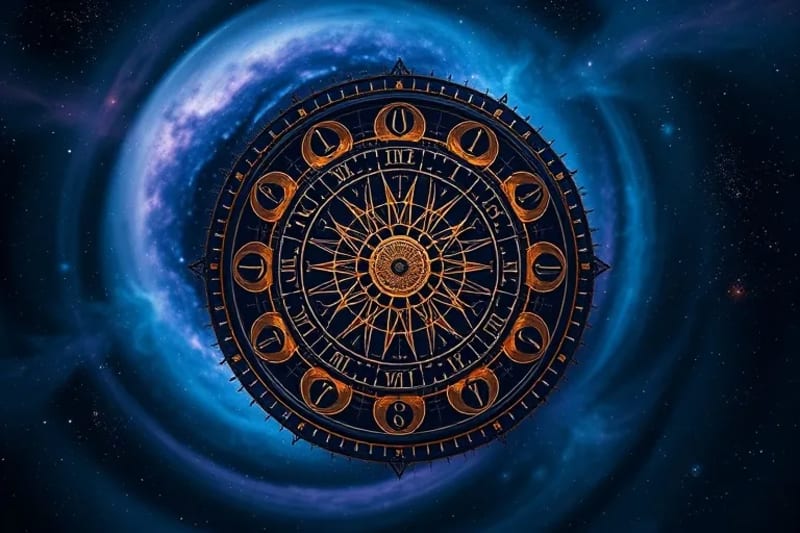
The intricate dance of outer planets orchestrates the grand cycles of collective consciousness, defining generational traits.
The study of generational horoscopes is not merely an academic exercise; it offers practical applications for understanding intergenerational dynamics and fostering greater empathy. Recognizing that different generations operate under distinct astrological imprints can help bridge gaps in communication and perspective. It allows us to appreciate why certain age groups prioritize specific values or react to global events in particular ways. This macro-astrological perspective enriches our comprehension of human history and provides a framework for anticipating future shifts in the collective human experience, offering clarity on the powerful, unseen forces at play.
The Architects of Eras: Understanding Outer Planet Influences
The outer planets are often referred to as the "generational planets" due to their slow orbital speeds and the extended periods they spend in each zodiac sign. Their influence is less about individual personality traits and more about the collective unconscious and the prevailing zeitgeist. Each of these celestial bodies carries a distinct archetypal energy that manifests on a global scale, shaping the very fabric of society. Understanding their individual roles is crucial for deciphering the unique characteristics of each generational cohort and the historical periods they inhabit.
- Jupiter (The Great Benefic): With an approximate 12-year cycle, Jupiter dictates broad social trends, philosophical outlooks, and areas of collective expansion and optimism. Its placement defines what a generation values as truth, where it seeks growth, and its prevailing sense of justice and morality. Periods of Jupiter in expansive signs like Sagittarius or Pisces can usher in eras of heightened spiritual or intellectual exploration.
- Saturn (The Great Malefic/Teacher): Completing its cycle in roughly 29.5 years, Saturn governs structure, discipline, responsibility, and societal limitations. It highlights the challenges, lessons, and reforms that a generation must undertake. Saturn's position reveals the collective sense of duty, the established norms, and the institutions that define an era, often bringing about periods of consolidation or necessary restrictions.
- Uranus (The Awakener): Taking about 84 years to orbit the Sun, Uranus is the planet of innovation, rebellion, sudden change, and technological breakthroughs. Its placement signifies where a generation seeks freedom, breaks from tradition, and introduces revolutionary ideas. It marks periods of scientific advancement, social upheaval, and unexpected shifts in human consciousness, often leading to paradigm-altering discoveries.
- Neptune (The Dissolver): With a 165-year cycle, Neptune represents spirituality, dreams, illusions, collective compassion, and the dissolution of boundaries. It influences artistic movements, spiritual awakenings, and areas where society might be prone to escapism or idealism. Neptune's sign indicates the collective longing for transcendence and the prevailing spiritual currents, sometimes manifesting as collective delusions or widespread artistic inspiration.
- Pluto (The Transformer): The slowest and most profound, Pluto has an irregular orbit averaging 248 years. It governs transformation, power dynamics, death, rebirth, and deep societal shifts. Pluto's placement reveals where a generation experiences profound, often intense, collective changes, confronting issues of control, regeneration, and the shadow aspects of society, leading to fundamental societal restructuring.
These planetary energies intertwine to create a complex astrological blueprint for each generation. For instance, a generation with Uranus in a particular sign might be characterized by specific technological innovations or social reforms, while a Pluto placement defines the deep, often unconscious, transformative processes at play. The interplay between these slow-moving planets paints a vivid picture of the collective journey, highlighting periods of stability, rapid change, spiritual growth, and profound restructuring. Their influence is subtle yet pervasive, shaping the very air we breathe collectively.
Generational Archetypes: Defining Eras Through Planetary Placements
Each generation carries a unique astrological signature, primarily defined by the zodiac signs of the outer planets at the time of their birth. These placements create distinct generational archetypes, influencing collective behaviors, values, and historical trajectories. Understanding these archetypes helps us to contextualize historical events and appreciate the underlying astrological forces at play. For example, the placement of Pluto, the planet of transformation, has profoundly shaped several generations, dictating periods of intense societal upheaval and renewal.
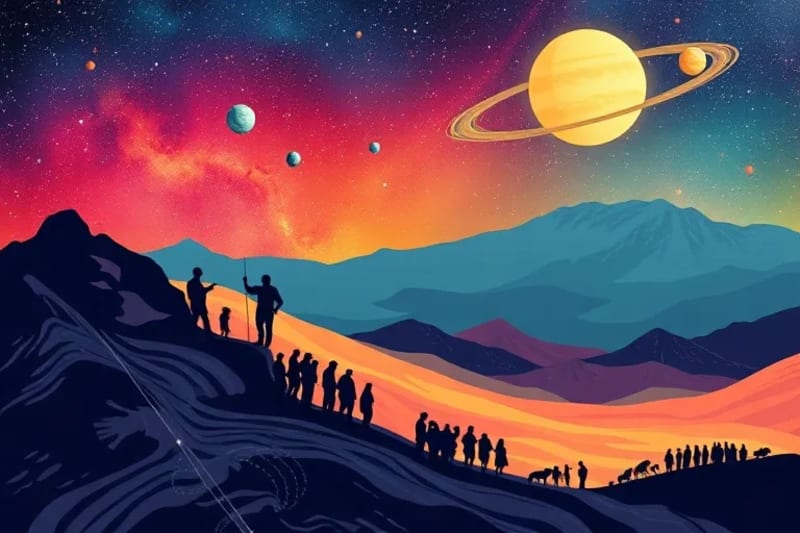
Stylized timelines illustrate how outer planet cycles delineate distinct generational archetypes and their societal impacts.
Consider the generation born with Pluto in Leo (roughly 1939-1957), often associated with the Baby Boomers. This placement fostered a generation with a strong desire for self-expression, leadership, and a dramatic flair, contributing to the rise of rock and roll, television, and a focus on individual identity. Their collective experience was marked by post-war optimism and a drive to leave a significant mark on the world, often through creative and impactful social movements. This era also saw a transformation in how power was perceived, shifting towards individual charisma and public influence.
In contrast, the generation with Pluto in Virgo (roughly 1957-1972) often known as Generation X, faced a world demanding greater efficiency, critical analysis, and a focus on health and environmental concerns. This placement led to a more pragmatic, often skeptical, approach to institutions and a desire for practical solutions. They collectively experienced a transformation in work ethics, a rise in environmental awareness, and a questioning of consumerism, seeking to perfect systems rather than simply expanding them. This period also saw significant shifts in public health and wellness paradigms.
The influence of Uranus, the planet of rebellion and innovation, also provides clear generational markers. The generation with Uranus in Gemini (roughly 1942-1949) witnessed a revolution in communication and information, laying the groundwork for the digital age. They were curious, adaptable, and challenged traditional modes of thought, embracing new forms of media and intellectual freedom. This era birthed the early forms of computing and a rapid expansion of global communication networks. Later, Uranus in Libra (roughly 1968-1975) coincided with significant shifts in social justice, equality, and relationship dynamics, pushing for reforms in marriage, partnerships, and civil rights. This period saw a collective urge to revolutionize interpersonal relationships and societal fairness, leading to movements for equal rights and new legal frameworks. For a deeper dive into how individual astrological placements can influence relationships, you might explore topics like Ancestral Veneration Natal Chart: Lineage Blessings Healing Karmic, which touches upon emotional foundations and family dynamics across generations and how these foundational aspects can be revolutionized.
Neptune's journey through the zodiac also paints broad strokes on the collective canvas. Neptune in Libra (roughly 1942-1956) fostered a generation that idealized peace, harmony, and aesthetic beauty, often seeking spiritual or artistic expression through partnerships. This era was marked by a collective longing for post-war peace and a romanticized view of relationships and justice. Following this, Neptune in Scorpio (roughly 1956-1970) brought a collective fascination with the mysterious, the occult, and deep psychological truths, often leading to a questioning of societal taboos and a search for profound spiritual transformation. This period saw a rise in psychedelic art, a fascination with the subconscious, and a collective exploration of deeper, often hidden, realities, challenging conventional spiritual and psychological boundaries. These examples highlight how the slow dance of the outer planets creates distinct energetic backdrops for each generational experience, shaping their collective worldview and their unique contributions to history.
Collective Consciousness and Societal Transformation
The interplay of outer planet cycles directly impacts the collective consciousness, leading to profound societal transformations that ripple across decades. These shifts are not random but often align with the archetypal energies of the planets transiting specific signs. When Uranus, the planet of revolution, enters a new sign, we often observe breakthroughs in technology or sudden shifts in social norms. Similarly, Pluto’s ingress into a sign often heralds periods of intense power struggles, deconstruction, and eventual regeneration within that area of life, forcing humanity to confront its deepest collective shadows.
Consider the recent transit of Pluto in Capricorn (2008-2024), which has coincided with a global restructuring of economic and governmental institutions. This period has seen the exposure of corruption, the collapse of established systems, and a demand for greater accountability, reflecting Pluto's transformative and often ruthless energy in the sign of structure and authority. This profound collective experience has reshaped global financial systems and political landscapes, leading to a re-evaluation of corporate power and governance. The Occupy Wall Street movement and the rise of cryptocurrency can be seen as manifestations of this transit, challenging traditional financial control. For those interested in deeper spiritual and energetic concepts that influence our reality, exploring topics like Quantum Physics Consciousness Spiritual Perspective can provide additional context on how unseen forces impact our world on a macro scale.
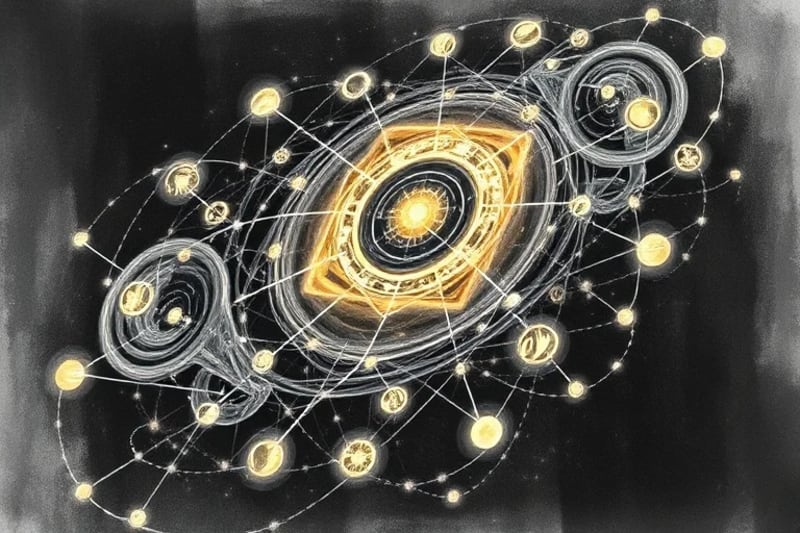
The intricate web of collective consciousness, illuminated by the subtle yet powerful influences of distant celestial bodies.
Neptune's transits, on the other hand, often manifest as shifts in collective spirituality, art, and the blurring of boundaries. Neptune in Pisces (2011-2025) has intensified themes of compassion, spiritual awakening, and a collective yearning for unity, but also increased susceptibility to illusions, misinformation, and escapism. This period has seen a rise in mindfulness practices, alternative healing modalities, and a greater awareness of global interconnectedness, alongside challenges related to discerning truth from deception and navigating complex spiritual landscapes. The widespread adoption of social media and the rise of virtual realities also reflect Neptune's influence in blurring the lines between reality and illusion. Understanding these broad energetic currents helps individuals navigate the collective experience with greater awareness and intentionality, fostering a more discerning approach to information and belief systems.
The concept of generational horoscopes also highlights the cyclical nature of history. While specific events never repeat exactly, the underlying archetypal energies often do, albeit in new forms. By studying past planetary cycles, we can gain valuable insights into potential future trends and prepare for the challenges and opportunities that lie ahead. This foresight can be particularly useful in areas like social planning, technological development, and educational reform, allowing societies to proactively address emerging needs and capitalize on collective strengths. The wisdom derived from these long-term astrological patterns offers a unique perspective on human evolution and our ongoing relationship with the cosmos, emphasizing our role as co-creators within these grand cycles.
Navigating Generational Dynamics and Future Outlook
Understanding generational horoscopes provides a powerful framework for navigating the complex dynamics between different age groups. Each generation, shaped by its unique planetary imprints, brings distinct perspectives, strengths, and challenges to the collective table. Recognizing these astrological underpinnings can foster greater intergenerational empathy and collaboration. It helps explain why certain values resonate more strongly with one cohort than another, or why specific historical events leave a more profound mark on a particular age group, leading to differing worldviews and priorities.
For instance, a generation heavily influenced by Uranus might prioritize individual freedom and technological advancement, potentially clashing with a Saturn-dominated generation that values tradition and established order. By appreciating these inherent astrological biases, we can move beyond superficial conflicts and address the deeper energetic differences. This perspective is invaluable in fields such as sociology, psychology, and even marketing, where understanding generational motivations is key to effective communication and policy-making. The study of collective patterns extends beyond horoscopes, as seen in Quantum Entanglement Synastry: Non-Local Soul Connections, which explores how shared focus can influence reality, much like collective planetary alignments shape our shared experience.
Looking towards the future, astrologers continue to track the movements of the outer planets to anticipate upcoming shifts in collective consciousness. The ingress of Pluto into Aquarius (starting in 2023-2024, with retrogrades) is widely anticipated to bring about radical transformations in technology, social structures, and humanitarian ideals. This transit is expected to challenge existing power structures, foster greater decentralization, and accelerate the development of artificial intelligence and community-focused initiatives. It suggests a future where collective innovation and progressive ideals will be paramount, potentially leading to both unprecedented advancements and significant societal disruptions, demanding a redefinition of power and community. This period will likely see a profound re-evaluation of individual freedoms versus collective responsibilities.
Similarly, the upcoming transit of Neptune into Aries will likely ignite new spiritual quests, a more assertive approach to collective idealism, and potentially a redefinition of heroism and self-sacrifice. This transit, occurring after 2025, could spark a new wave of spiritual pioneers and a more direct, courageous pursuit of collective dreams, potentially leading to both inspiring leadership and impulsive movements. These long-term astrological forecasts are not deterministic predictions but rather indications of the energetic currents that will shape the collective human experience. They offer a roadmap for conscious evolution, encouraging humanity to align with these powerful cosmic forces for positive change. By understanding these grand cycles, individuals and societies can better prepare for the future, fostering resilience and adaptability in the face of inevitable transformation and embracing the opportunities for collective growth.
Conclusion: The Enduring Influence of Cosmic Cycles
Generational horoscopes provide an unparalleled framework for understanding the profound and enduring influence of cosmic cycles on collective consciousness. The slow, deliberate dance of the outer planets—Jupiter, Saturn, Uranus, Neptune, and Pluto—acts as a celestial clock, marking the rhythm of societal evolution and shaping the unique characteristics of each generational cohort. From technological revolutions driven by Uranus to deep societal transformations orchestrated by Pluto, these planetary energies are the unseen architects of our shared human experience. They illuminate the underlying themes that define eras, influence cultural shifts, and guide the collective psyche through periods of growth, challenge, and renewal, offering a cosmic perspective on human development.
By studying these macro-astrological patterns, we gain a deeper appreciation for the interconnectedness of individual lives within the larger tapestry of human history. This perspective fosters empathy, helps bridge generational divides, and offers valuable insights into the forces that shape our world. As we continue to navigate an era of rapid change, the wisdom embedded in generational horoscopes offers a guiding light, enabling us to anticipate future trends and consciously participate in the ongoing evolution of collective consciousness. It reminds us that humanity's journey is inextricably linked to the grand cosmic ballet, a testament to the profound and mysterious influence of the stars and their cyclical wisdom.
Source: Hybrid content assisted by AI and human editorial supervision.


Comments
Post a Comment