
I Ching Chinese Zodiac Divination Strategic Choices
I Ching & Chinese Zodiac: Divination for Strategic Life Choices
In a world brimming with complexities and uncertainties, the quest for clarity and strategic insight remains a timeless human endeavor. Ancient divination systems, far from being mere superstitions, offer profound frameworks for understanding patterns, probabilities, and personal pathways. Among the most revered are the I Ching, or Book of Changes, and the Chinese Zodiac, each providing unique lenses through which to perceive life's intricate tapestry. This comprehensive guide explores how these two powerful systems can be synergistically employed to illuminate strategic life choices, offering a blend of ancient wisdom and practical application for modern decision-making.
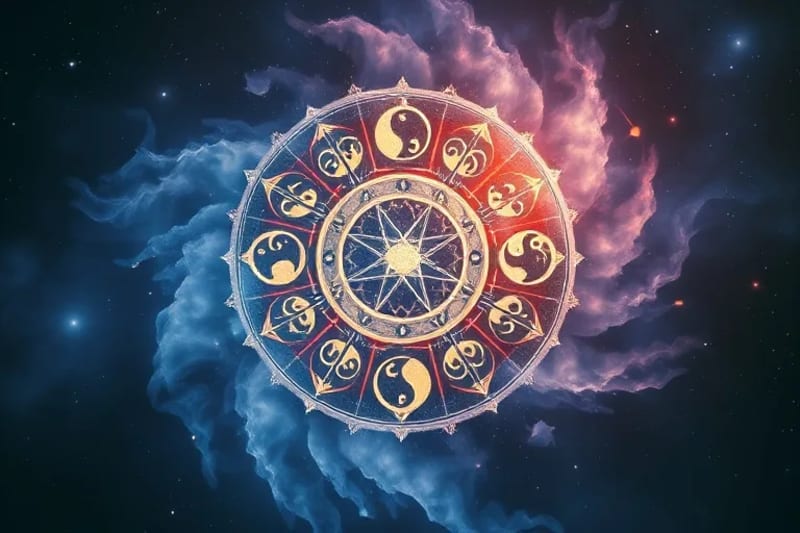
A cosmic fusion of I Ching hexagrams and Chinese Zodiac animals, illustrating the deep connection between ancient divination and strategic life planning.
The I Ching, with its 64 hexagrams, offers a dynamic model of change and transformation, reflecting the ebb and flow of cosmic and human events. It provides guidance not by predicting a fixed future, but by revealing the underlying tendencies and potentials of a given situation. Simultaneously, the Chinese Zodiac, based on a 12-year cycle of animal signs, offers deep insights into personality traits, interpersonal dynamics, and cyclical influences that shape an individual's destiny and interactions with the world.
By integrating these two systems, individuals can gain a multi-dimensional perspective on their challenges and opportunities. The I Ching can clarify the immediate energetic landscape of a decision, while the Chinese Zodiac provides context regarding the inherent nature of the individuals involved and the broader cyclical forces at play. This holistic approach empowers one to make choices that are not only strategically sound but also deeply aligned with their intrinsic self and the prevailing cosmic currents.
Table of Contents
- Understanding the I Ching: The Book of Changes
- Exploring the Chinese Zodiac: Cyclical Wisdom
- A Synergistic Approach: Combining I Ching and Chinese Zodiac
- Practical Application: Steps for Strategic Divination
- Case Studies: Illustrating Strategic Insights
- Ethical Considerations in Divination
- Modern Relevance and Personal Empowerment
Understanding the I Ching: The Book of Changes
The I Ching, one of the oldest classical texts in Chinese culture, dates back over three millennia. Its core philosophy revolves around the concept of yin and yang, the complementary forces that govern all existence. These forces combine to form trigrams, which are then paired to create 64 hexagrams, each representing a unique life situation or state of change. Each hexagram consists of six lines, which can be either solid (yang) or broken (yin), and can be moving (changing) or static.
The process of consulting the I Ching typically involves casting coins or yarrow stalks to generate a hexagram. The interpretation of this hexagram, along with any "moving lines" that transform it into a new hexagram, provides a nuanced description of the current situation, potential developments, and recommended courses of action. It's a tool for self-reflection and understanding, rather than a fortune-telling device, guiding individuals towards optimal alignment with the flow of change.
Key principles of the I Ching include:
- Change is Constant: The universe is in perpetual motion, and understanding these shifts is crucial.
- Interconnectedness: All phenomena are related, and a change in one area affects others.
- Balance: The interplay of yin and yang creates harmony and disequilibrium, driving evolution.
- Timeliness: Knowing when to act and when to remain still is a central teaching.
Exploring the Chinese Zodiac: Cyclical Wisdom
The Chinese Zodiac is a classification scheme based on a 12-year cycle, with each year associated with an animal sign and its reputed attributes. These signs are Rat, Ox, Tiger, Rabbit, Dragon, Snake, Horse, Goat, Monkey, Rooster, Dog, and Pig. Beyond the annual animal, each year is also associated with one of the five elements (Wood, Fire, Earth, Metal, Water), creating a 60-year cycle that adds further layers of complexity and insight into personality and destiny.
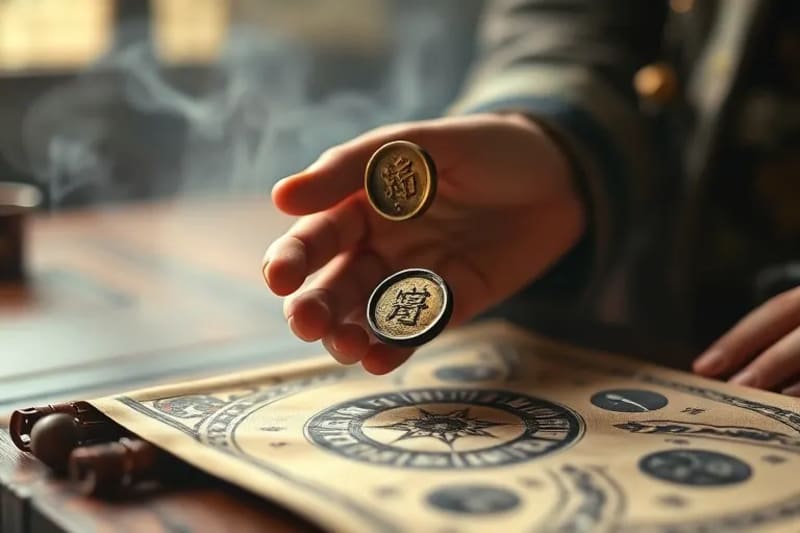
The act of divination, with ancient coins poised for casting, set against a backdrop illustrating the cyclical nature of the Chinese Zodiac.
Each animal sign embodies a specific set of characteristics, strengths, weaknesses, and compatibilities. For instance, people born in the Year of the Dragon are often seen as charismatic and ambitious, while those born under the Rabbit sign are typically gentle and diplomatic. Understanding one's own zodiac sign and those of others can provide valuable insights into personal motivations, relationship dynamics, and career aptitudes. This knowledge is particularly useful for strategic planning, especially when it involves collaboration or navigating social environments.
The five elements further refine these interpretations, influencing the expression of the animal's traits. For example, a Wood Dragon might be more creative and flexible than a Metal Dragon, who could be more rigid and determined. This elemental interaction adds a dynamic layer to the static animal sign, reflecting the nuanced nature of human experience.
| Animal Sign | Key Traits | Strategic Implications |
|---|---|---|
| Rat | Intelligent, adaptable, charming, resourceful | Excellent in negotiation, networking, finding opportunities. |
| Ox | Diligent, dependable, strong, determined | Ideal for long-term projects, stable leadership, building foundations. |
| Tiger | Brave, confident, competitive, unpredictable | Suited for bold initiatives, challenging norms, inspiring others. |
| Rabbit | Gentle, elegant, compassionate, cautious | Skilled in diplomacy, mediation, avoiding conflict, meticulous planning. |
| Dragon | Charismatic, ambitious, powerful, lucky | Excellent for leadership, grand visions, taking calculated risks. |
| Snake | Wise, enigmatic, intuitive, sophisticated | Adept at problem-solving, deep analysis, strategic thinking, discretion. |
| Horse | Energetic, independent, enthusiastic, impatient | Good for quick action, dynamic roles, motivating teams, adapting to change. |
| Goat (Sheep) | Gentle, artistic, compassionate, indecisive | Strong in creative fields, nurturing environments, seeking harmony. |
| Monkey | Clever, witty, curious, mischievous | Excels in innovation, problem-solving, adapting quickly, communication. |
| Rooster | Observant, hardworking, courageous, honest | Proficient in detailed work, organization, public speaking, precision. |
| Dog | Loyal, honest, protective, responsible | Reliable in team roles, upholding justice, building trust, security. |
| Pig | Generous, compassionate, diligent, naive | Good for philanthropy, enjoying life, fostering goodwill, simple solutions. |
A Synergistic Approach: Combining I Ching and Chinese Zodiac
The true power of these systems emerges when they are used in conjunction. The I Ching provides a snapshot of the current energetic dynamics surrounding a specific question or decision, offering a "how-to" guide for navigating the present moment. The Chinese Zodiac, conversely, offers a "who-you-are" and "who-they-are" context, shedding light on inherent tendencies and long-term cyclical influences. This dual perspective allows for a more robust and nuanced strategic assessment.
For instance, if an individual born in the Year of the Tiger (known for boldness) is contemplating a risky business venture, the I Ching might advise caution (e.g., Hexagram 4, Youthful Folly, or Hexagram 29, The Abysmal). This combination would suggest that while the Tiger's natural inclination is to leap, the current circumstances (as indicated by the I Ching) call for careful study and preparation. Conversely, if the I Ching indicates a time for decisive action (e.g., Hexagram 51, The Arousing, or Hexagram 43, Breakthrough), it would affirm the Tiger's innate drive, encouraging them to proceed with confidence but perhaps with the specific caveats provided by the hexagram's lines.
This integration helps to mitigate potential pitfalls that might arise from relying on a single system. The I Ching can temper an overly impulsive zodiac sign, while the zodiac can provide the personal context needed to properly interpret the I Ching's often abstract advice. It's about understanding both the external circumstances and the internal disposition, leading to more informed and harmonious choices.
Practical Application: Steps for Strategic Divination
To effectively use the I Ching and Chinese Zodiac for strategic life choices, a structured approach is recommended. This involves clearly defining the question, performing the divination, and then synthesizing the insights from both systems.

An abstract decision tree, illuminated by ancient symbols, guiding towards strategic clarity and alignment with cosmic wisdom.
Here are the steps:
- Formulate a Clear Question: Before consulting the I Ching, define your strategic dilemma with precision. Avoid yes/no questions; instead, ask open-ended questions about how to approach a situation, what tendencies are at play, or what the outcome of a particular action might be. For example: "How should I navigate this career transition?" or "What is the best approach to resolve this interpersonal conflict?"
- Determine Zodiacal Context: Identify the Chinese Zodiac signs of all key individuals involved in the strategic decision, including yourself. Consider their elemental attributes and their compatibility. This provides a baseline understanding of inherent motivations and potential areas of harmony or friction.
- Cast the I Ching: Use the traditional coin method (three coins cast six times) or yarrow stalks to generate your hexagram. Record the lines carefully, noting any moving lines.
- Interpret the I Ching Hexagram: Consult a reliable I Ching commentary to understand the meaning of the primary hexagram and any resulting changing hexagram. Pay close attention to the judgment, image, and line statements. These will describe the current situation, its underlying dynamics, and the recommended attitude or action.
- Synthesize Insights: This is the crucial step. Compare the I Ching's guidance with the zodiacal context.
- Does the I Ching's advice align with your natural zodiacal tendencies, or does it suggest a counter-intuitive approach?
- How do the zodiacal traits of others involved influence the I Ching's recommendations regarding communication or collaboration?
- Are there specific times (e.g., years, months, or days ruled by certain animals or elements) that might be more auspicious for action, as suggested by the I Ching's emphasis on timeliness?
- Formulate a Strategic Plan: Based on the synthesized insights, develop a detailed action plan. This plan should incorporate both the immediate tactical advice from the I Ching and the long-term strategic understanding derived from the Chinese Zodiac.
- Reflect and Re-evaluate: Divination is an ongoing dialogue. Regularly reflect on the outcomes of your choices and, if necessary, re-consult the systems as circumstances evolve.
Case Studies: Illustrating Strategic Insights
Let's consider a hypothetical scenario to illustrate the combined power of these systems for strategic decision-making.
Scenario: A CEO (born in the Year of the Dragon, known for ambition and leadership) is considering a major acquisition that promises significant growth but also carries substantial risk. The company's lead negotiator (born in the Year of the Rabbit, known for caution and diplomacy) advises a slower, more meticulous approach.
I Ching Consultation: The CEO casts the I Ching and receives Hexagram 18, "Work on What Has Been Spoiled (Decay)", with a moving line in the fifth place, changing to Hexagram 46, "Pushing Upward".
Interpretation:
Hexagram 18 (Decay): This hexagram suggests a situation where previous errors or neglect have led to decay. It calls for diligent effort to remedy the past, emphasizing the need for thoroughness and not rushing into new ventures without first addressing existing issues. The judgment speaks of "great success" if one "crosses the great water" (takes a bold step), but only after rectifying the decay.
Moving Line (Fifth Place): "Dealing with the decay caused by the father. One meets with praise." This line implies that the CEO needs to address foundational or systemic issues, possibly inherited from previous leadership or business practices, before moving forward. Success comes from taking responsibility and implementing necessary reforms.
Resulting Hexagram 46 (Pushing Upward): This hexagram signifies gradual, steady progress and advancement. It encourages perseverance and a step-by-step approach, indicating that success will come through persistent effort and a solid foundation, rather than sudden leaps.
Strategic Synthesis:
- The Dragon CEO's natural inclination for bold, rapid growth is tempered by the I Ching's advice for caution and meticulous preparation.
- The I Ching validates the Rabbit negotiator's cautious approach, suggesting that a slower, more thorough due diligence process is not just advisable but necessary to "work on what has been spoiled" before the acquisition.
- The transition to "Pushing Upward" indicates that the acquisition can be successful, but it must follow a period of careful internal restructuring and addressing any existing "decay" within the company or the deal itself.
- The strategic choice would be to postpone the aggressive acquisition, conduct a deep audit of internal processes and the target company's financials, and then proceed with a well-planned, gradual integration, leveraging the Rabbit's diplomatic skills in negotiation.
Ethical Considerations in Divination
While divination offers powerful insights, it is crucial to approach it with ethical awareness. The I Ching and Chinese Zodiac are tools for self-understanding and guidance, not for absolving personal responsibility or manipulating others. Ethical considerations include:
- Personal Responsibility: The ultimate decision-making power rests with the individual. Divination provides information, not mandates.
- Respect for Privacy: Do not use these systems to pry into the lives of others without their consent. Focus on your own actions and how they interact with others.
- Non-Attachment to Outcomes: While seeking guidance, maintain an open mind about the results. The I Ching often challenges preconceived notions.
- Continuous Learning: Treat each consultation as a learning experience, deepening your understanding of yourself and the patterns of the universe.
Modern Relevance and Personal Empowerment
In an era of big data and predictive analytics, the ancient wisdom of the I Ching and Chinese Zodiac might seem anachronistic. However, their enduring appeal lies in their ability to address the qualitative, human element of decision-making that algorithms often miss. They offer a framework for intuitive intelligence, emotional awareness, and a connection to deeper, archetypal patterns that influence our lives.
By integrating these systems, individuals and even organizations can cultivate a more holistic approach to strategy. It's about blending rational analysis with intuitive insight, understanding both the measurable variables and the subtle energies at play. This leads to decisions that are not just logically sound but also resonate with personal values and the broader flow of life, fostering greater resilience and adaptability in an ever-changing world.
The practice of combining I Ching and Chinese Zodiac divination is a journey of self-discovery and empowerment. It encourages a mindful approach to life's challenges, transforming uncertainty into an opportunity for growth and strategic alignment. Whether for personal development, career advancement, or navigating complex relationships, these ancient tools offer a timeless path to wisdom and effective action.
Fuente: Contenido híbrido asistido por IAs y supervisión editorial humana.


Comments
Post a Comment