
Planetary Magic Grimoire Traditions Celestial Intelligences Guide
Planetary magic and grimoire traditions represent a profound and ancient system of esoteric practice, deeply rooted in the belief that celestial bodies exert significant influence over earthly affairs and human consciousness. This intricate discipline involves working with specific planetary energies and their associated intelligences to achieve various magical and spiritual objectives. Far from being mere superstition, these traditions are built upon centuries of observation, philosophical inquiry, and mystical experience, offering a structured approach to understanding and interacting with the cosmos.
The core concept revolves around the idea that each planet—including the Sun and Moon, often referred to as luminaries—is not just a physical object but a living entity imbued with unique archetypal qualities, spiritual forces, and even conscious intelligences. Practitioners of planetary magic seek to align themselves with these energies, often through meticulously crafted rituals, invocations, and the creation of talismans, to manifest desired outcomes in their lives or to gain deeper spiritual insight.
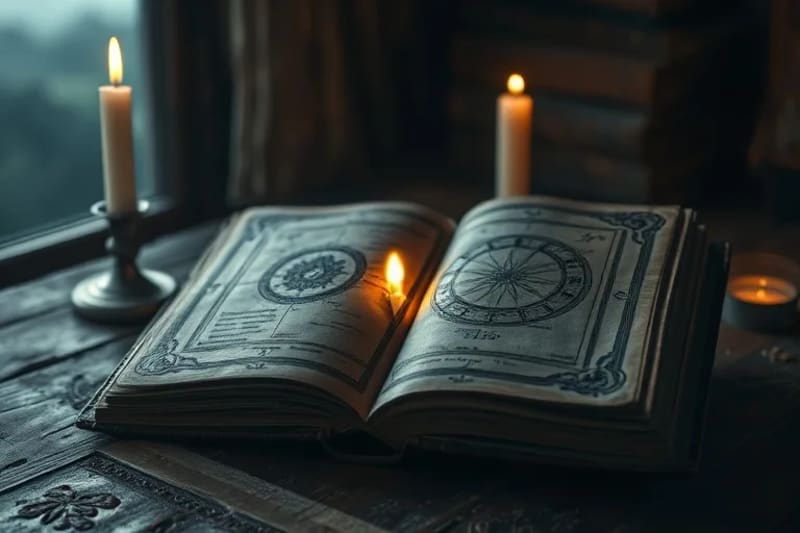 An ancient grimoire, illuminated by candlelight, reveals intricate planetary sigils and astrological symbols, hinting at the profound knowledge within.
Historical Roots and Evolution of Planetary Magic
The practice of planetary magic boasts a rich lineage stretching back to ancient civilizations. Evidence of celestial worship and astrological influence on daily life can be found in Mesopotamia, Egypt, Greece, and Rome. These early cultures meticulously charted the movements of planets and stars, attributing divine qualities and specific influences to each celestial body.
During the Hellenistic period, particularly in Alexandria, the confluence of Egyptian, Babylonian, and Greek traditions led to a sophisticated system of astrology and magic. Texts like the "Picatrix" (originally an Arabic grimoire, later translated into Latin) became foundational, detailing how to create talismans and perform rituals aligned with planetary hours and days. The Renaissance saw a resurgence of interest in these Hermetic and Neoplatonic philosophies, with scholars like Marsilio Ficino and Heinrich Cornelius Agrippa integrating planetary magic into their comprehensive systems of occult philosophy.
The development of grimoires, or magical textbooks, paralleled this historical trajectory. These books served as repositories of magical knowledge, containing instructions for invoking spirits, preparing magical tools, and performing complex rituals. From the medieval "Key of Solomon" to the later "Grimorium Verum," these texts codified the practices, correspondences, and invocations necessary for practitioners to engage with celestial intelligences.
The Seven Classical Planets and Their Correspondences
Central to planetary magic are the seven classical planets visible to the naked eye: the Sun, Moon, Mercury, Venus, Mars, Jupiter, and Saturn. Each of these celestial bodies is associated with a unique set of correspondences that inform magical practice. Understanding these associations is crucial for any practitioner seeking to harness specific planetary energies effectively.
These correspondences extend to days of the week, metals, colors, herbs, stones, deities, emotional states, and even specific types of magical operations. By carefully selecting the right time, materials, and invocations that resonate with a particular planet, practitioners aim to create a powerful sympathetic link that amplifies their magical intent.
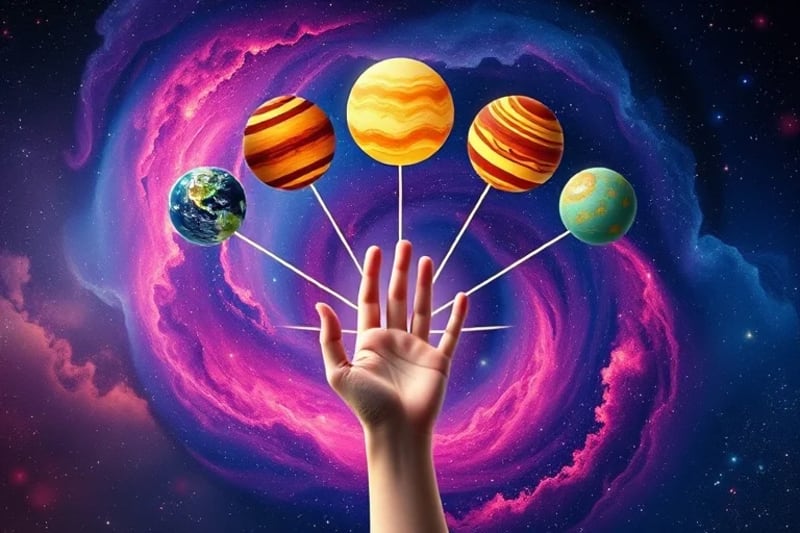 A digital painting depicts the seven classical planets arranged in a mystical formation, symbolizing their interconnected energies and influences.
Below is a foundational table outlining some key correspondences for the seven classical planets:
| Planet | Day | Metal | Color | Key Influence |
|---|---|---|---|---|
| Sun | Sunday | Gold | Gold, Orange | Vitality, Leadership, Success, Glory |
| Moon | Monday | Silver | Silver, White | Emotions, Intuition, Fertility, Dreams |
| Mars | Tuesday | Iron | Red | Action, Courage, Conflict, Energy |
| Mercury | Wednesday | Quicksilver | Yellow, Grey | Communication, Intellect, Travel, Commerce |
| Jupiter | Thursday | Tin | Blue, Purple | Expansion, Wisdom, Prosperity, Justice |
| Venus | Friday | Copper | Green, Pink | Love, Beauty, Harmony, Art, Pleasure |
| Saturn | Saturday | Lead | Black, Dark Blue | Discipline, Structure, Karma, Limitation |
Understanding Grimoires: The Books of Power
Grimoires are much more than simple spellbooks; they are comprehensive manuals for magical practice, often containing detailed instructions for everything from constructing magical tools and preparing ingredients to invoking planetary spirits and creating talismans. The term "grimoire" itself is thought to derive from the Old French word "grammaire," implying a book of instruction or a "grammar" of magic.
These texts often include complex diagrams, sigils (magical symbols representing spirits or energies), and lengthy invocations in various languages, including Latin, Hebrew, and Greek. They serve as a vital link to historical magical traditions, preserving knowledge that might otherwise have been lost. Studying grimoires provides invaluable insight into the worldview and practices of past magicians.
Some of the most well-known grimoires include:
- The Key of Solomon: One of the most influential grimoires, providing detailed instructions for invoking spirits, constructing magical instruments, and performing various operations.
- Picatrix: A medieval grimoire of astrological magic, focusing on the creation of talismans and the use of planetary energies.
- Lesser Key of Solomon (Goetia): Primarily concerned with the evocation of demons, often associated with specific planetary hours and days.
- Grimorium Verum: A later grimoire, known for its focus on pacts with spirits and its more direct, often darker, magical practices.
Celestial Intelligences: Angels, Spirits, and Planetary Genii
A fundamental aspect of planetary magic is the interaction with "celestial intelligences." These are often understood as spiritual beings or forces that embody and govern the energies of the planets. Depending on the tradition, these intelligences might be referred to as angels, planetary spirits, genii, or even specific deities.
For example, in many Hermetic and Kabbalistic traditions, each planet is associated with specific angelic hierarchies. Michael is often linked with the Sun, Gabriel with the Moon, Raphael with Mercury, Haniel with Venus, Camael with Mars, Zadkiel with Jupiter, and Cassiel with Saturn. These entities are not typically "commanded" but rather respectfully invoked or petitioned to assist in magical operations, acting as intermediaries between the practitioner and the divine cosmic forces.
Working with these intelligences requires a deep understanding of their nature, their preferred offerings, and the appropriate invocations. Practitioners aim to build a harmonious relationship, fostering a connection based on mutual respect and aligned intention. This is a crucial distinction from more coercive forms of magic often depicted in popular culture.
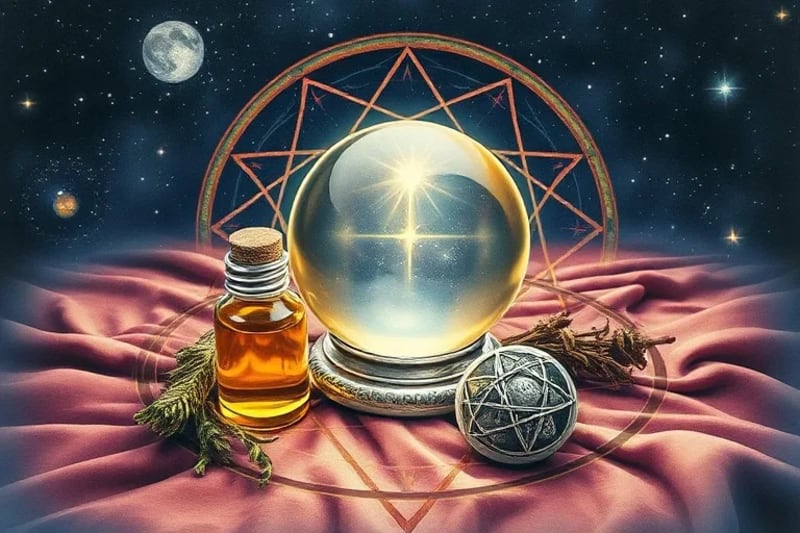 A watercolor illustration showcases various symbolic items, including a crystal ball and planetary talisman, used in esoteric practices.
Practical Applications and Ritual Structure
The practical application of planetary magic involves a structured approach, often guided by the instructions found in grimoires. The timing of a ritual is paramount, as aligning with the correct planetary day and hour is believed to significantly enhance the efficacy of the operation. For instance, a ritual for love or beauty might be performed on a Friday (Venus's day) during a Venusian hour, utilizing copper implements and green candles.
Common elements of planetary magic rituals include:
- Purification: Cleansing oneself and the ritual space.
- Invocation: Calling upon the planetary intelligence or associated deity.
- Offerings: Presenting items corresponding to the planet (e.g., incense, herbs, specific foods).
- Talismanic Magic: Creating charged objects (talismans) imbued with planetary energy for ongoing influence. These are often engraved with planetary sigils and symbols.
- Meditation and Visualization: Focusing the mind on the desired outcome and the planetary energy.
- Closing: Thanking the intelligences and formally concluding the ritual.
Talismans are particularly significant in planetary magic. These are objects, often made of metal or parchment, inscribed with planetary symbols and consecrated during a specific planetary alignment. They are believed to act as conduits, continuously drawing down and radiating the desired planetary influence to the wearer or owner.
Ethical Considerations and Modern Practice
Engaging with planetary magic and celestial intelligences carries significant ethical responsibilities. Practitioners are often advised to approach these forces with respect, clear intention, and a strong moral compass. The principle of "do no harm" is paramount, and magic used for selfish or manipulative purposes is generally considered detrimental to both the practitioner and the recipient.
Modern practitioners of planetary magic often adapt traditional techniques to contemporary contexts. While some adhere strictly to historical grimoires, others integrate these ancient practices with modern psychological insights, energy work, and personal spiritual development. The emphasis has shifted for many from purely external manifestation to internal transformation and self-mastery, using planetary energies as a tool for personal growth and understanding one's place within the cosmic order.
The study of planetary magic offers a unique lens through which to view the interconnectedness of the universe. It encourages a deeper appreciation for the subtle forces that shape our reality and provides a framework for conscious engagement with these energies. Whether for spiritual development, practical manifestation, or simply intellectual curiosity, these traditions continue to captivate and inspire those who seek to understand the mysteries of the cosmos.
Source: Hybrid content assisted by AIs and human editorial supervision.


Comments
Post a Comment