
Urban Geomancy: Ley Lines & Spirit Allies in Cityscapes
Urban Geomancy: Discovering Ley Lines and Spirit Allies in Cityscapes
The modern urban landscape, often perceived as a realm of concrete and steel, holds a hidden energetic tapestry waiting to be discovered. Urban geomancy is an esoteric practice that seeks to understand and interact with the subtle energies of cities, much like traditional geomancy explores natural landscapes. This discipline suggests that even in the densest "concrete jungles," ancient energetic pathways, known as ley lines, persist and influence the urban environment.
Beyond the visible architecture, cities are vibrant ecosystems of human intention, historical memory, and natural forces. This article delves into the intriguing world of urban geomancy, exploring how to identify these hidden energetic currents and connect with the often-overlooked spirit allies that inhabit our metropolitan spaces. We will uncover the historical roots, practical applications, and profound implications of engaging with the energetic blueprint of our urban homes.
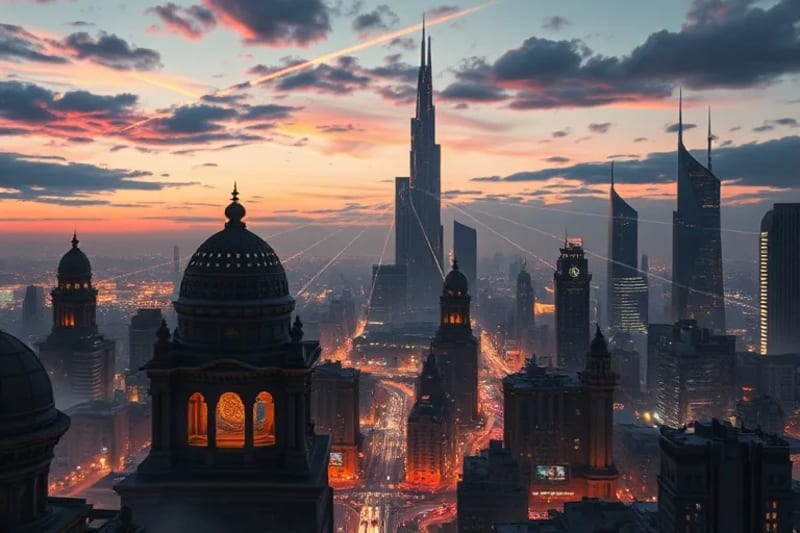
A futuristic cityscape reveals subtle, glowing energetic lines, hinting at the hidden ley lines that crisscross urban environments, blending ancient wisdom with modern architecture.
What is Urban Geomancy?
Urban geomancy is a specialized branch of geomancy, an ancient practice focused on understanding the Earth's subtle energies and their impact on living beings. While traditional geomancy often deals with natural landscapes, sacred sites, and agricultural areas, its urban counterpart applies these principles to man-made environments. It recognizes that cities, despite their artificial appearance, are built upon and interact with the planet's inherent energetic fields.
This practice involves sensing, mapping, and harmonizing with the energetic currents, or 'chi,' that flow through urban spaces. It considers how buildings, roads, parks, and infrastructure affect these energies, and how these energies, in turn, influence the well-being, mood, and even the collective consciousness of city dwellers. Urban geomancers believe that by understanding these dynamics, we can create more vibrant, healthy, and spiritually aligned urban environments.
The core idea is that cities are not merely collections of inert structures but living entities with their own energetic signatures. These signatures are shaped by their geological foundations, historical events, cultural practices, and the collective human experience. Engaging with urban geomancy offers a unique lens through which to perceive and interact with our metropolitan surroundings, fostering a deeper connection to place and community.
The Concept of Ley Lines in Urban Settings
Ley lines are theoretical alignments of ancient sites, geographical features, and sacred spaces that are believed to carry telluric energy. While often associated with rural landscapes and megalithic structures like Stonehenge, urban geomancy posits that these energetic pathways extend into and through cities. They are not physical lines but rather channels of subtle energy that can be detected through dowsing or intuitive perception.
In an urban context, ley lines might connect historical landmarks, significant public spaces, or even specific architectural features. For instance, a city's main avenue might follow an ancient ley line, or a prominent cathedral could be intentionally built at a ley line intersection. These intersections, often called 'power points' or 'nodes,' are believed to be areas of concentrated energy, influencing the vitality and character of the surrounding urban fabric.
The presence of these lines can impact everything from traffic flow to the emotional atmosphere of a neighborhood. Understanding their location and flow can help urban planners and residents alike make more informed decisions about development, green spaces, and community gathering points. For a deeper dive into geomantic practices, consider exploring resources on Chrono-Astrology Ancestral Echoes Navigating Personal Time Cycles.
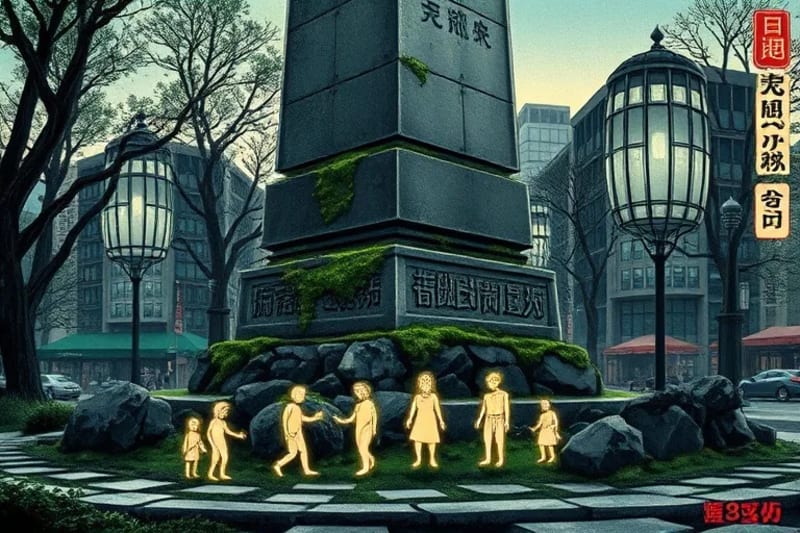
An ancient, moss-covered obelisk in a modern city park, surrounded by subtle, glowing elemental spirits, symbolizing the hidden guardians of urban green spaces.
Identifying Spirit Allies in the Cityscape
Beyond energetic lines, urban geomancy also acknowledges the presence of 'spirit allies' or 'genius loci' (spirits of place) within the city. These are not necessarily anthropomorphic entities but can be felt as distinct energetic presences or intelligences tied to specific locations. They might manifest as the vibrant energy of a bustling market, the serene calm of a hidden garden, or the protective aura of an old, resilient tree.
Identifying these spirit allies requires developing one's intuitive and sensory awareness. It involves paying attention to how different places make you feel, observing recurring patterns in nature (even in urban settings), and listening to the subtle messages of the environment. For instance, a centuries-old oak tree in a city park might house a powerful nature spirit, while a historic building could be imbued with the collective memories and energies of its past inhabitants.
Engaging with these allies can involve simple acts of respect, such as acknowledging their presence, making small offerings (like leaving a smooth stone or a flower), or simply spending time in quiet contemplation in their domain. This practice fosters a sense of reciprocity and connection, transforming impersonal urban spaces into living, breathing entities with whom we can interact. Understanding the concept of Advanced Planetary Aspects: Trines, Sextiles, Quincunxes can further deepen this appreciation.
Practical Applications: Enhancing Urban Well-being
The insights gained from urban geomancy can be applied in various practical ways to enhance the well-being of individuals and communities. By understanding where ley lines converge or where spirit allies reside, we can consciously choose locations for homes, businesses, or public spaces that are energetically supportive. This can lead to improved health, greater creativity, and a stronger sense of community belonging.
Here are some practical applications:
- Site Selection: Choosing a home or office location based on positive energetic flows can lead to greater harmony and productivity. Avoiding areas with stagnant or disruptive energies is equally important.
- Urban Gardening: Planting specific trees or herbs in energetically charged areas can amplify their growth and healing properties, creating vibrant urban green spaces.
- Public Art and Design: Incorporating sacred geometry or specific materials in public art installations can help to anchor and enhance positive energies within a neighborhood.
- Personal Rituals: Performing simple grounding or blessing rituals in energetically significant urban spots can help individuals connect with the city's spirit and find inner peace amidst the hustle.
- Community Building: Identifying and revitalizing energetically potent public spaces can foster stronger community bonds and a shared sense of place.
These applications move beyond mere aesthetics, aiming to create environments that nourish the soul as much as they serve practical needs. The principles of Sound Alchemy: Cellular Regeneration, Manifestation Frequencies can also be integrated into these practices for enhanced harmony.
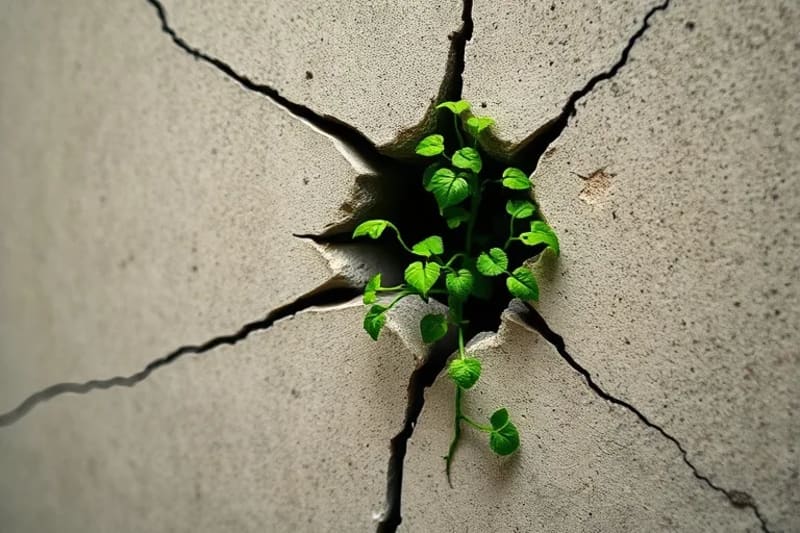
An extreme close-up of a vibrant green vine pushing through a concrete wall, revealing subtle, shimmering energetic patterns, symbolizing life's persistence and hidden energy in urban environments.
Historical and Modern Perspectives on City Energy
Throughout history, many ancient civilizations instinctively understood the importance of site selection and energetic alignment in their settlements. From the carefully planned cities of the Indus Valley to the Roman Empire's strategic road networks, there's evidence of an awareness of natural energy flows. Indigenous cultures worldwide have always honored the spirits of the land, even within early urban developments. The principles of Feng Shui in Chinese culture, for example, are a sophisticated system for harmonizing human-made structures with natural energy, directly influencing urban design.
In the modern era, the concept of urban geomancy has seen a resurgence, particularly among architects, urban planners, and spiritual practitioners seeking more holistic approaches to city living. Contemporary research into bio-energetic fields and the impact of electromagnetic frequencies (EMFs) on human health also provides a scientific parallel to geomantic concerns. While traditional geomancy often relied on intuition and dowsing, modern approaches may incorporate technology to measure subtle energy shifts.
The challenge lies in integrating these ancient wisdom traditions with the rapid pace of urban development. However, a growing number of professionals are exploring how geomantic principles can inform sustainable design, community resilience, and the creation of truly regenerative urban environments. This convergence of ancient wisdom and modern innovation is crucial for creating cities that are not only functional but also spiritually nourishing. Further insights can be found in discussions about Sound Alchemy: Cellular Regeneration, Manifestation Frequencies.
Ethical Considerations and Respectful Engagement
Engaging with urban geomancy and spirit allies requires a strong ethical framework. It is crucial to approach these practices with respect, humility, and a deep understanding of the interconnectedness of all life. Just as one wouldn't carelessly disturb a natural ecosystem, the energetic fabric of a city, with its history and inhabitants, deserves thoughtful consideration. Exploiting or manipulating these energies for personal gain without regard for the collective well-being is contrary to the spirit of geomancy.
Key ethical considerations include:
- Respect for Indigenous Knowledge: Acknowledging and honoring the original custodians of the land and their traditional understanding of its energetic properties.
- Non-Interference: Avoiding actions that could disrupt or harm existing energetic patterns or spirit allies. The goal is harmonization, not domination.
- Intent and Integrity: Ensuring that all geomantic work is undertaken with positive intentions for the highest good of the community and the environment.
- Cultural Sensitivity: Being aware of and respectful towards the diverse cultural and spiritual beliefs that may be present in an urban area.
- Environmental Stewardship: Recognizing that the health of urban energetic systems is intrinsically linked to the physical health of the urban environment.
By adhering to these principles, urban geomancers can contribute positively to the energetic health of cities, fostering environments that are not only sustainable but also spiritually resonant and inclusive.
Integrating Geomancy into Modern Urban Planning
The integration of geomantic principles into modern urban planning offers a revolutionary approach to creating more livable and harmonious cities. Instead of solely focusing on economic viability and functional efficiency, geomantically informed planning considers the energetic health of a site. This could involve conducting energetic surveys before major construction projects, designing green spaces to enhance natural energy flows, or placing public amenities at auspicious energetic nodes.
Imagine cities where parks are designed not just for recreation but as energetic healing centers, where public transport routes follow beneficial ley lines, and where buildings are constructed with materials that resonate positively with the Earth's energies. This holistic vision moves beyond conventional sustainability, aiming for true regenerative urbanism that supports both human and planetary well-being. It recognizes that the spiritual health of a city is as important as its economic or social health.
Such an approach requires collaboration between geomancers, architects, urban planners, landscape designers, and community leaders. It calls for a paradigm shift, acknowledging that the invisible forces of nature and spirit play a vital role in shaping our built environments. By consciously working with these energies, we can transform our concrete jungles into vibrant, thriving ecosystems that nurture all who inhabit them, leading to a profound re-enchantment of urban life.
Conclusion
Urban geomancy offers a compelling framework for understanding and interacting with the hidden energetic dimensions of our cities. By recognizing the presence of ley lines and spirit allies, we can move beyond a purely material perception of urban spaces and cultivate a deeper, more meaningful connection to our surroundings. This practice encourages us to become more attuned to the subtle influences that shape our daily lives, fostering a sense of wonder and responsibility.
Whether through simple acts of mindful observation or more complex geomantic interventions, engaging with the energetic blueprint of the city can lead to enhanced well-being, greater community harmony, and a more sustainable future. As we continue to build and evolve our urban environments, integrating the wisdom of urban geomancy can help us create cities that are not just functional, but truly alive, vibrant, and spiritually nourishing for all.
Fuente: Contenido híbrido asistido por IAs y supervisión editorial humana.


Comments
Post a Comment