
Vibrational Linguistics: Mantras, Tones, Archetypal Sound
In an era dominated by visual information, the profound power of sound often remains an overlooked dimension of human experience and cosmic understanding. However, ancient wisdom traditions and emerging scientific fields are increasingly converging on a fascinating concept: Vibrational Linguistics. This discipline explores the esoteric power embedded within mantras, specific tones, and archetypal sound codes, suggesting that sound is not merely a medium for communication but a fundamental force shaping reality itself. From the resonant chants of ancient temples to the intricate frequencies of modern bio-acoustics, understanding vibrational linguistics opens a gateway to profound personal transformation and a deeper connection to the universe.
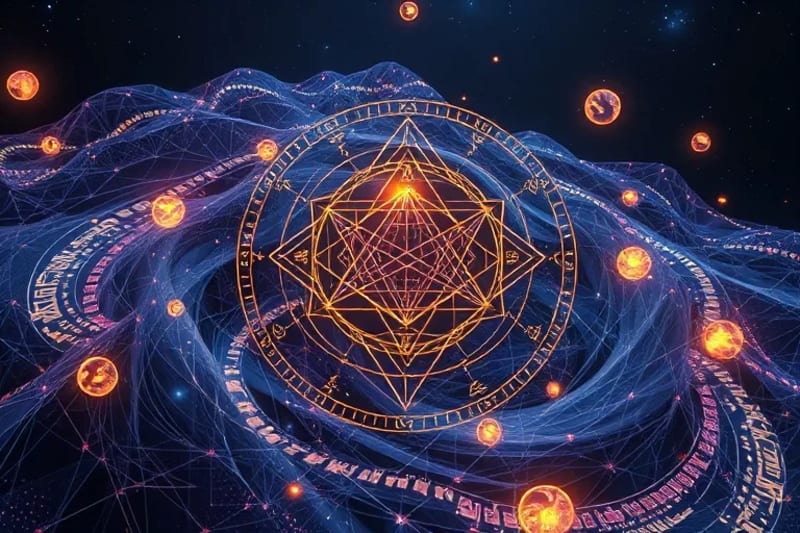
The intricate dance of sound waves shaping reality, a core concept in vibrational linguistics.
The Foundations of Vibrational Linguistics
At its heart, vibrational linguistics posits that everything in the universe, from the smallest subatomic particle to the largest galaxy, is in a state of vibration. Sound, in this context, is not just what we hear but a manifestation of these fundamental vibrations. Every thought, emotion, and physical object possesses a unique vibrational signature. When we interact with sound, we are engaging with these foundational energies, capable of influencing our own vibrational state and, by extension, our reality.
The principle of resonance is central to this understanding. When two objects vibrate at the same frequency, one can cause the other to vibrate sympathetically. This phenomenon is evident in music, where a specific note can cause a wine glass to shatter, or in the human body, where certain frequencies can stimulate healing or relaxation. Ancient civilizations were acutely aware of this. The Vedic traditions of India, the ancient Egyptians, and Tibetan monks all utilized sound in their spiritual practices, understanding its power to heal, transform, and connect with higher states of consciousness.
- Sound as Energy: Sound waves are mechanical waves that carry energy through a medium. In esoteric thought, this energy is seen as a primal creative force.
- Sympathetic Vibration: The tendency of one vibrating object to respond to the vibrations of another with the same natural frequency. This is how sound can influence our cellular structure and energy fields.
- Ancient Wisdom: Many cultures believed that the universe was sung into existence, highlighting the profound role of sound in creation.
Mantras: Sacred Syllables and Their Power
Perhaps the most widely recognized application of vibrational linguistics is the use of mantras. Derived from Sanskrit, "mantra" translates to "instrument of thought" or "freeing the mind." These are sacred words, sounds, or phrases repeated in meditation or prayer, believed to have psychological and spiritual power. Mantras are not merely words; they are considered to be vibrational formulas that embody specific divine energies or intentions.
The power of mantras lies in their repetitive nature, the specific sounds they contain, and the intention behind their recitation. When chanted, mantras create a vibrational field that can influence the chanter's internal state, brainwave patterns, and even the surrounding environment. The sound vibrations resonate through the body, stimulating various energy centers (chakras) and promoting a state of calm, focus, or spiritual awakening. For instance, the primordial sound "Om" (Aum) is considered the sound of the universe, encompassing creation, preservation, and dissolution.
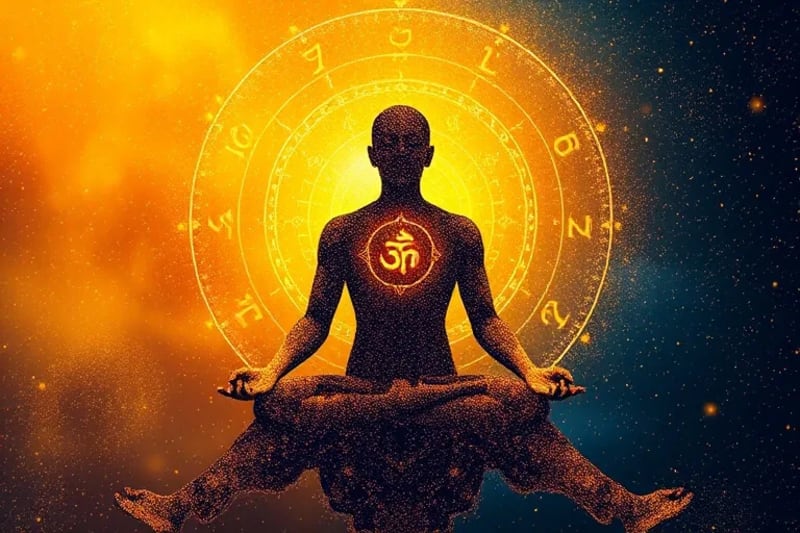
The meditative practice of chanting mantras generates powerful energetic fields.
Scientific research, though still in its early stages, has begun to explore the effects of mantra chanting. Studies have shown that repetitive vocalization can lead to brainwave entrainment, shifting brain activity from beta (alert, active) to alpha (relaxed, meditative) and even theta (deep relaxation, creativity) states. This neuroplastic effect can help reduce stress, improve concentration, and foster a sense of well-being. Mantras like "So Hum" (I am That) or the Gayatri Mantra are not just spiritual tools; they are sophisticated vibrational technologies for inner transformation.
Tones and Frequencies: The Blueprint of Reality
Beyond mantras, specific tones and frequencies are believed to hold immense power. The concept of the Solfeggio frequencies is a prime example. These are a series of six (or more) electromagnetic tones believed to have been used in ancient Gregorian chants and sacred music. Each frequency is associated with specific healing and transformative properties, such as releasing guilt (396 Hz), facilitating change (417 Hz), fostering love (528 Hz), and repairing DNA (528 Hz is also known as the "Miracle Tone").
Another fascinating area is the study of binaural beats. These are auditory illusions perceived when two different pure-tone sine waves, with frequencies differing by a small amount, are presented to a listener dichotically (one tone to each ear). The brain perceives a third tone, the binaural beat, which can influence brainwave states. For instance, a binaural beat in the theta range (4-8 Hz) can induce deep relaxation or meditative states, while one in the gamma range (30-100 Hz) might enhance cognitive function.
The visual manifestation of sound through cymatics provides compelling evidence of sound's formative power. When sound vibrations are applied to a medium like sand, water, or powder on a vibrating plate (a Chladni plate), intricate geometric patterns emerge. These patterns change with different frequencies, demonstrating how sound can literally sculpt matter. This phenomenon hints at the ancient concept of the "harmony of the spheres," where celestial bodies were thought to emit musical tones that influenced the cosmic order, suggesting that reality itself is a symphony of vibrations.

Visualizing sound's formative power through cymatics and resonant objects.
Archetypal Sound Codes: Unlocking Deeper Meanings
Beyond specific mantras and frequencies, vibrational linguistics delves into the concept of archetypal sound codes. These are primordial sounds or vibrational patterns that resonate with universal human experiences and the collective unconscious, as described by Carl Jung. They are not tied to any specific language but are understood at a deeper, intuitive level, often evoking powerful emotional or spiritual responses.
Archetypal sound codes can be found in the sounds of nature – the roar of the ocean, the whisper of the wind, the chirping of birds – which carry inherent meanings and evoke universal feelings of peace, power, or mystery. They are also embedded in ancient languages, where certain phonemes or combinations of sounds are believed to carry intrinsic energetic qualities. For example, the "ah" sound is often associated with the heart and openness, while "om" resonates with universal consciousness.
These codes act as a language of the soul, bypassing the rational mind to communicate directly with our deeper being. They can unlock latent memories, activate dormant potentials, or facilitate profound insights. Understanding and consciously engaging with these archetypal sounds can help individuals connect with universal wisdom, access their inner guidance, and align with their true purpose. It's a recognition that sound is not just about what is heard, but what is felt and understood at a primal level.
| Concept | Description | Impact |
|---|---|---|
| Resonance | The phenomenon where one vibrating object causes another to vibrate sympathetically. | Allows external sounds to influence internal body frequencies and energy. |
| Mantras | Sacred words or phrases repeated to induce specific states of consciousness. | Promotes focus, reduces stress, facilitates spiritual connection, brainwave entrainment. |
| Solfeggio Frequencies | Specific tones believed to have healing and transformative properties (e.g., 528 Hz for DNA repair). | Supports physical healing, emotional release, spiritual awakening. |
| Cymatics | The study of visible sound and vibration, showing how sound creates geometric patterns in matter. | Demonstrates sound's formative power on physical reality. |
| Archetypal Sound Codes | Primordial sounds or vibrational patterns resonating with universal experiences and the collective unconscious. | Connects individuals to universal wisdom, inner guidance, and deeper self. |
Practical Applications of Vibrational Linguistics
The understanding of vibrational linguistics is not merely theoretical; it has profound practical applications that can enhance daily life and foster holistic well-being. Integrating these principles can lead to significant improvements in mental, emotional, and spiritual health.
- Meditation and Spiritual Growth: Chanting mantras, listening to sacred music, or engaging with specific frequencies can deepen meditative states, facilitate spiritual insights, and promote a sense of inner peace. Practices like sound baths, where participants are immersed in the sounds of gongs, singing bowls, and other instruments, are increasingly popular for stress reduction and spiritual awakening.
- Healing and Well-being: Sound therapy, including vocal toning, tuning fork therapy, and bio-acoustic practices, uses specific frequencies to address physical ailments, emotional blockages, and energetic imbalances. The principle is that introducing harmonious frequencies can help the body return to its natural state of balance and health.
- Manifestation and Intention Setting: By consciously using words, affirmations, and even specific tones, individuals can align their vibrational frequency with their desires. The spoken word, imbued with intention and emotion, is considered a powerful tool for manifesting reality, as it sends out a clear vibrational signal to the universe.
- Personal Transformation: Engaging with vibrational linguistics can lead to a deeper understanding of self and one's place in the cosmos. It encourages mindful communication, both internally and externally, and fosters an awareness of the energetic impact of one's words and thoughts. This can lead to profound shifts in perspective and behavior.
Integrating Vibrational Linguistics into Modern Life
Incorporating the principles of vibrational linguistics doesn't require a complete overhaul of one's lifestyle. Even small, conscious changes can yield significant benefits. The key is to cultivate an awareness of sound and its impact.
Start by practicing mindful listening. Pay attention to the sounds around you – both pleasant and jarring – and notice how they affect your mood and energy. Seek out music that resonates positively with you, and consider exploring genres known for their healing frequencies, such as classical Indian ragas or ambient soundscapes. Engaging in simple vocal practices, like humming, toning, or even just consciously speaking positive affirmations, can begin to shift your internal vibrations. Many find that even a few minutes of chanting "Om" daily can bring a sense of calm and centeredness.
Consider creating sacred sound environments in your home or workspace. This could involve using singing bowls, chimes, or playing specific frequency music to clear stagnant energy and promote a harmonious atmosphere. Furthermore, be mindful of the words you use, both to yourself and others. Understanding that words carry vibrational energy can empower you to choose language that is uplifting, constructive, and aligned with your highest intentions. For those interested in deeper exploration, resources on Karmic Nodes Fixed Stars Rectifying Past Life Wounds, Chrono-Astrology Ancestral Echoes Navigating Personal Time Cycles, and sound healing are widely available.
Vibrational linguistics offers a powerful paradigm shift, inviting us to perceive sound not as a mere auditory phenomenon but as a dynamic, creative force. By consciously engaging with mantras, tones, and archetypal sound codes, we can unlock profound healing, foster spiritual growth, and actively participate in shaping our reality. It is a journey into the ancient wisdom that recognizes the universe as a grand symphony, and ourselves as integral, harmonizing instruments within it.
Fuente: Contenido híbrido asistido por IAs y supervisión editorial humana.


Comments
Post a Comment