
Sacred Activism: Eco-Spirituality, Planetary Healing, Well-being
In an era marked by pressing environmental challenges and a growing spiritual awakening, a powerful movement is emerging: Sacred Activism. This transformative approach transcends conventional environmentalism by integrating profound spiritual wisdom with dedicated action, aiming not just for ecological preservation but for holistic planetary healing and collective well-being. It is a call to recognize the inherent sacredness of Earth and all its inhabitants, fostering a deeper connection that inspires compassionate and effective change.
Sacred Activism invites individuals to view their environmental efforts as a spiritual practice, where inner transformation and outer action become inseparable. This paradigm shift acknowledges that the ecological crisis is not merely a physical problem but a symptom of a deeper spiritual disconnect from nature. By merging eco-spirituality with tangible efforts, sacred activists seek to restore balance, harmony, and reverence for life itself, paving the way for a more sustainable and thriving future for all.

A dawn landscape radiating vital energy, symbolizing the profound connection between eco-spirituality and planetary healing.
Table of Contents
- Understanding Sacred Activism: A Holistic Approach
- The Core Principles of Eco-Spirituality
- Planetary Healing: Beyond Environmentalism
- Practical Pathways for Sacred Activists
- Fostering Collective Well-being: A Synergistic Vision
Understanding Sacred Activism: A Holistic Approach
Sacred Activism is more than just protesting or advocating for policy changes; it is a way of life that recognizes the deep spiritual roots of our global crises. It posits that true and lasting change must begin within, through a profound shift in consciousness and a reconnection to the sacredness of existence. This approach views all actions, from personal choices to large-scale movements, as opportunities for spiritual growth and service to the Earth.
Unlike secular activism, which often focuses solely on external outcomes, sacred activism emphasizes the importance of inner transformation. It encourages individuals to cultivate qualities such as compassion, reverence, mindfulness, and interconnectedness. These inner states then inform and empower their external actions, making them more authentic, resilient, and impactful. The goal is to act from a place of love and wisdom, rather than fear or anger.
Key aspects of this holistic approach include:
- Inner Work as Foundation: Meditation, contemplation, and self-reflection are seen as essential tools for developing clarity, resilience, and a deeper connection to purpose.
- Interconnectedness: Recognizing that all life is interwoven and that harm to one part of the system affects the whole. This fosters empathy for all beings and ecosystems.
- Reverence for Life: Cultivating a deep respect and awe for the natural world, viewing it as a living, sacred entity rather than a resource to be exploited.
- Intentional Action: Engaging in activism with clear intentions, guided by spiritual principles, ensuring that actions are aligned with the highest good for all.
The Core Principles of Eco-Spirituality
Eco-spirituality forms the philosophical bedrock of sacred activism. It is a worldview that acknowledges the spiritual dimension of nature and the natural dimension of the spirit. It challenges anthropocentric views that place humanity above nature, instead advocating for a biocentric or ecocentric perspective where humans are an integral part of the larger web of life. This perspective draws from indigenous wisdom traditions, ancient philosophies, and contemporary spiritual movements.
At its heart, eco-spirituality asserts that the Earth is not merely a collection of resources but a living, breathing, sacred being. This belief inspires a profound sense of responsibility and care. It encourages individuals to seek spiritual experiences in nature, finding solace, wisdom, and connection in forests, oceans, mountains, and even urban green spaces. This direct experience of nature's divinity fuels the passion for its protection.
Core principles of eco-spirituality include:
- The Earth as Sacred: Recognizing the intrinsic value and spiritual essence of all natural elements, from rocks and rivers to plants and animals.
- Interdependence: Understanding that all life forms are interconnected and mutually reliant. This extends to the cosmos, recognizing how planetary deities and archetypes can influence earthly cycles and human consciousness.
- Immanence of the Divine: Believing that the divine is present within creation itself, not separate from it. Nature becomes a direct pathway to spiritual understanding.
- Ecological Justice: Advocating for fairness in the distribution of environmental benefits and burdens, recognizing that marginalized communities often bear the brunt of ecological destruction.
- Biomimicry: Learning from natural systems and processes to create sustainable human designs and solutions.
Planetary Healing: Beyond Environmentalism
While environmentalism typically focuses on conservation, pollution reduction, and policy, planetary healing delves deeper, addressing the energetic, emotional, and spiritual wounds inflicted upon the Earth. It acknowledges that centuries of exploitation, neglect, and disharmony have created deep scars that require more than just physical restoration. This holistic approach seeks to mend the energetic fabric of the planet, fostering a return to balance and vitality.

A symbolic representation of humanity's role in nurturing and healing the Earth through conscious action.
Planetary healing involves both individual and collective practices. On an individual level, it can mean healing one's own relationship with nature, releasing personal trauma that mirrors ecological wounds, and engaging in practices that send healing energy to the Earth. On a collective level, it involves large-scale restoration projects, conscious community building, and shifting societal paradigms towards regenerative practices. It also acknowledges the profound impact of human consciousness on the planet's well-being, suggesting that collective intention can influence global healing.
The concept of planetary healing often intersects with astrological understanding, where the cycles and transits of outer planets are seen as opportunities for deep integration and shadow work, not just for individuals but for the collective consciousness and the Earth itself. This perspective views planetary events as catalysts for necessary shifts and healing processes.
Key aspects of planetary healing include:
- Energetic Restoration: Using intention, meditation, and ritual to send healing energy to damaged ecosystems or areas of conflict.
- Trauma Release: Recognizing that the Earth holds the energetic imprint of human suffering and working to release these collective traumas.
- Regenerative Practices: Moving beyond sustainability to actively restore and enhance ecological systems, such as permaculture and biodynamic farming.
- Sacred Land Practices: Reconnecting with the spiritual significance of specific landforms and engaging in ceremonies to honor and heal these places.
Practical Pathways for Sacred Activists
Engaging in sacred activism doesn't require grand gestures; it begins with conscious choices and a shift in perspective. There are numerous ways individuals can integrate these principles into their daily lives and contribute to planetary healing. The key is to act from a place of intention, love, and connection.
Practical pathways for sacred activists include:
- Mindful Consumption: Making conscious choices about what we buy, eat, and use, supporting ethical and sustainable businesses, and reducing waste.
- Nature Connection Practices: Spending time in nature, practicing forest bathing, meditation outdoors, or simply observing the natural world with reverence.
- Community Building: Connecting with like-minded individuals and groups to share knowledge, support each other, and collaborate on local initiatives. This could involve creating community gardens or organizing local clean-up efforts.
- Advocacy Rooted in Compassion: Speaking up for environmental justice and protection, but doing so from a place of empathy and understanding, seeking common ground rather than confrontation.
- Earth Healing Rituals: Participating in or creating personal rituals to honor the Earth, offer gratitude, and send healing intentions. This can be as simple as lighting a candle for the planet or performing a small ceremony in nature.
- Creative Expression: Using art, music, writing, and storytelling to raise awareness, inspire action, and express the beauty and sacredness of the natural world.
- Supporting Regenerative Projects: Investing time, energy, or resources into projects that actively restore ecosystems, promote biodiversity, and foster sustainable living.
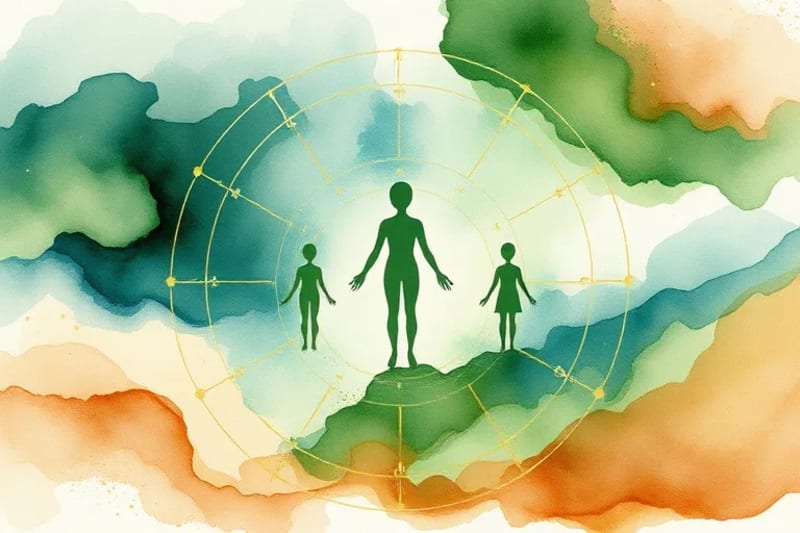
An artistic representation of collective well-being, where human figures are harmoniously integrated with natural elements.
Even seemingly small actions, when performed with conscious intention and a connection to the sacred, can have a profound ripple effect. For instance, understanding the principles of sacred architecture and planetary alignments can inspire us to create spaces that resonate with cosmic harmony, extending this balance into our immediate environment.
Fostering Collective Well-being: A Synergistic Vision
The ultimate aim of sacred activism is not just a healthy planet, but a thriving humanity living in harmony with all life. This vision of collective well-being recognizes that human health, happiness, and spiritual fulfillment are inextricably linked to the health of the Earth. When the planet suffers, so do its inhabitants. Conversely, when we heal the Earth, we heal ourselves.
This synergistic vision emphasizes that individual spiritual growth and personal well-being contribute directly to the collective good. As individuals become more mindful, compassionate, and connected to the sacred, they naturally act in ways that benefit the wider community and the planet. This creates a positive feedback loop where personal transformation fuels collective healing, and a healthier planet supports individual flourishing.
Fostering collective well-being involves:
- Holistic Health: Recognizing that physical, mental, emotional, and spiritual health are interconnected and influenced by our environment.
- Social Justice: Creating equitable societies where everyone has access to clean air, water, food, and opportunities for growth, understanding that different life areas and astrological houses reflect our collective responsibilities and potential for impact.
- Regenerative Cultures: Developing societies that are designed to regenerate natural systems and foster human potential, rather than deplete resources.
- Intergenerational Equity: Ensuring that future generations inherit a healthy planet and a just society, considering the long-term impacts of current actions.
- Global Consciousness: Cultivating a sense of global citizenship and shared responsibility for the well-being of all beings and the planet as a whole.
Sacred activism offers a hopeful and empowering path forward. By weaving together the threads of spirituality, environmental action, and a deep reverence for life, it provides a framework for creating a world where both humanity and nature can thrive. It is a powerful reminder that our actions, big or small, are part of a larger sacred dance towards healing and collective well-being.
Source: Hybrid content assisted by AI and human editorial supervision.


Comments
Post a Comment