
Sacred Architecture Planetary Alignments Cosmic Harmony
Sacred architecture transcends mere construction; it is an ancient art form deeply intertwined with spiritual beliefs, cosmological understanding, and the pursuit of harmony. For millennia, civilizations across the globe have designed structures not only for shelter or worship but as conduits for cosmic energy and reflections of the celestial order. This intricate relationship between the built environment and planetary alignments forms the bedrock of what we now understand as sacred architecture.
The concept posits that by aligning buildings with specific celestial events or astronomical patterns, humanity can tap into universal energies, fostering spiritual growth, healing, and a deeper connection to the cosmos. This introductory exploration delves into the historical foundations, key principles, and enduring legacy of designing spaces for cosmic harmony.

Ancient temples were often meticulously aligned with celestial phenomena, reflecting a profound understanding of cosmic order.
From the megalithic structures of Stonehenge to the majestic pyramids of Egypt and the intricate cathedrals of medieval Europe, architects and builders have consistently sought to embed cosmic principles into their designs. These structures were not accidental marvels but carefully planned expressions of a worldview that saw the heavens as a divine blueprint for earthly existence. Understanding this connection offers profound insights into the spiritual and scientific sophistication of past cultures.
Table of Contents
- Historical Roots of Cosmic Architecture
- Principles of Cosmic Harmony in Design
- Planetary Influences and Sacred Geometry
- Global Examples of Sacred Architecture
- Modern Applications and Resonances
- Benefits of Harmonized Spaces
Historical Roots of Cosmic Architecture
The practice of aligning structures with celestial bodies dates back to prehistoric times. Early humans observed the cycles of the sun, moon, and stars, recognizing their profound impact on agriculture, seasons, and daily life. This observational knowledge quickly evolved into a spiritual reverence, leading to the construction of sites that mirrored these cosmic rhythms.
Ancient civilizations, such as the Egyptians, Mayans, and Incas, developed sophisticated astronomical systems. Their priests and astronomers meticulously charted celestial movements, using this data to orient temples, pyramids, and cities. These alignments were not merely symbolic; they were believed to facilitate communication with the divine, enhance spiritual rituals, and imbue the structures with sacred energy.
For instance, many ancient temples in Egypt are oriented towards the rising sun on specific dates, like the solstices or equinoxes. This allowed sunlight to penetrate deep into inner sanctuaries, illuminating statues of deities and signifying a cosmic connection. Such precise alignments demonstrate an advanced understanding of both astronomy and engineering, driven by a deep spiritual conviction.
Principles of Cosmic Harmony in Design
The design of sacred architecture is guided by several core principles aimed at achieving cosmic harmony. These principles often involve a blend of mathematical precision, symbolic representation, and an intuitive understanding of energetic flow. They ensure that the structure functions as a microcosm of the universe.
One fundamental principle is sacred geometry, which utilizes universal patterns and ratios, such as the Golden Ratio (Phi) and fractal designs. These geometric forms are found throughout nature and the cosmos, believed to carry inherent energetic properties that promote balance and well-being. Incorporating them into architecture creates spaces that resonate with natural universal frequencies.
Another critical aspect is orientation and alignment. Buildings are often oriented to cardinal directions, solstices, equinoxes, or the rising/setting points of significant stars or planets. This careful positioning allows the structure to capture and channel specific celestial energies, influencing the atmosphere and purpose of the space. It connects the earthly realm directly to the celestial.
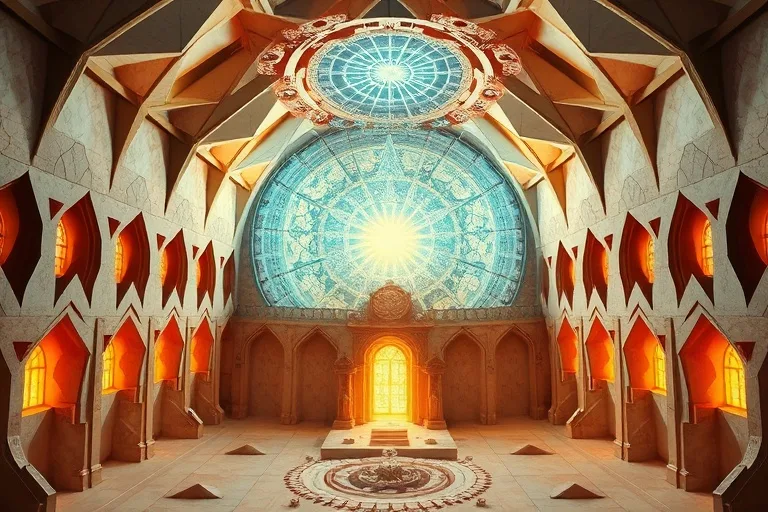
Intricate designs often incorporate astrological symbols and planetary alignments to enhance energetic flow.
The choice of materials and proportions also plays a significant role. Natural materials like stone, wood, and metal are often selected for their energetic properties and connection to the earth. Proportions are carefully calculated to reflect cosmic ratios, creating a sense of balance and aesthetic perfection that resonates with the human psyche and the wider cosmos.
Planetary Influences and Sacred Geometry
Beyond simple alignment, many sacred structures were designed to embody the specific influences of planets or constellations. Each planet, in astrological and esoteric traditions, is associated with certain qualities, elements, and archetypes. Architects would sometimes integrate these associations into the building's form, function, or decorative elements.
For example, structures dedicated to deities associated with the Sun might feature prominent circular motifs, golden hues, and open spaces to maximize light. Buildings linked to Venus might emphasize flowing lines, intricate carvings, and materials associated with beauty and harmony. This deep symbolic language transformed buildings into living astrological charts.
Sacred geometry, as discussed, is the visual language through which these cosmic principles are expressed. Patterns like the Flower of Life, the Vesica Piscis, and the Platonic Solids are not just decorative; they are believed to be fundamental building blocks of the universe. When these forms are incorporated into architecture, they are thought to create resonant fields that can positively impact occupants.
The integration of these principles can be seen in various forms, from the overall layout of a temple complex to the smallest decorative detail. This meticulous attention to cosmic symbolism ensures that the building is not just a physical space but a spiritual tool, designed to elevate consciousness and connect with higher realms. For more on how celestial mechanics influence spiritual perspectives, consider exploring resources on celestial mechanics and cosmic order.
Global Examples of Sacred Architecture
The phenomenon of sacred architecture aligned with planetary movements is a global one, spanning diverse cultures and epochs. Each civilization brought its unique cosmological understanding to its monumental constructions.
| Structure/Culture | Cosmic Alignment/Principle | Significance |
|---|---|---|
| Great Pyramid of Giza, Egypt | Aligned with cardinal points, Orion's Belt, and the North Star (Thuban). | Funerary and spiritual purpose, believed to facilitate the pharaoh's journey to the afterlife in alignment with celestial deities. |
| Stonehenge, England | Aligned with the sunrise of the summer solstice and sunset of the winter solstice. | Astronomical observatory, ritual site, and calendar, marking crucial agricultural and ceremonial dates. |
| Chichen Itza (El Castillo), Maya | During equinoxes, the sun creates a shadow illusion of a serpent descending the pyramid's steps. | Dedicated to Kukulkan (feathered serpent deity), symbolizing the descent of the god and marking agricultural cycles. |
| Gothic Cathedrals, Europe | Often oriented East (towards Jerusalem and the rising sun), incorporating sacred geometry (e.g., rose windows, cruciform plans). | Symbolized the divine order, heaven on earth, and used light as a metaphor for God's presence. |
| Hindu Temples, India | Designed using Vastu Shastra, aligned with cardinal directions and planetary energies, often reflecting a mandala. | A cosmic diagram (mandala) intended to harmonize human dwelling with the universe, attracting positive energy. |
These examples highlight a universal human impulse to connect the earthly and the celestial through architecture. The precision and scale of these projects underscore the profound importance placed on cosmic harmony in ancient societies. They were not just buildings, but sacred instruments for spiritual alignment.
Modern Applications and Resonances
While the overt construction of astronomically aligned temples might seem like a practice of the past, the principles of sacred architecture continue to resonate in contemporary design. Modern architects and designers are increasingly exploring ways to integrate natural light, harmonious proportions, and energetic considerations into their projects. This often manifests in more subtle ways than ancient alignments.

Contemporary designs explore integrating cosmic energy flows and advanced materials for enhanced well-being.
Biophilic design, for instance, seeks to connect building occupants more closely to nature through natural light, ventilation, and views. While not directly aligning with planets, it aims to create environments that foster well-being by mimicking natural systems, which inherently align with cosmic principles. The growing interest in sacred geometry and esoteric symbols also finds its way into contemporary art and architectural installations, reminding us of these timeless patterns.
Furthermore, urban planning sometimes incorporates principles of energetic flow and harmonious layout, albeit often without explicit reference to planetary alignments. The desire to create balanced, aesthetically pleasing, and functional spaces remains a constant. The subconscious impact of well-designed, harmonically resonant spaces on human psychology and spiritual state is undeniable, regardless of the explicit intentions of the designer.
Benefits of Harmonized Spaces
The creation of spaces designed with cosmic harmony in mind offers a multitude of benefits, extending beyond mere aesthetics. These advantages touch upon our physical, mental, and spiritual well-being, fostering environments that support human flourishing.
- Enhanced Well-being: Spaces aligned with natural and cosmic rhythms can reduce stress, improve mood, and promote a sense of peace and tranquility. The harmonious flow of energy contributes to overall vitality.
- Spiritual Connection: Such environments often facilitate deeper meditation, prayer, and introspection, strengthening an individual's connection to their spiritual self and the divine. They act as anchors for spiritual practice.
- Improved Focus and Creativity: Harmonious proportions and natural light can create conditions conducive to concentration, learning, and creative expression. The absence of energetic discord allows the mind to flourish.
- Energetic Balance: By incorporating sacred geometry and planetary alignments, these spaces are believed to balance subtle energies, neutralizing negative influences and amplifying positive vibrations. This creates a supportive energetic field.
- Sense of Belonging: Living or working in a space that feels cosmically connected can instill a profound sense of belonging and purpose, reminding us of our place within the larger universal order.
In conclusion, sacred architecture, through its integration of planetary alignments and cosmic principles, offers a timeless blueprint for creating spaces that nurture the human spirit. Whether in ancient temples or modern designs, the pursuit of cosmic harmony in our built environments remains a powerful testament to humanity's enduring quest for meaning and connection with the universe.
Fuente: Contenido híbrido asistido por IAs y supervisión editorial humana.


Comments
Post a Comment