
Sacred Geometry: Unlocking Universal Truths, Esoteric Symbols | StarPluto
Sacred geometry and esoteric symbolism represent ancient pathways to understanding the fundamental nature of existence. Far from being mere decorative patterns or obscure beliefs, these disciplines offer profound insights into the blueprint of creation, the interconnectedness of all things, and the very fabric of consciousness. From the intricate spirals of a seashell to the vast expanse of galaxies, certain geometric forms and symbols recur throughout nature, art, and spiritual traditions, suggesting a universal language that transcends cultural and temporal boundaries. This exploration delves into how these timeless concepts unlock deeper truths about ourselves and the cosmos.
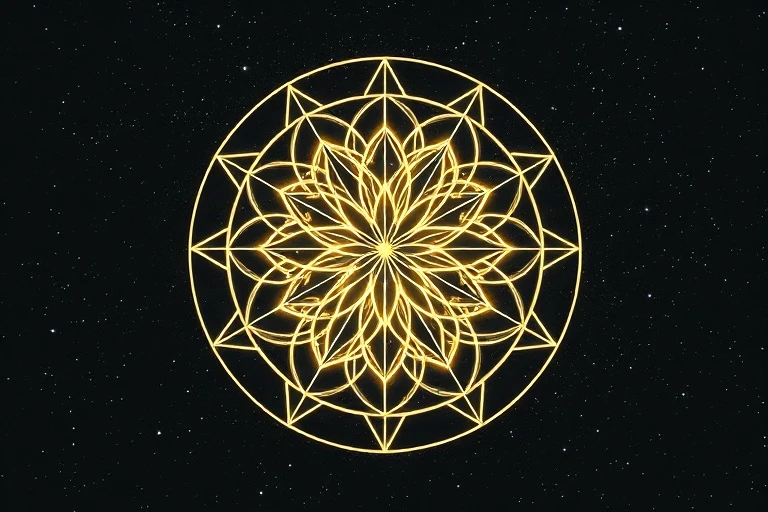
A luminous Mesoamerican Astrology AI Oracles Bridging Ancient Modern pattern, glowing against a cosmic backdrop, represents the fundamental blueprint of existence and universal harmony.
The quest to decipher these hidden meanings has captivated philosophers, mystics, artists, and scientists for millennia. Sacred geometry, often described as the architecture of the universe, reveals the mathematical and geometric principles that underpin all forms in creation. Esoteric symbolism, on the other hand, provides a rich tapestry of archetypal images and metaphors that communicate complex spiritual and psychological concepts, often bypassing the limitations of linear language. Together, they form a powerful framework for perceiving the underlying order and beauty of the world.
This article will guide you through the core principles of sacred geometry, explore the significance of key esoteric symbols, and illuminate how their combined study can lead to a deeper understanding of universal truths. We will examine their historical roots, their presence in various cultures, and their relevance to contemporary spiritual and scientific thought. By engaging with these ancient wisdom traditions, we can begin to unlock new perspectives on our place within the grand cosmic design.
Table of Contents
- What is Sacred Geometry?
- Fundamental Geometric Forms and Their Meanings
- Esoteric Symbolism: A Language of the Soul
- Key Esoteric Symbols and Their Interpretations
- The Connection: How Geometry and Symbolism Reveal Universal Truths
- Applications in Ancient Civilizations and Modern Practice
- Scientific Perspectives and Philosophical Implications
What is Sacred Geometry?
Sacred geometry is the belief that certain geometric shapes and proportions have a sacred meaning and are fundamental to the creation and structure of the universe. It is often considered the visual language of the cosmos, revealing the underlying mathematical order present in everything from atomic structures to celestial bodies. This ancient concept posits that these geometric patterns are not arbitrary but are intrinsic to the very fabric of reality, reflecting divine order and harmony.
Historically, sacred geometry has been studied and applied across numerous cultures and civilizations. Ancient Egyptians used its principles in the construction of their pyramids and temples, believing these structures would resonate with cosmic energies. The Greeks, particularly Pythagoras and Plato, delved deeply into the philosophical implications of geometry, associating specific shapes with the elements and the cosmos. Renaissance artists and architects, such as Leonardo da Vinci, also incorporated sacred geometric principles into their works, seeing them as expressions of divine beauty and proportion.
At its core, sacred geometry teaches that all life forms and natural phenomena emerge from a common geometric template. This perspective allows us to see the unity in diversity, recognizing the same fundamental patterns repeating at different scales. It's a way of perceiving the invisible structure that gives rise to the visible world, offering a profound sense of interconnectedness and purpose.
The study of sacred geometry often involves contemplation of these forms, which can lead to meditative states and a deeper understanding of universal laws. It's not just an intellectual pursuit but a spiritual practice, aiming to align the individual with the harmonious rhythms of the universe. By recognizing these patterns, one can gain insight into the creative process itself, both within the cosmos and within oneself.
Fundamental Geometric Forms and Their Meanings
Several key geometric forms are central to sacred geometry, each carrying unique symbolic and energetic properties. Understanding these forms is crucial to grasping the universal truths they represent.
- The Circle: Represents unity, wholeness, eternity, and the divine. It has no beginning or end, symbolizing infinite potential and the cycle of life.
- The Point: The origin, the center, the primal beginning from which all creation emanates. It signifies singularity and the source of all existence.
- The Vesica Piscis: Formed by the intersection of two circles, it symbolizes the union of opposites, creation, the womb, and the gateway between worlds. It is foundational to many other sacred geometric patterns.
- The Seed of Life: Composed of seven overlapping circles, it represents the seven days of creation, the basic building blocks of the universe, and the potential for all life.
- The Flower of Life: An intricate pattern of overlapping circles forming a flower-like motif, it is considered the blueprint of the universe, containing all the patterns of creation, including the Platonic Solids.
- The Tree of Life (Kabbalah): While also an esoteric symbol, its geometric representation in Kabbalah links it to the structure of the cosmos and the path to spiritual enlightenment.
- Platonic Solids: These are five unique regular polyhedra (tetrahedron, cube, octahedron, dodecahedron, icosahedron), each associated with a classical element (fire, earth, air, ether/universe, water, respectively) and representing the fundamental building blocks of matter.
- Metatron's Cube: Derived from the Flower of Life, this complex figure contains all the Platonic Solids within its structure. It is believed to represent the complete energetic grid of the universe and is used for protection and spiritual cleansing.
- The Golden Ratio (Phi, Φ): Approximately 1.618, this irrational number appears throughout nature, art, and architecture. It represents perfect balance, harmony, and aesthetic beauty, often found in spirals, human proportions, and natural growth patterns.
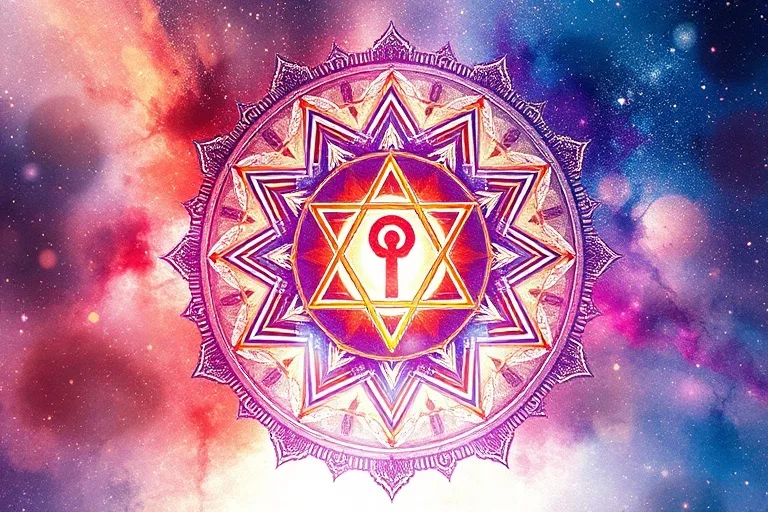
A watercolor depiction of various esoteric symbols subtly intertwined with geometric patterns, evoking mystical connections.
These forms are not merely abstract concepts; they are living patterns that resonate with specific energies and meanings. Contemplating them can activate dormant parts of the mind and facilitate a deeper connection to the universal consciousness. Their recurrence across diverse cultures underscores their universal significance as archetypal expressions of reality.
Esoteric Symbolism: A Language of the Soul
Esoteric symbolism refers to the use of symbols to convey hidden or deeper meanings, often relating to spiritual, mystical, or philosophical concepts that are not immediately obvious to the uninitiated. Unlike exoteric symbols, which are openly understood, esoteric symbols require study, intuition, and often a spiritual journey to fully comprehend. They act as keys to unlock layers of understanding, bridging the conscious and unconscious mind.
This symbolic language is prevalent in ancient mystery schools, alchemical texts, Gnostic traditions, and various spiritual paths. Carl Jung's work on archetypes and the collective unconscious sheds light on why certain symbols resonate universally. He proposed that humanity shares a common reservoir of images and patterns that emerge in myths, dreams, and religious experiences, and these are often expressed through esoteric symbols.
The power of esoteric symbols lies in their ability to communicate complex ideas concisely and profoundly. They can encapsulate entire philosophies, spiritual journeys, or universal laws within a single image. Engaging with these symbols is not just about intellectual interpretation; it's about experiencing their energetic resonance and allowing them to evoke inner wisdom and insight.
For example, the Ouroboros, a serpent eating its own tail, symbolizes cyclicality, self-sufficiency, and eternal return. The Ankh, an ancient Egyptian symbol, represents life, immortality, and the union of male and female principles. These symbols transcend literal interpretation, inviting a deeper, intuitive understanding that can transform one's perspective on life and death, creation and destruction.
Key Esoteric Symbols and Their Interpretations
A vast array of symbols populate the esoteric landscape, each with layers of meaning. Here are some of the most prominent ones:
- The Ankh: An ancient Egyptian hieroglyphic symbol representing life, eternal life, and the key to the afterlife. It combines the masculine (vertical line) and feminine (oval) principles.
- The Eye of Horus (or Eye of Ra): An Egyptian symbol of protection, royal power, and good health. It also represents the six senses or components of existence: touch, taste, hearing, sight, smell, and thought.
- The Ouroboros: An ancient symbol depicting a serpent or dragon eating its own tail. It symbolizes cyclicality, self-reflection, eternal return, infinity, and the unity of all things.
- Yin and Yang: A Chinese philosophical concept describing how seemingly opposite or contrary forces may actually be complementary, interconnected, and interdependent in the natural world, and how they may give rise to each other as they interrelate to one another.
- The Tree of Life: A fundamental archetype in many mythologies, religions, and philosophical traditions. It symbolizes the connection between heaven and earth, the cycles of life, death, and rebirth, and the interconnectedness of all creation.
- The Pentagram: A five-pointed star. In various esoteric traditions, it represents the five elements (spirit, air, fire, water, earth), the human microcosm, and protection. Its orientation (point up or down) can alter its meaning.
- The Caduceus: Often confused with the Rod of Asclepius, the Caduceus features two serpents entwined around a staff, sometimes with wings. It symbolizes commerce, negotiation, and sometimes healing, but its esoteric meaning often relates to the balance of opposing forces and spiritual awakening (kundalini).
- The Cross: Beyond its religious connotations, the cross in esoteric terms often represents the intersection of the divine and the earthly, the four cardinal directions, and the balance of forces.
- The Spiral: A universal symbol of growth, evolution, cosmic energy, and the journey of life. It appears in galaxies, hurricanes, and DNA, reflecting the dynamic nature of creation.
Each of these symbols is a portal to deeper understanding, inviting contemplation and personal interpretation. Their power lies in their ability to transcend cultural barriers and speak directly to the collective human experience, offering guidance and insight into the mysteries of existence.
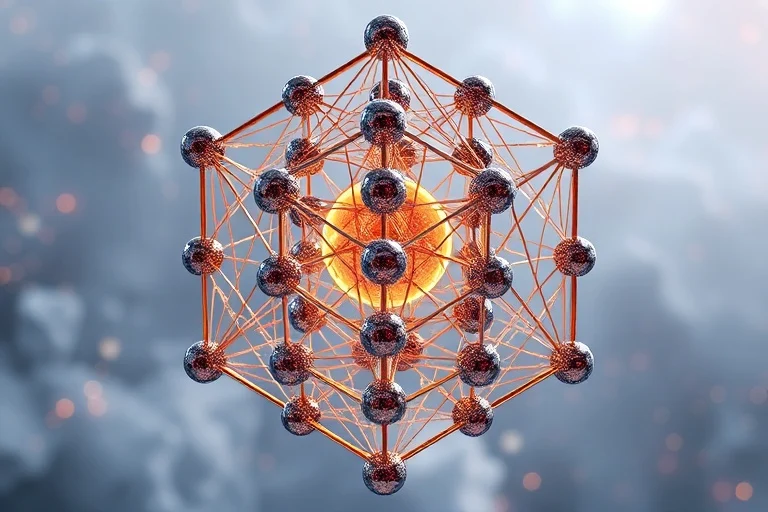
An intricate 3D render of Metatron's Cube, surrounded by glowing fractals, symbolizing the energetic grid and underlying order of the universe.
The Connection: How Geometry and Symbolism Reveal Universal Truths
The true power of sacred geometry and esoteric symbolism emerges when they are viewed not as separate entities but as two sides of the same cosmic coin. Sacred geometry provides the structural framework—the mathematical blueprint—while esoteric symbolism imbues these structures with meaning, purpose, and spiritual significance. Together, they offer a comprehensive language for understanding universal truths.
Consider the Flower of Life. Geometrically, it is a series of overlapping circles. Symbolically, it represents the interconnectedness of all life and the fundamental patterns of creation. The Vesica Piscis, a geometric form, becomes a symbol of divine union and the genesis of form. The Platonic Solids, precise geometric shapes, are assigned symbolic meanings related to the elements and the building blocks of reality.
This synergy allows for a multi-dimensional understanding of reality. Sacred geometry appeals to the logical, rational mind, demonstrating the inherent order and precision of the universe. Esoteric symbolism, conversely, speaks to the intuitive, emotional, and spiritual aspects of our being, connecting us to archetypal energies and deeper truths that cannot be fully expressed through logic alone.
By studying both, individuals can develop a more holistic perception of the world. They learn to see the patterns of creation not just as abstract concepts but as living expressions of divine intelligence. This integrated approach fosters a sense of awe and wonder, encouraging a deeper spiritual connection and a recognition of the sacred in the mundane. It helps to bridge the gap between science and spirituality, suggesting that the universe is both mathematically ordered and imbued with profound meaning.
Applications in Ancient Civilizations and Modern Practice
The application of sacred geometry and esoteric symbolism is not confined to ancient history; their principles continue to resonate and find utility in contemporary contexts. From the construction of ancient temples to modern spiritual practices, their influence is pervasive.
In ancient civilizations, these principles were integral to every aspect of life. Temples and sacred sites were often built according to specific geometric proportions to align with celestial bodies and cosmic energies, believed to enhance spiritual connection and facilitate healing. Art, music, and dance also incorporated these patterns, aiming to reflect universal harmony and evoke higher states of consciousness. For example, the design of mandalas in Eastern traditions utilizes sacred geometry to aid in meditation and spiritual transformation.
The study of sacred geometry and esoteric symbolism offers a profound lens through which to view the universe, revealing an intricate dance between form and meaning. It suggests that the cosmos is not a random collection of events but a meticulously designed masterpiece, imbued with intelligence and purpose.
This understanding has been a cornerstone of wisdom traditions for millennia, guiding humanity in its quest for truth and self-realization.
In modern times, the resurgence of interest in these subjects is evident in various fields:
- Architecture and Design: Contemporary architects and designers are increasingly incorporating sacred geometric principles to create spaces that feel harmonious, balanced, and conducive to well-being.
- Art and Digital Media: Artists use these patterns to create visually stunning and spiritually resonant works, often leveraging digital tools to explore complex fractal and geometric designs.
- Meditation and Spiritual Growth: Many individuals use sacred geometric images and symbols as focal points for meditation, believing they can help to align their energy fields, promote healing, and facilitate access to higher states of consciousness.
- Therapeutic Practices: Some alternative therapies utilize the energetic properties of these forms for healing, stress reduction, and personal transformation.
- Personal Development: Understanding the archetypal meanings of esoteric symbols can provide insights into personal psychology, dream interpretation, and the journey of individuation.
These applications highlight the enduring relevance of sacred geometry and esoteric symbolism as tools for both personal and collective evolution. They remind us that the universe is a living, intelligent system, and by understanding its language, we can better navigate our own journey within it.
Scientific Perspectives and Philosophical Implications
While often associated with spirituality and mysticism, the principles of sacred geometry and esoteric symbolism also find intriguing parallels in modern science and philosophy. The recurring patterns observed in sacred geometry, such as the Golden Ratio and fractal structures, are increasingly recognized in fields like physics, biology, and cosmology.
Fractals, for instance, are geometric shapes that exhibit self-similarity at different scales, meaning they look similar no matter how much you zoom in or out. These patterns are ubiquitous in nature, from coastlines and snowflakes to tree branches and circulatory systems. The concept of fractals strongly echoes the idea in sacred geometry that fundamental patterns repeat across all levels of existence, from the microcosm to the macrocosm. This convergence suggests a universal generative principle at play.
Quantum physics, with its exploration of the fundamental nature of reality, also offers intriguing philosophical implications that resonate with esoteric thought. Concepts like interconnectedness, the observer effect, and the idea that reality might be more fluid and less solid than it appears, align with ancient mystical views of a unified, energetic universe. While not directly proving sacred geometry, these scientific advancements open the door to a more nuanced understanding of reality that is less reductionist and more holistic.
Philosophically, the study of sacred geometry and esoteric symbolism encourages a holistic worldview, challenging materialistic paradigms. It prompts questions about the nature of consciousness, the origin of the universe, and the existence of an underlying intelligence. By exploring these ancient wisdom traditions, we are invited to consider that reality is not just a random collection of phenomena but a deeply meaningful and intelligently structured system.
This interdisciplinary approach enriches both scientific inquiry and spiritual understanding. It suggests that the quest for universal truths is a journey that can be undertaken through multiple avenues, whether through the rigorous methods of science or the intuitive insights of esoteric wisdom. Ultimately, both paths seem to point towards a universe of profound order, beauty, and interconnectedness.
In conclusion, sacred geometry and esoteric symbolism offer more than just historical curiosities; they provide a living language for understanding the universe. By engaging with these timeless principles, we can unlock a deeper appreciation for the harmony and intelligence that permeate all existence, fostering personal growth and a profound connection to the universal truths that bind us all.
Source: Hybrid content assisted by AIs and human editorial supervision.


Comments
Post a Comment