
Zi Wei Dou Shu Career Mapping: Unveiling Destiny Paths
Zi Wei Dou Shu, often translated as "Purple Star Astrology," stands as one of the most sophisticated and intricate forms of Chinese metaphysical analysis. Unlike the more generalized Chinese Zodiac, Zi Wei Dou Shu offers an exceptionally detailed and personalized blueprint of an individual's life, including profound insights into their career trajectory and vocational potential. This ancient system, rooted in Taoist cosmology and the I Ching, utilizes the positions of 108 stars and their interactions within 12 life palaces to construct a highly accurate predictive model.
Understanding one's Zi Wei Dou Shu chart can illuminate inherent talents, suitable professions, potential challenges, and periods of significant career advancement or change. For those seeking to align their professional life with their deepest purpose, this system provides a roadmap, guiding individuals toward fulfilling and prosperous vocational paths. This comprehensive guide will delve into the core principles of Zi Wei Dou Shu, focusing specifically on its application in predictive career mapping.
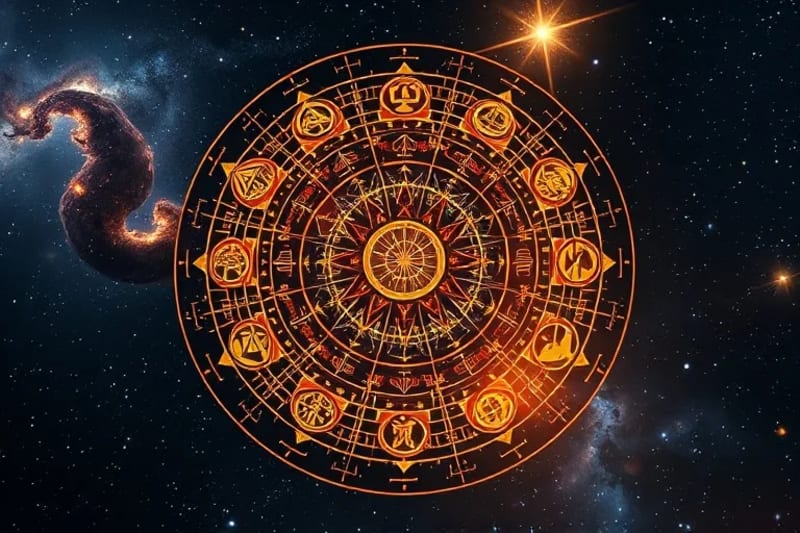
An intricate celestial map blending ancient Chinese astrological symbols with modern career path diagrams, illustrating the predictive power of Zi Wei Dou Shu.
Understanding Zi Wei Dou Shu
Zi Wei Dou Shu is a complex astrological system that originated in China during the Song Dynasty (960-1279 AD). It is often referred to as the "Emperor Star Astrology" due to the central role of the Zi Wei (Purple Star) in the chart. This system requires precise birth data—year, month, day, and hour—to construct a natal chart, which is then divided into 12 palaces, each representing a different aspect of life.
The core of Zi Wei Dou Shu lies in the intricate interplay of various stars, their brightness, and their positions within these palaces. Each star carries specific attributes, influencing personality, relationships, wealth, health, and, critically, career. The system's predictive power comes from analyzing these static natal positions alongside dynamic transiting stars and "Four Transformers" that shift annually, monthly, and even daily.
Historical Roots and Philosophical Basis
The origins of Zi Wei Dou Shu are often attributed to Chen Tuan, a Taoist sage of the Song Dynasty. Chen Tuan, renowned for his expertise in metaphysics and the I Ching, is believed to have systematized the complex calculations and interpretations that form the basis of this astrology. His work built upon centuries of astronomical observation and philosophical thought, integrating principles of Yin-Yang, the Five Elements (Wu Xing), and the cyclical nature of time.
Philosophically, Zi Wei Dou Shu operates on the premise that an individual's destiny is imprinted at the moment of birth, reflecting the cosmic energies present at that precise time. However, it is not a fatalistic system. While it outlines inherent potentials and challenges, it also emphasizes the role of free will and conscious action in navigating one's path. It provides a framework for understanding one's strengths and weaknesses, allowing for informed decisions to optimize outcomes, particularly in career development.
The Natal Chart: Palaces and Stars
A Zi Wei Dou Shu natal chart is composed of 12 palaces, arranged in a fixed order, each governing a specific life domain. These palaces are: Self (Life), Siblings, Spouse, Children, Wealth, Health, Travel, Friends (Associates), Career, Property, Happiness (Karma), and Parents. Each palace houses a unique combination of stars, which are categorized into major, minor, and auxiliary stars.
The 14 Major Stars are the most influential, acting as primary indicators of personality and destiny. These include Zi Wei (Emperor Star), Tian Fu (Regent Star), Tian Ji (Advisor Star), Tai Yang (Sun Star), Wu Qu (Warrior Star), Tian Tong (Pleasure Star), Lian Zhen (Integrity Star), Tian Xiang (Prime Minister Star), Ju Men (Dark Gate Star), Tian Liang (Benevolence Star), Qi Sha (Seven Killings Star), Po Jun (Army Breaker Star), Tan Lang (Greed Wolf Star), and Tai Yin (Moon Star). Their positions and interactions within the palaces define the individual's inherent characteristics and life themes.
| Component | Description | Role in Career Mapping |
|---|---|---|
| 12 Palaces | Represent different life aspects (Self, Wealth, Career, etc.). | Indicate the arena where career energies manifest. |
| 14 Major Stars | Primary indicators of personality, talents, and destiny. | Define core vocational traits, suitable industries, and leadership potential. |
| Minor & Auxiliary Stars | Provide additional detail, support, or challenges to major stars. | Refine career interpretations, indicating specific skills, helpers, or obstacles. |
| Four Transformers | Dynamic energies (祿 Lu, 權 Quan, 科 Ke, 忌 Ji) that modify star influences. | Highlight periods of opportunity, power, recognition, or challenges in career. |
Key Palaces for Career Analysis
While all 12 palaces offer some insight into an individual's life, several are particularly crucial for predictive career mapping. The primary palaces for vocational analysis are the Career Palace, the Wealth Palace, and the Self Palace, along with their respective "opposite" and "trine" palaces.
- Career Palace (Guan Lu Gong 官祿宮): This is the most direct indicator of one's professional life. It reveals the type of career suitable for the individual, their work ethic, ambition, leadership qualities, and potential for success. The stars residing in this palace, along with any Four Transformers, provide specific details about the nature of their work and their professional environment.
- Wealth Palace (Cai Bo Gong 財帛宮): Closely linked to career, the Wealth Palace describes how an individual earns and manages money. It indicates potential for financial gain through work, investment acumen, and overall financial stability. A strong Wealth Palace often correlates with a prosperous career path.
- Self Palace (Ming Gong 命宮): This palace represents the individual's core personality, character, inherent talents, and life purpose. Understanding the Self Palace is vital because a fulfilling career should ideally align with one's fundamental nature and strengths. Discrepancies between the Self and Career Palaces can indicate vocational dissatisfaction.
- Friends/Associates Palace (Nu Pu Gong 奴僕宮): This palace offers insights into relationships with colleagues, subordinates, and business partners. It can indicate whether one works best independently, in a team, or in a leadership role managing others.
- Property Palace (Tian Zhai Gong 田宅宮): While seemingly unrelated, this palace can indicate stability and long-term assets, which often stem from successful career endeavors. It can also reflect the environment in which one works or conducts business.

An abstract digital painting symbolizing the winding path of professional growth, with gears and stars representing the intricate mechanics of career development.
Major Stars and Their Vocational Influence
Each of the 14 Major Stars carries distinct characteristics that heavily influence career choices and outcomes when found in the Career or Wealth Palaces, or even the Self Palace. Their interactions with other stars and palaces provide a nuanced understanding of an individual's professional destiny.
- Zi Wei (Emperor Star): Indicates leadership, authority, high-level management, government roles, or positions requiring strategic vision. Individuals with Zi Wei in their Career Palace often rise to prominence.
- Tian Fu (Regent Star): Suggests financial management, administration, real estate, or roles that involve managing large assets. It signifies stability and wealth accumulation.
- Tian Ji (Advisor Star): Points to careers in planning, analysis, education, communication, or technology. These individuals are intelligent and excel in roles requiring mental agility.
- Tai Yang (Sun Star): Represents public service, teaching, law, or roles requiring visibility and leadership. It often indicates a career that benefits others and brings recognition.
- Wu Qu (Warrior Star): Associated with finance, military, engineering, or entrepreneurship. These individuals are decisive, hardworking, and driven to achieve material success.
- Tian Tong (Pleasure Star): Suggests careers in hospitality, arts, entertainment, or social work. They prefer comfortable, less stressful environments and often excel in roles that bring joy to others.
- Lian Zhen (Integrity Star): Indicates careers in law, government, auditing, or highly disciplined fields. They are meticulous, principled, and can be very ambitious.
- Tian Xiang (Prime Minister Star): Points to administrative roles, public relations, diplomacy, or service-oriented professions. They are helpful, organized, and good at mediating.
- Ju Men (Dark Gate Star): Associated with communication, debate, investigation, or roles that involve uncovering truth, such as journalism or legal professions. Can also indicate careers involving public speaking.
- Tian Liang (Benevolence Star): Suggests careers in healthcare, social welfare, counseling, or teaching. They are compassionate and excel in roles that involve helping and guiding others.
- Qi Sha (Seven Killings Star): Indicates careers in military, surgery, entrepreneurship, or competitive fields. These individuals are bold, decisive, and thrive in challenging environments.
- Po Jun (Army Breaker Star): Points to careers involving change, innovation, or breaking new ground, such as R&D, reform, or creative destruction. They are pioneers but can experience instability.
- Tan Lang (Greed Wolf Star): Associated with entertainment, sales, diplomacy, or spiritual practices. They are charismatic, adaptable, and often have multiple talents.
- Tai Yin (Moon Star): Suggests careers in arts, beauty, real estate, or nurturing professions. They are gentle, intuitive, and excel in roles requiring creativity and empathy.
The Four Transformers: Dynamic Career Shifts
Beyond the static placement of stars, Zi Wei Dou Shu incorporates dynamic energies known as the Four Transformers (Si Hua 四化). These are Lu (祿), Quan (權), Ke (科), and Ji (忌), and they attach to specific stars in the natal chart, as well as to transiting stars, modifying their influence. They are crucial for predictive analysis, indicating periods of opportunity, power, recognition, or challenge.
- Lu (祿 - Prosperity/Wealth): When a star is "transformed" by Lu, it signifies increased prosperity, opportunities for financial gain, and good fortune. In the Career Palace, it indicates a period of career growth and increased income.
- Quan (權 - Power/Authority): Quan enhances a star's influence, granting power, authority, and leadership opportunities. If present in the Career Palace, it suggests promotions, increased responsibility, and a rise in status.
- Ke (科 - Reputation/Fame): Ke brings recognition, academic achievement, and good reputation. In a career context, it indicates periods of public acknowledgment, awards, or becoming an expert in one's field.
- Ji (忌 - Obstruction/Trouble): Ji is the most challenging of the transformers, signifying obstacles, losses, disputes, or difficulties. In the Career Palace, it can indicate job instability, conflicts with colleagues, or career setbacks. However, it also presents opportunities for learning and growth through adversity.
Analyzing the annual, monthly, and even daily shifts of these Four Transformers across the palaces provides a highly granular predictive capability. For instance, if the Career Palace experiences a Lu transformation in a particular year, it signals a strong potential for career advancement and financial benefit during that period.
Methodology for Predictive Career Mapping
Predictive career mapping with Zi Wei Dou Shu involves a multi-layered analysis of the natal chart and its interaction with dynamic transiting energies. It's not a static reading but an ongoing process of interpretation.
- Natal Chart Analysis: First, thoroughly examine the stars and Four Transformers in the Career, Wealth, and Self Palaces. Identify the dominant major stars and their inherent characteristics to understand the individual's core vocational strengths and preferred work environment.
- Inter-Palace Relationships: Analyze the relationships between the Career Palace and its trine palaces (Wealth and Property), as well as its opposite palace (Spouse/Marriage, which can influence career through partnership or support). The strength and harmony of these connections indicate overall career stability and potential.
- Decade Luck Cycles (Da Yun 大運): Zi Wei Dou Shu divides life into 10-year cycles, each governed by a specific palace and its stars. Analyzing the Decade Luck Cycle for the current period reveals the overarching themes and opportunities or challenges that will dominate the individual's career for that decade.
- Annual Luck Cycles (Liu Nian 流年): Within each decade, annual cycles provide more specific predictions. By observing which stars and Four Transformers are active in the Career Palace for a given year, one can pinpoint periods of promotion, job change, new projects, or potential difficulties.
- Monthly and Daily Cycles: For even finer detail, monthly and daily charts can be consulted to time important decisions, such as job interviews, project launches, or negotiations.
The Ministry of Human Resources and Social Security of the People's Republic of China, in its 2015 "Vocational Classification Dictionary," recognizes a wide array of career fields, reflecting the diverse opportunities available in modern society. This diversity underscores the need for personalized guidance systems like Zi Wei Dou Shu to navigate complex vocational landscapes.
While not explicitly endorsing astrological practices, governmental bodies acknowledge the importance of career guidance and development for economic stability and individual well-being.
Interpreting Career Trajectories
Interpreting a Zi Wei Dou Shu chart for career involves synthesizing all these elements. For example, a person with Zi Wei and Quan in their Career Palace in their natal chart is likely destined for leadership roles, with strong authority. If, during a particular Decade Luck Cycle, their Career Palace also receives a Lu transformation, that decade would be particularly auspicious for financial growth and career advancement.
Conversely, if the Career Palace is afflicted by Ji or by inauspicious minor stars, it may indicate periods of struggle, career changes, or a need for greater resilience. These periods are not necessarily negative but serve as opportunities for introspection, skill development, or a shift in vocational direction. The system helps individuals understand the "why" behind their career experiences and how to best respond.
A detailed 3D render of an open ancient scroll, its pages revealing complex astrological charts and holographic projections, symbolizing deep predictive insights.
One might observe a chart where the Self Palace has Tian Ji (Advisor Star) indicating a sharp mind and love for learning, while the Career Palace has Tai Yang (Sun Star) and a Ke transformation. This combination suggests a career in education, research, or public speaking, where their intellect is recognized and they gain a good reputation. The predictive aspect allows for timing when to pursue further studies, apply for promotions, or even change industries.
Limitations and Ethical Considerations
While Zi Wei Dou Shu offers powerful insights, it is essential to approach its interpretations with a balanced perspective. The system provides probabilities and tendencies, not absolute decrees. Free will and individual effort remain paramount. A challenging chart does not condemn an individual to failure; rather, it highlights areas requiring greater awareness and effort.
Ethically, practitioners must emphasize guidance over fortune-telling. The goal is to empower individuals to make informed choices, leverage their strengths, and mitigate potential weaknesses. Over-reliance on predictions without personal initiative can lead to stagnation. Furthermore, accurate birth time is critical; even a slight error can significantly alter the chart, leading to misinterpretations.
Zi Wei Dou Shu vs. Western Astrology
Both Zi Wei Dou Shu and Western Astrology aim to understand human destiny through celestial patterns, but they employ distinct methodologies and philosophical frameworks. Western Astrology primarily uses the tropical zodiac, focusing on the Sun, Moon, and planets within 12 houses, each representing a life area. It emphasizes psychological archetypes and personality traits, with career insights often derived from the 10th house and its ruler.
Zi Wei Dou Shu, on the other hand, uses a sidereal calendar and focuses on 108 stars and their interactions within 12 palaces. Its interpretations are often more concrete and detailed regarding specific life events and career outcomes. The concept of the Four Transformers provides a dynamic predictive layer that is less directly paralleled in standard Western astrological techniques, offering a more precise timing of events and shifts in fortune. Both systems offer valuable perspectives, but Zi Wei Dou Shu's intricate star system and dynamic transformations provide a unique depth for career mapping.
Conclusion: Navigating Your Vocational Path
Zi Wei Dou Shu offers an unparalleled tool for understanding one's vocational destiny. By meticulously analyzing the interplay of stars within the 12 palaces and the dynamic influence of the Four Transformers, individuals can gain profound clarity regarding their inherent talents, suitable career paths, and auspicious timing for professional endeavors. It empowers individuals to make strategic decisions, aligning their efforts with cosmic currents to achieve greater fulfillment and success in their working lives.
Whether you are at the beginning of your career journey, contemplating a significant change, or seeking to optimize your current professional trajectory, Zi Wei Dou Shu provides a sophisticated framework to unveil your destiny paths. It is a testament to ancient wisdom offering relevant and actionable insights for the complexities of modern career mapping.
Source: Hybrid content assisted by AIs and human editorial supervision.


Comments
Post a Comment