
I Ching Chinese Zodiac: Divination Beyond Yearly Predictions
The quest for understanding one's destiny and navigating life's complexities has driven humanity for millennia. Ancient civilizations developed sophisticated systems of divination to gain insight into the cosmic order and its influence on individual lives. Among the most revered and enduring of these are the I Ching, the venerable Chinese Book of Changes, and the intricate Chinese Zodiac, a lunar-based astrological system. While often studied independently, combining the profound wisdom of the I Ching with the nuanced insights of the Chinese Zodiac offers a powerful, multi-layered approach to divination that transcends simple yearly predictions, providing a holistic framework for self-discovery and strategic life planning.
This article delves into the rich tapestry of both systems, exploring their individual foundations and, more importantly, how their synergistic application can unlock deeper levels of cosmic guidance. By integrating the dynamic, situational wisdom of the I Ching with the inherent personality traits and elemental influences of the Chinese Zodiac, practitioners can achieve a more comprehensive understanding of their path, challenges, and opportunities. This approach moves beyond superficial forecasts, fostering a profound connection to ancient wisdom and empowering individuals to make informed decisions aligned with their true nature and the prevailing cosmic energies.
Table of Contents
- Understanding the I Ching: The Book of Changes
- The Chinese Zodiac: Animals, Elements, and Cycles
- The Synergy of I Ching and Chinese Zodiac: A Combined Approach to Divination
- Practical Application: Performing a Combined Reading
- Beyond Predictions: Cultivating Self-Awareness and Growth
- Ethical Considerations in Divination
Understanding the I Ching: The Book of Changes
The I Ching, or "Book of Changes," is one of the oldest and most revered texts in Chinese culture, dating back over three millennia. It is not merely a fortune-telling device but a profound philosophical system that offers insights into the dynamic nature of the universe and human experience. Its core philosophy revolves around the concept of constant change and the interplay of complementary forces: Yin and Yang.
At its heart, the I Ching is composed of 64 hexagrams, each a unique six-line figure. These lines are either solid (Yang, representing active, masculine, light energy) or broken (Yin, representing receptive, feminine, dark energy). Each hexagram is a symbolic representation of a particular situation or state of change, offering guidance on how to navigate it harmoniously.
A wise figure contemplates the intricate interplay of Tarot Quantum Mechanics Intersecting Divination Reality and Chinese Zodiac symbols, seeking ancient wisdom.
These six lines are built from combinations of three-line figures called trigrams. There are eight fundamental trigrams, each associated with a natural element, a family member, a direction, and a specific quality. Understanding these trigrams is crucial to interpreting the hexagrams.
- Yin (broken line --): Represents receptivity, darkness, femininity, passivity.
- Yang (solid line —): Represents activity, light, masculinity, creativity.
When consulting the I Ching, a question is posed, and a hexagram is generated, traditionally through coin tosses or yarrow stalks. The resulting hexagram, along with any "moving lines" (lines that change from Yin to Yang or vice versa), provides a detailed answer. The interpretation involves reading the judgment of the hexagram, the images, and the individual line statements, offering a nuanced perspective on the situation at hand.
The Eight Trigrams and Their Meanings
| Trigram | Symbol | Element/Nature | Key Qualities |
|---|---|---|---|
| Ch'ien (Heaven) | ☰ | Heaven, Father | Creativity, Strength, Initiative |
| K'un (Earth) | ☷ | Earth, Mother | Receptivity, Devotion, Nurturing |
| Chen (Thunder) | ☳ | Thunder, Eldest Son | Arousal, Movement, Excitement |
| Kan (Water) | ☵ | Water, Middle Son | Danger, Abyss, Flow |
| Ken (Mountain) | ☶ | Mountain, Youngest Son | Stillness, Rest, Contemplation |
| Sun (Wind/Wood) | ☴ | Wind/Wood, Eldest Daughter | Gentle Penetration, Subtlety, Flexibility |
| Li (Fire) | ☲ | Fire, Middle Daughter | Clarity, Radiance, Attachment |
| Tui (Lake) | ☱ | Lake, Youngest Daughter | Joy, Pleasure, Openness |
The Chinese Zodiac: Animals, Elements, and Cycles
The Chinese Zodiac is a repeating cycle of 12 years, with each year represented by an animal and its reputed attributes. Unlike Western astrology, which is based on the month of birth, the Chinese Zodiac assigns an animal sign based on the lunar year of birth. These animal signs are believed to influence an individual's personality, destiny, and compatibility with others.
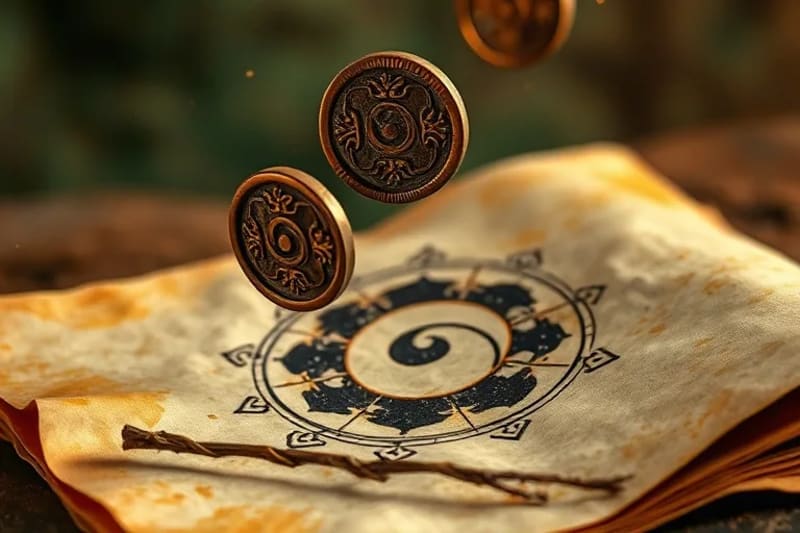
The traditional tools for : ancient coins and yarrow stalks.
Beyond the 12 animal signs, the Chinese Zodiac also incorporates the Five Elements: Wood, Fire, Earth, Metal, and Water. These elements cycle through the years, creating a 60-year cycle (12 animals x 5 elements). Each element brings its own set of characteristics, further refining the personality and energetic makeup of an individual born in a particular year. For example, a Wood Rat will have different traits than a Metal Rat.
- Wood: Growth, flexibility, creativity, generosity.
- Fire: Passion, dynamism, leadership, impulsiveness.
- Earth: Stability, practicality, reliability, nurturing.
- Metal: Determination, discipline, justice, rigidity.
- Water: Adaptability, intuition, sensitivity, introspection.
Each animal sign is also associated with either Yin or Yang, adding another layer of complexity. For instance, the Rat is Yang, while the Ox is Yin. This elemental and Yin-Yang interplay creates a rich framework for understanding individual tendencies, strengths, weaknesses, and potential life paths. Yearly predictions in Chinese astrology often focus on how the current year's animal and element interact with one's birth sign, indicating periods of harmony or challenge.
The Twelve Chinese Zodiac Animals and Their Qualities
| Animal | Yin/Yang | Key Traits |
|---|---|---|
| Rat | Yang | Clever, resourceful, charming, ambitious |
| Ox | Yin | Diligent, dependable, strong, determined |
| Tiger | Yang | Brave, confident, competitive, unpredictable |
| Rabbit | Yin | Gentle, compassionate, elegant, cautious |
| Dragon | Yang | Charismatic, powerful, intelligent, ambitious |
| Snake | Yin | Intelligent, mysterious, intuitive, wise |
| Horse | Yang | Energetic, independent, enthusiastic, impatient |
| Goat (Sheep) | Yin | Gentle, artistic, compassionate, indecisive |
| Monkey | Yang | Intelligent, witty, curious, mischievous |
| Rooster | Yin | Observant, hardworking, courageous, proud |
| Dog | Yang | Loyal, honest, protective, stubborn |
| Pig | Yin | Generous, compassionate, diligent, naive |
The Synergy of I Ching and Chinese Zodiac: A Combined Approach to Divination
While both the I Ching and Chinese Zodiac offer profound insights individually, their true power is unleashed when used in conjunction. The I Ching provides specific, situational guidance for a particular question or moment, reflecting the dynamic flow of change. The Chinese Zodiac, on the other hand, offers a foundational understanding of an individual's innate character, strengths, and challenges based on their birth year and associated elements. By integrating these two, one can interpret the I Ching's message through the lens of their unique Zodiacal blueprint.
Consider a person born in the Year of the Fire Horse consulting the I Ching about a career change. The I Ching might present Hexagram 3, "Difficulty at the Beginning," suggesting initial obstacles and the need for perseverance. Without the Zodiacal context, this might be interpreted generally. However, knowing the individual is a Fire Horse adds layers of meaning. Fire Horses are known for their passion, independence, and sometimes impulsiveness. The "Difficulty at the Beginning" might then specifically advise the Fire Horse to temper their natural impetuosity, plan meticulously, and seek wise counsel, rather than rushing headlong into the new venture.
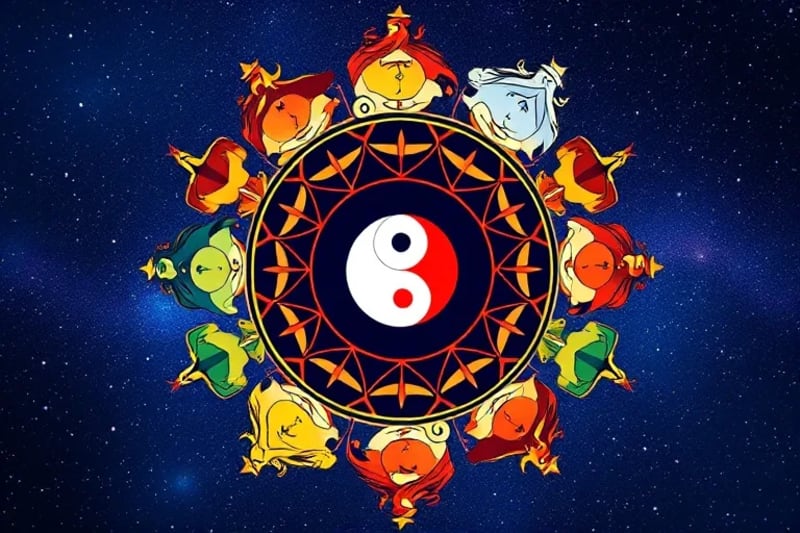
A vibrant wheel illustrating the twelve animals and their elemental energies.
This combined approach allows for a highly personalized interpretation. The I Ching's advice becomes more relevant and actionable when filtered through the unique energetic signature of the individual's Chinese Zodiac sign and element. It helps to understand not just 'what' is happening, but 'how' it relates to one's intrinsic nature and 'why' certain challenges or opportunities are presenting themselves in a particular way.
Practical Application: Performing a Combined Reading
To perform a combined I Ching and Chinese Zodiac reading, follow these steps:
- Determine Your Chinese Zodiac Profile: Identify your birth animal sign and its associated element (e.g., Wood Dragon, Metal Rooster). Understand the core characteristics, strengths, and potential pitfalls of this combination. This forms your foundational lens.
- Formulate a Clear Question: The I Ching responds best to specific, open-ended questions about a situation or decision. Avoid yes/no questions. For example: "What is the best approach for me to take regarding my new business venture?" or "What insights does the universe offer about my current relationship challenge?"
- Consult the I Ching: Use the traditional coin toss method (three coins, six times) or yarrow stalks to generate your hexagram. Note the primary hexagram and any changing lines, which will lead to a secondary hexagram.
- Interpret the I Ching: Read the judgment, image, and line statements of your primary hexagram. If there are changing lines, also interpret the secondary hexagram and the specific advice of the changing lines themselves.
- Integrate with Your Zodiac Profile: This is the crucial step. Filter the I Ching's guidance through the characteristics of your Chinese Zodiac animal and element. Ask yourself:
- How does this advice resonate with my inherent strengths or weaknesses as a [Your Animal/Element]?
- Does the I Ching's counsel suggest I lean into or temper certain Zodiacal traits?
- Are there specific elemental interactions (e.g., Fire clashing with Water) that might be highlighted by the hexagram?
- Reflect and Act: The I Ching is a guide, not a dictator. Meditate on the combined interpretation. How can you apply this wisdom practically to your situation, leveraging your Zodiacal strengths and mitigating weaknesses?
This process transforms a simple reading into a deeply personal and empowering experience. It allows for a nuanced understanding of cosmic influences on your individual journey, offering tailored advice that considers both external circumstances and internal predispositions.
Beyond Predictions: Cultivating Self-Awareness and Growth
The true value of integrating the I Ching and Chinese Zodiac extends far beyond predicting future events. It is a powerful tool for cultivating self-awareness and fostering personal growth. By consistently engaging with these systems, individuals can gain a deeper understanding of their own patterns, motivations, and reactions to life's challenges. The I Ching's emphasis on change encourages adaptability, while the Zodiac provides a stable framework for understanding one's core identity.
This combined approach encourages a proactive stance towards life. Instead of passively waiting for predictions to unfold, individuals are empowered to actively participate in shaping their destiny. The insights gained can highlight areas for personal development, suggest optimal timing for actions, and reveal hidden potentials. It's about aligning one's actions with the natural flow of the universe, informed by both situational wisdom and innate character.
For example, if an Earth Pig (known for being grounded but sometimes overly complacent) receives a hexagram indicating a need for bold action, the combined interpretation would emphasize how the Earth Pig can harness their inherent stability to plan carefully, then overcome their natural inertia to execute with determination. This transforms a generic message into a personalized growth strategy. This holistic view aligns well with concepts of conscious evolution and spiritual development.
Ethical Considerations in Divination
Engaging with powerful divination systems like the I Ching and Chinese Zodiac requires an ethical approach. It is crucial to remember that these tools offer guidance, not absolute decrees. They illuminate possibilities and suggest optimal paths, but ultimately, free will and personal responsibility remain paramount. Responsible divination involves:
- Respect for the Systems: Approach the I Ching and Chinese Zodiac with reverence for their ancient origins and profound wisdom.
- Clear Intent: Formulate questions with genuine intent for self-understanding and constructive action, rather than seeking to manipulate outcomes or avoid responsibility.
- Non-Attachment to Outcomes: While seeking guidance, avoid becoming overly attached to a specific interpretation or desired outcome. The universe often reveals truths that challenge our preconceived notions.
- Personal Responsibility: Use insights gained to inform decisions, but always take ownership of your choices and their consequences. Divination is a tool for empowerment, not an excuse for inaction or blame.
- Confidentiality: If performing readings for others, maintain strict confidentiality and ensure that interpretations are delivered with empathy and respect.
By adhering to these ethical principles, practitioners can ensure that their engagement with the I Ching and Chinese Zodiac remains a positive and transformative experience, fostering wisdom, personal growth, and a deeper connection to the cosmic rhythms that govern existence. This integrated approach, therefore, serves as a sophisticated framework for navigating life's journey with greater clarity and purpose.
Source: Hybrid content assisted by AIs and human editorial supervision.


Comments
Post a Comment