
Advanced Medical Astrology: Chronic Conditions Planetary Debilities | StarPluto
Advanced medical astrology delves into the intricate relationship between celestial mechanics and human health, offering a profound lens through which to understand predispositions to chronic conditions. Far beyond rudimentary zodiac sign interpretations, this specialized branch of astrology examines the natal chart with meticulous precision, focusing on planetary debilities and the subtle yet potent influence of fixed stars. It posits that our birth chart acts as a cosmic blueprint, encoding not only our psychological makeup and life path but also our physiological strengths and vulnerabilities.
Historically, medical astrology has roots in ancient civilizations, where the connection between the heavens and human well-being was considered self-evident. From Babylonian tablets to Hellenistic treatises and medieval European texts, astrologers and physicians often worked in tandem, using celestial observations to diagnose ailments, predict disease progression, and even determine optimal times for treatments. Modern advanced medical astrology builds upon these foundational principles, integrating a deeper understanding of astrological complexities to decipher the subtle energetic imbalances that can lead to persistent health challenges.
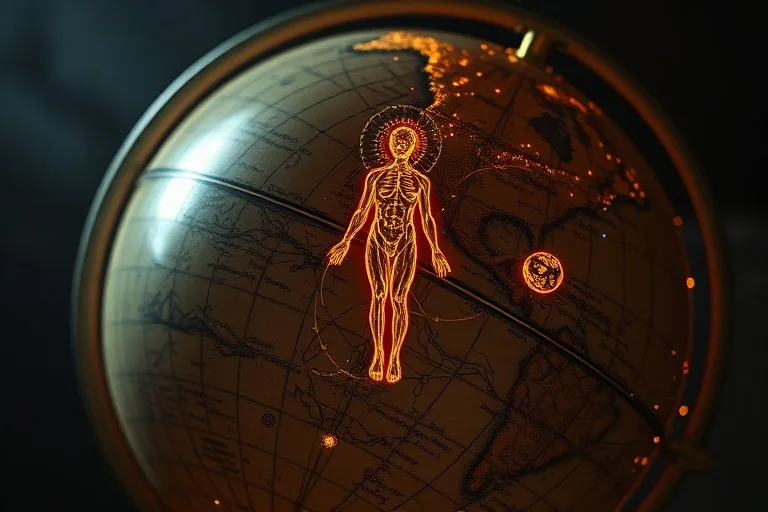
An antique celestial globe intricately mapping constellations and planetary positions, with subtle, translucent anatomical overlays, symbolizing the ancient connection between cosmic patterns and human physiology.
This comprehensive guide explores the advanced techniques used to identify potential chronic conditions by analyzing planetary debilities—conditions where planets are weakened in the natal chart—and the specific medical significations of fixed stars. Understanding these elements can provide invaluable insights into an individual's inherent health landscape, empowering proactive health management and a more personalized approach to well-being.
Table of Contents
- Planetary Debilities: Cosmic Weaknesses and Health Vulnerabilities
- The Influence of Fixed Stars: Celestial Markers of Chronic Ailments
- Deciphering Chronic Conditions: A Methodological Approach
- Case Study Examples: Applying Advanced Medical Astrology
- Ethical Considerations and Holistic Integration
Planetary Debilities: Cosmic Weaknesses and Health Vulnerabilities
In astrological terms, a planet's "debility" refers to its weakened state within a natal chart, indicating a diminished capacity to express its energies constructively. These weakened states can manifest as areas of vulnerability in the physical body, contributing to chronic health issues or predispositions. Understanding these debilities is paramount in advanced medical astrology, as they often point to systemic weaknesses rather than acute conditions.
The primary forms of planetary debility include:
- Detriment: A planet is in detriment when it is in the zodiac sign opposite to the one it rules. For example, Mars rules Aries and Scorpio, so it is in detriment in Libra and Taurus. This position often signifies a struggle for the planet to function effectively, leading to imbalances in its associated bodily functions or organs.
- Fall: A planet is in fall when it is in the sign opposite to its sign of exaltation. For instance, the Sun is exalted in Aries, so it is in fall in Libra. This indicates a position of extreme discomfort for the planet, where its energies are severely hampered, often leading to deep-seated or hereditary weaknesses.
- Retrograde: When a planet appears to move backward from Earth's perspective, it is retrograde. In medical astrology, retrograde planets suggest internalized issues, reoccurring problems, or conditions that are difficult to diagnose or treat conventionally. The energy is often turned inward, affecting the body's internal systems or psychological well-being.
- Combust: A planet is combust when it is very close (within 8.5 degrees) to the Sun. The Sun's overwhelming light "burns up" the planet's energy, making it difficult for the planet to express itself clearly. This can indicate a hidden or suppressed condition, or a chronic issue that drains vitality.
- Peregrine: A planet is peregrine when it is in a sign where it has no essential dignities (neither rulership, exaltation, triplicity, term, nor face). Such a planet is considered "wandering" or lacking direction, making its influence unpredictable and potentially unstable regarding health. It can point to conditions that lack a clear cause or fluctuate significantly.
- Anaretic Degrees: The 29th degree of any sign is often considered anaretic or "fated." Planets at this degree can indicate critical or crisis points in health, suggesting a chronic condition reaching a peak or a long-standing vulnerability coming to the forefront.
Each planet governs specific body parts, organs, and physiological processes. When a planet is debilitated, these areas become potential sites for chronic issues. For example, a debilitated Moon might indicate issues with fluid retention, digestion, or emotional stability, while a debilitated Saturn could point to problems with bones, teeth, skin, or conditions related to aging and chronicity.
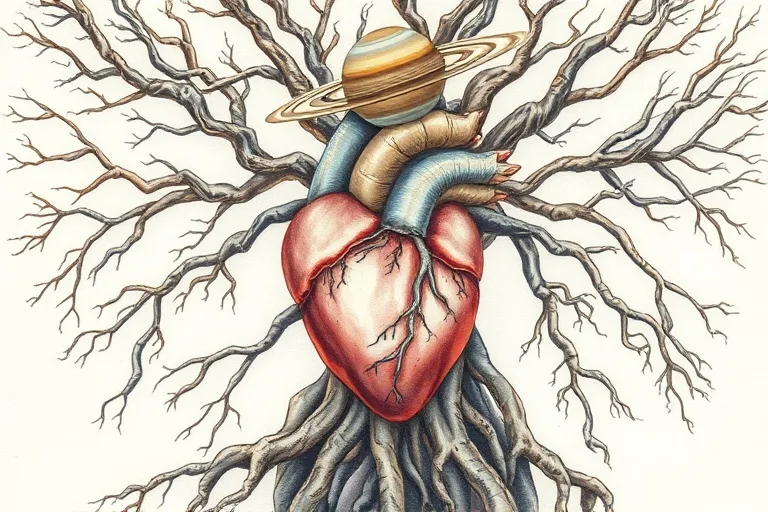
A watercolor depicting an anatomical heart intertwined with gnarled tree roots, symbolizing deep-seated vulnerabilities, with a faint, fractured planetary symbol above, representing the subtle impact of cosmic debilities on vital organs.
Table: Planetary Debilities and Associated Health Risks
| Planet | Associated Body Parts/Systems | Potential Chronic Conditions (Debilitated) |
|---|---|---|
| Sun | Heart, spine, vitality, eyes (right) | Chronic fatigue, heart conditions, spinal issues, vision problems, low immunity. |
| Moon | Stomach, breasts, fluids, lymphatic system, eyes (left), emotional stability | Digestive disorders (IBS), edema, hormonal imbalances, chronic anxiety, mood disorders. |
| Mercury | Nervous system, lungs, hands, communication, intellect | Nervous disorders (anxiety, tremors), respiratory issues (asthma), speech impediments, chronic stress. |
| Venus | Kidneys, throat, skin, reproductive organs, glands, sweetness | Kidney disease, throat infections, skin conditions (eczema), hormonal imbalances, diabetes. |
| Mars | Muscles, blood, adrenal glands, head, inflammation, energy | Chronic inflammation, high blood pressure, migraines, autoimmune conditions, persistent fevers. |
| Jupiter | Liver, thighs, pancreas, growth, abundance | Liver dysfunction, metabolic disorders (obesity, gout), circulatory issues, glandular imbalances. |
| Saturn | Bones, teeth, skin, joints, spleen, chronicity, structure | Arthritis, osteoporosis, chronic skin conditions, dental problems, depression, long-term debilitating illnesses. |
| Uranus | Nervous system (sudden), circulation, ankles, unconventional issues | Sudden neurological disorders, spasms, unpredictable illnesses, circulatory problems. |
| Neptune | Pineal gland, lymphatic system, immune system, mysterious illnesses, addictions | Autoimmune diseases, chronic fatigue syndrome, allergies, mysterious ailments, drug sensitivities. |
| Pluto | Reproductive system, elimination, cellular regeneration, deep-seated transformation | Chronic degenerative diseases, reproductive issues, hormonal cancers, deep psychological trauma affecting physical health. |
The Influence of Fixed Stars: Celestial Markers of Chronic Ailments
Beyond the planets, fixed stars—distant suns that appear stationary in the night sky—hold significant, albeit often subtle, influence in advanced medical astrology. Unlike the planets, which represent dynamic energies, fixed stars are considered to imbue a more fated or inherent quality to the natal chart. Their impact on health, particularly chronic conditions, can be profound when they are in close conjunction (within 0.5 to 1 degree orb) with planets, angles (Ascendant, Descendant, Midheaven, Imum Coeli), or sensitive points in the chart.
The medical interpretations of fixed stars are rooted in ancient observations and mythologies, often reflecting their perceived nature or the constellation they belong to. A star considered "malefic" or associated with misfortune might indicate a predisposition to challenging health issues, while a "benefic" star could offer protection or healing qualities. The precise nature of the ailment often depends on the planet or point it conjoins and the house it falls in.
For instance, Algol, a star often associated with violence and decapitation in mythology, might indicate issues with the head, neck, or throat, or conditions that involve sudden, severe onset. Regulus, a royal star, can signify heart conditions, especially when aspecting the Sun or Mars. Understanding these specific associations requires extensive knowledge of traditional astrological texts and careful chart analysis.

A 3D render of polished, ancient medical instruments, such as a caduceus and mortar and pestle, subtly illuminated by shimmering energy lines radiating from an abstract fixed star, symbolizing the connection between celestial wisdom and healing practices.
Table: Prominent Fixed Stars and Medical Interpretations
| Fixed Star | Constellation | Approximate Zodiac Position (2026) | Medical Associations (Conjunction) |
|---|---|---|---|
| Algol | Perseus | 26° Taurus | Head and neck issues, throat problems, sudden severe illnesses, accidents involving the head, psychological disturbances. |
| Aldebaran | Taurus | 10° Gemini | Acute fevers, lung conditions, accidents, issues with hands and arms, eye problems. |
| Bellatrix | Orion | 21° Gemini | Accidents, fevers, eye injuries, issues with the nervous system, potential for sudden ailments. |
| Castor | Gemini | 20° Cancer | Facial injuries, nervous sensitivity, mental strain, issues with lungs and shoulders. |
| Pollux | Gemini | 23° Cancer | Poisoning, chronic fevers, issues with the stomach and digestion, potential for violence-related injuries. |
| Procyon | Canis Minor | 25° Cancer | Fevers, inflammations, dog bites, issues with the stomach and eyes, rapid onset of illness. |
| Regulus | Leo | 0° Virgo | Heart conditions, fevers, eye problems, accidents, issues with the spine or back. |
| Spica | Virgo | 24° Libra | Benefic influence, protection against illness, but if afflicted, can indicate kidney or reproductive issues. |
| Arcturus | Boötes | 24° Libra | Healing energies, protection, but if afflicted, can indicate knee or joint problems, skin issues. |
| Antares | Scorpio | 10° Sagittarius | Acute illnesses, eye problems, fevers, issues with the reproductive organs, accidents. |
| Fomalhaut | Piscis Austrinus | 04° Pisces | Mysterious illnesses, chronic fevers, respiratory issues, digestive problems, issues with the feet. |
It is crucial to remember that the influence of fixed stars is highly nuanced. A single fixed star does not guarantee a specific condition. Instead, its impact is filtered through the planet it conjoins, the house it occupies, and the overall context of the natal chart. For example, a malefic fixed star conjoining a benefic planet might have its negative effects mitigated, or a benefic star conjoining a debilitated planet might offer a path to healing despite the underlying weakness.
Deciphering Chronic Conditions: A Methodological Approach
Deciphering chronic conditions through advanced medical astrology involves a multi-layered analysis of the natal chart. It's not about finding a single indicator but rather identifying clusters of astrological signatures that point towards a consistent theme of vulnerability. The methodology typically includes:
- Analysis of the 6th House: Traditionally known as the house of health, daily routines, and illness. Planets within the 6th house, its ruling planet, and aspects to it are primary indicators of health predispositions. A debilitated planet here can signify chronic issues related to its nature and the sign it occupies.
- Examination of the 8th House: This house governs regeneration, surgery, and chronic or degenerative illnesses. Strong malefic influences or debilitated planets here can indicate deep-seated health challenges, often requiring significant transformation or intervention.
- Scrutiny of the 12th House: The house of hidden enemies, self-undoing, and institutions (including hospitals). Debilitated planets or malefic fixed stars here can point to mysterious illnesses, conditions that are difficult to diagnose, or health issues that require hospitalization or long-term care.
- Planetary Rulers of Health Houses: The condition of the rulers of the 6th, 8th, and 12th houses is critical. If these rulers are themselves debilitated or afflicted by challenging aspects, they amplify the potential for chronic health issues.
- Malefic Planets (Mars and Saturn): These planets are often associated with disease and hardship. Mars signifies acute inflammation, fevers, and injuries, while Saturn points to chronicity, degeneration, and structural problems. Their placement, aspects, and debilities are key.
- Outer Planets (Uranus, Neptune, Pluto):
- Uranus: Associated with sudden, unpredictable illnesses, nervous system disorders, and conditions that defy conventional diagnosis.
- Neptune: Linked to mysterious, elusive illnesses, autoimmune disorders, allergies, and conditions related to toxicity or sensitivity. It can also indicate psychological or psychosomatic components to illness.
- Pluto: Governs regeneration, cellular processes, and deep-seated transformations. Its influence can point to degenerative diseases, hormonal imbalances, and conditions rooted in deep psychological trauma.
- Aspects: Hard aspects (squares, oppositions, conjunctions with malefic planets) involving debilitated planets, fixed stars, or rulers of health houses are particularly significant. A T-square or Grand Cross involving these elements can indicate a persistent and challenging health pattern.
- Lunar Nodes: The North and South Nodes can offer insights into karmic health patterns or inherited predispositions. The South Node might reveal past life health issues that recur, while the North Node suggests areas of growth and healing.
The synthesis of these factors allows the medical astrologer to build a comprehensive picture of an individual's health vulnerabilities. It's about identifying patterns rather than isolated events. For instance, a debilitated Saturn in the 6th house, ruling the 8th house, and conjunct a malefic fixed star like Algol, would strongly suggest a predisposition to chronic, degenerative conditions affecting the bones or teeth, potentially with a sudden, severe onset or difficult diagnosis.
Case Study Examples: Applying Advanced Medical Astrology
To illustrate the application of these advanced principles, let's consider a few hypothetical scenarios:
Scenario 1: Chronic Autoimmune Disorder
- Chart Signature: Neptune in the 6th house (health), retrograde and in fall (Leo), forming a tight square to Mars in the 9th house. The ruler of the 6th house (Aquarius) is Uranus, which is also retrograde and in hard aspect to Pluto.
- Interpretation: Neptune, being retrograde and in fall in the house of health, strongly indicates a predisposition to mysterious, difficult-to-diagnose illnesses, often involving the immune system or endocrine glands. Its square to Mars suggests chronic inflammation or an overactive immune response. The retrograde Uranus ruling the 6th, in aspect to Pluto, points to sudden, unpredictable flare-ups and deep-seated cellular or transformative processes at play, common in autoimmune conditions.
Scenario 2: Degenerative Bone Condition
- Chart Signature: Saturn in the 6th house (health), in detriment (Cancer), and conjunct the fixed star Pollux (associated with chronic fevers, stomach issues, and potential for violence-related injuries, but also general malefic influence). The ruler of the 6th house (Capricorn) is Saturn itself, creating a strong emphasis.
- Interpretation: Saturn, the planet of bones, structure, and chronicity, is doubly emphasized by being in the 6th house and ruling it. Its detriment in Cancer suggests a weakening of its structural integrity, potentially affecting bones, joints, or teeth. The conjunction with Pollux amplifies the malefic potential, indicating a chronic, possibly painful, degenerative condition that may have deep emotional or ancestral roots (Cancer).
Scenario 3: Chronic Migraines and Nervous System Issues
- Chart Signature: Mercury in the 12th house (hidden issues), combust the Sun, and forming an exact conjunction with the fixed star Algol (head and neck issues, sudden severe illnesses). The 6th house ruler (Virgo) is Mercury.
- Interpretation: Mercury, governing the nervous system and head, is severely weakened by combustion, indicating a suppressed or hidden neurological vulnerability. Its placement in the 12th house suggests conditions difficult to pinpoint or that manifest as chronic, debilitating symptoms. The exact conjunction with Algol is highly significant, pointing directly to severe head-related issues like chronic migraines, nerve pain, or even conditions affecting brain function. The fact that Mercury also rules the 6th house reinforces this predisposition as a central health theme.
These examples highlight how advanced medical astrology synthesizes multiple layers of information to identify specific health predispositions. It's a complex process that requires deep astrological knowledge and careful consideration of all chart factors.
Ethical Considerations and Holistic Integration
It is imperative to approach medical astrology with a clear understanding of its role: it is a complementary tool, not a substitute for conventional medical diagnosis and treatment. Advanced medical astrology provides insights into predispositions and energetic patterns, offering a framework for understanding potential vulnerabilities. It does not replace the need for professional medical advice, diagnostic tests, or prescribed therapies from qualified healthcare providers.
The practice of medical astrology should always be conducted with ethical responsibility, emphasizing the importance of holistic well-being. Astrologers should guide individuals to seek appropriate medical care while using astrological insights to complement their health journey.
Understanding one's astrological predispositions can empower individuals to make informed lifestyle choices, adopt preventative measures, and engage in self-care practices that support their unique energetic constitution.
Integrating medical astrology into a holistic health strategy can involve:
- Preventative Measures: If a chart indicates a predisposition to kidney issues (e.g., debilitated Venus), an individual might proactively focus on kidney-supporting diets, hydration, and regular check-ups.
- Stress Management: Debilitated Mercury or Moon can point to chronic anxiety or nervous system sensitivity. Astrological awareness can encourage practices like meditation, mindfulness, or therapy.
- Timing for Treatments: While not a primary diagnostic tool, some traditional medical astrologers use electional astrology to determine auspicious times for surgeries or starting new treatments, though this is a highly specialized area.
- Personalized Wellness: Understanding one's unique astrological health blueprint allows for a more tailored approach to diet, exercise, and spiritual practices that resonate with their energetic needs. For instance, a strong Saturn might benefit from structured routines, while a dominant Neptune might thrive with practices that foster intuition and emotional release.
In conclusion, advanced medical astrology offers a sophisticated framework for exploring the deep-seated connections between cosmic influences and human health. By meticulously analyzing planetary debilities and the subtle yet powerful effects of fixed stars, it provides a unique perspective on predispositions to chronic conditions. This knowledge, when used responsibly and in conjunction with conventional medicine, can be a powerful tool for self-awareness, prevention, and the pursuit of optimal well-being.
Source: Hybrid content assisted by AIs and human editorial supervision.


Comments
Post a Comment