
Antiscia & Contrascia: Mirror Points in Advanced Natal Chart Analysis | StarPluto
In the intricate tapestry of astrological analysis, beyond the commonly known planets, signs, and houses, lie advanced techniques that offer deeper layers of insight. Among these are the concepts of Antiscia and Contrascia, often referred to as "mirror points." These subtle yet powerful points in a natal chart reveal hidden dynamics, unconscious attractions, and karmic connections that can significantly influence an individual's life path and interactions.
Understanding Antiscia and Contrascia can unlock a more nuanced interpretation of a birth chart, shedding light on aspects of personality and destiny that might otherwise remain obscure. They act as energetic reflections, showing where a planet's influence might be subtly expressed or overtly challenged. This exploration delves into their historical origins, calculation methods, and profound implications for advanced astrological practice.
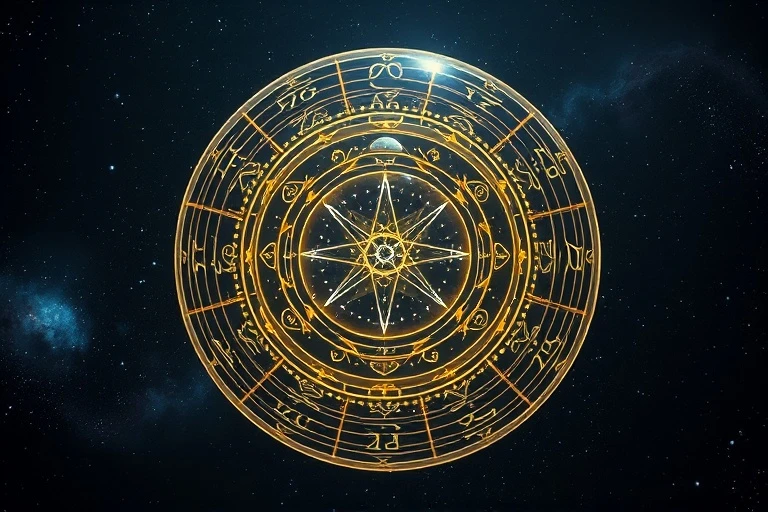
A conceptual visualization of astrological mirror points, highlighting their subtle yet profound influence on natal chart interpretation.
The practice of using Antiscia and Contrascia dates back to ancient astrological traditions, particularly gaining prominence during the Hellenistic and Renaissance periods. Astrologers like Ptolemy and later figures recognized the significance of these symmetrical points, integrating them into their interpretive frameworks. While they might seem complex at first glance, their underlying logic is rooted in the celestial mechanics of the Sun's apparent path.
This guide aims to demystify these advanced concepts, making them accessible to both seasoned astrologers and curious newcomers. By understanding how these mirror points operate, you can add a powerful new dimension to your astrological readings, revealing deeper truths about yourself and your relationships. Let's embark on this journey to uncover the hidden reflections in your cosmic blueprint.
Table of Contents
- What Are Antiscia? The Points of Equal Light
- What Are Contrascia? The Points of Equal Darkness
- Calculating Antiscia and Contrascia
- Interpreting Antiscia in the Natal Chart
- Interpreting Contrascia in the Natal Chart
- Antiscia and Contrascia in Synastry
- Transits and Progressions to Mirror Points
- Historical Context and Modern Relevance
- Conclusion: The Depth of Mirror Points
What Are Antiscia? The Points of Equal Light
Antiscia, derived from the Greek word meaning "shadows," are points in the zodiac that share the same declination from the celestial equator. More simply, they are points that have the same length of daylight. This symmetry is based on the solstices, specifically the Cancer-Capricorn axis (0° Cancer and 0° Capricorn).
Imagine the zodiac as a circle, and the solstices as the turning points where the Sun reaches its maximum northern (0° Cancer) or southern (0° Capricorn) declination. Any two points equidistant from this axis will experience the same amount of daylight. These are the Antiscia points.
For example, a planet at 10° Gemini would have its Antiscia at 20° Cancer. Both points are 20 degrees away from 0° Cancer (10° Gemini is 20° before 0° Cancer, and 20° Cancer is 20° after 0° Cancer). Similarly, 10° Sagittarius would have its Antiscia at 20° Capricorn.
Astrologically, Antiscia represent subtle, hidden, or indirect influences. They are often associated with unconscious attractions, secret sympathies, or karmic connections that operate beneath the surface. A planet's Antiscia can reveal where its energy might be expressed in a more subdued or private manner, or where it finds sympathetic resonance with other parts of the chart or other people's charts.
Consider a planet in your chart. Its Antiscia point indicates a "shadow" area where its qualities are reflected, perhaps not overtly, but with equal strength in a different context. This can manifest as a hidden talent, an unspoken desire, or an attraction to certain types of people or situations that resonate with this mirrored energy. For more on planetary influences, explore our guide on Tarot Quantum Mechanics Intersecting Divination Reality.
What Are Contrascia? The Points of Equal Darkness
Contrascia, also known as "contra-antiscia," are the opposite points to Antiscia. While Antiscia share the same length of daylight, Contrascia share the same length of nighttime. This symmetry is based on the equinoxes, specifically the Aries-Libra axis (0° Aries and 0° Libra).
If Antiscia are reflections across the solstice axis, Contrascia are reflections across the equinox axis. These points are diametrically opposed to the Antiscia points. For instance, if a planet's Antiscia is at 20° Cancer, its Contrascia would be at 20° Capricorn (opposite 20° Cancer).
An ancient text revealing the subtle and often hidden connections represented by Antiscia in a natal chart.
Astrologically, Contrascia represent more overt, conscious, or challenging influences. They can indicate areas where a planet's energy might meet resistance, express itself in a more confrontational manner, or where there are conscious disagreements or oppositions. Contrascia often highlight where an individual's conscious will or actions might be tested or where they encounter direct opposition from others.
Where Antiscia are about subtle resonance, Contrascia are about active engagement and potential friction. They can point to areas of life where you might feel a strong pull or push, or where you need to assert yourself. These points are crucial for understanding the dynamic interplay of forces within your chart and in your interactions with the world.
Calculating Antiscia and Contrascia
While modern astrological software can calculate Antiscia and Contrascia automatically, understanding the underlying principle is beneficial. The calculation relies on the concept of zodiacal symmetry around the cardinal axes.
For Antiscia, the mirror axis is 0° Cancer / 0° Capricorn. To find the Antiscia of a planet, you measure its distance from the nearest cardinal point on this axis and then project that same distance on the other side of the axis. For example, if a planet is at 15° Leo, it is 15° past 0° Cancer. Its Antiscia would then be 15° before 0° Cancer, which is 15° Gemini.
A simpler way to calculate Antiscia is to remember that the sum of the degrees of a planet and its Antiscia will always be 30° (if one is in a sign before Cancer/Capricorn and the other after) or 0°/30° (if both are in the same sign relative to the axis). For instance, 10° Taurus (20° before 0° Cancer) has its Antiscia at 20° Leo (20° after 0° Cancer). The signs are always equidistant from the solstice points.
For Contrascia, the mirror axis is 0° Aries / 0° Libra. Alternatively, once you have the Antiscia point, the Contrascia is simply the exact opposite degree in the zodiac (180 degrees away). So, if a planet's Antiscia is 15° Gemini, its Contrascia would be 15° Sagittarius.
Here's a simplified table for calculating Antiscia and Contrascia based on zodiacal symmetry:
| Original Sign & Degree | Antiscia (Equal Day) | Contrascia (Equal Night) |
|---|---|---|
| Aries (0-30°) | Virgo (30-0°) | Pisces (30-0°) |
| Taurus (0-30°) | Leo (30-0°) | Aquarius (30-0°) |
| Gemini (0-30°) | Cancer (30-0°) | Sagittarius (30-0°) |
| Cancer (0-30°) | Gemini (30-0°) | Capricorn (30-0°) |
| Leo (0-30°) | Taurus (30-0°) | Aquarius (30-0°) |
| Virgo (0-30°) | Aries (30-0°) | Pisces (30-0°) |
| Libra (0-30°) | Capricorn (30-0°) | Aries (30-0°) |
| Scorpio (0-30°) | Sagittarius (30-0°) | Taurus (30-0°) |
| Sagittarius (0-30°) | Scorpio (30-0°) | Gemini (30-0°) |
| Capricorn (0-30°) | Libra (30-0°) | Cancer (30-0°) |
| Aquarius (0-30°) | Pisces (30-0°) | Leo (30-0°) |
| Pisces (0-30°) | Aquarius (30-0°) | Virgo (30-0°) |
Note: The degrees for Antiscia and Contrascia are always the same numerical degree within the mirrored sign. For example, 15° Aries' Antiscia is 15° Virgo, and its Contrascia is 15° Pisces.
Interpreting Antiscia in the Natal Chart
When interpreting Antiscia, think of them as a planet's "shadow" or "sympathetic" point. The energy of a planet at its Antiscia degree is often expressed subtly, behind the scenes, or in a way that is not immediately obvious to others. It’s like a hidden talent or a secret desire that resonates deeply within the individual.
Key interpretations for Antiscia include:
- Hidden Strengths and Talents: Antiscia can reveal innate abilities or potentials that are not consciously recognized or overtly displayed. These might be talents that emerge when least expected or are only shared with a select few.
- Unconscious Attractions: A planet's Antiscia can point to types of people, environments, or experiences that draw you in on an unconscious level. These attractions might feel fated or deeply familiar, even if they defy logical explanation.
- Karmic Connections: In a spiritual context, Antiscia can indicate karmic ties or unresolved issues from past lives that subtly influence current relationships and life circumstances. They suggest a deep, often unspoken understanding or connection.
- Subtle Manifestations: The energy of a planet at its Antiscia might manifest in indirect ways. For example, if your Mars Antiscia falls in a certain house, your drive and ambition (Mars) might be expressed in a more understated or strategic manner in that area of life.
- Support and Resonance: Antiscia can highlight areas where you find natural support or where your energy resonates harmoniously with others, even if the connection isn't immediately apparent.
Consider the house and sign where an Antiscia falls. This provides context for how the subtle energy of the original planet might play out. For instance, Venus Antiscia in the 7th House could suggest a hidden desire for partnership or an unconscious magnetism in relationships that draws people to you without you actively trying. For more on relationship dynamics, refer to our insights on Advanced Planetary Dignities Beyond Rulerships Synastry Electional Astrology.
Interpreting Contrascia in the Natal Chart
Contrascia, as the opposite points to Antiscia, tend to represent more conscious, overt, and sometimes challenging influences. They highlight areas where a planet's energy might be met with opposition, where there's a need for conscious effort, or where external conflicts might arise. These are not necessarily negative, but they demand direct engagement.
A symbolic representation of Contrascia, highlighting the direct and often challenging aspects reflected in the natal chart.
Key interpretations for Contrascia include:
- Overt Challenges and Conflicts: Contrascia can point to areas where you are likely to encounter direct opposition, friction, or challenges. These are not hidden struggles but rather conscious tests that require you to assert yourself.
- Conscious Disagreements: In relationships, a planet's Contrascia might indicate areas where conscious disagreements or differing viewpoints are likely to arise. These are points of friction that need to be addressed openly.
- Areas of Active Engagement: Contrascia often highlight life areas where you must actively engage, fight for what you believe in, or overcome obstacles. They can be points of growth through confrontation.
- External Manifestations: The energy of a planet at its Contrascia might manifest in more external and noticeable ways. For example, if your Jupiter Contrascia falls in the 10th House, your desire for expansion and recognition (Jupiter) might meet with obvious obstacles or require a public battle for success in your career.
- Points of Awareness: Unlike Antiscia, Contrascia bring issues to conscious awareness, forcing you to acknowledge and deal with them directly. They can be catalysts for personal development.
The house and sign of a Contrascia point provide vital context for understanding these direct challenges. For instance, a Saturn Contrascia in the 2nd House could indicate conscious struggles with financial security, requiring disciplined effort and careful management of resources. For deeper insights into your life path, consider exploring Numerology Guide: Life Path & Destiny Revealed.
Antiscia and Contrascia in Synastry
One of the most revealing applications of Antiscia and Contrascia is in synastry, the astrological comparison of two natal charts. When a planet in one person's chart forms a conjunction or opposition to an Antiscia or Contrascia point in another person's chart, it creates a powerful, often undeniable connection.
In synastry, Antiscia connections often indicate a deep, unspoken bond or a sense of fatedness between two individuals. These are the "soulmate" connections that might not be immediately apparent but resonate on a profound, unconscious level. They suggest a natural sympathy and understanding, even if the personalities seem outwardly different. For example, if Person A's Sun is conjunct Person B's Venus Antiscia, there could be a strong, almost telepathic attraction and mutual appreciation.
Contrascia connections in synastry, on the other hand, can point to areas of conscious friction, challenge, or direct interaction. These are often the "growth edges" in a relationship, where differences must be confronted and worked through. While potentially challenging, these aspects can also lead to significant personal and relational growth if handled constructively. For instance, if Person A's Mars is conjunct Person B's Saturn Contrascia, there might be recurring power struggles or a need to establish clear boundaries.
Analyzing these mirror point connections in synastry can provide invaluable insights into the hidden dynamics and overt challenges within a relationship. They add layers of depth that go beyond standard aspect analysis, revealing the subtle threads that bind people together and the active forces that shape their interactions. Understanding these points can help navigate complex relationship dynamics, as discussed in our various .
Transits and Progressions to Mirror Points
The influence of Antiscia and Contrascia extends beyond the static natal chart into predictive astrology, particularly through transits and progressions. When a transiting or progressed planet aspects a natal Antiscia or Contrascia point, it can trigger significant events or internal shifts that bring these hidden or challenging energies to the forefront.
A transit to a natal Antiscia point might bring about subtle opportunities or connections that feel serendipitous or fated. These events often unfold quietly, without much fanfare, but can have profound long-term effects. For example, a transiting Jupiter conjunct your natal Mercury Antiscia could open doors to learning or communication that feel "meant to be," perhaps through an unexpected encounter or a sudden interest in a new subject.
Conversely, a transit to a natal Contrascia point can signify a period of overt challenge, confrontation, or necessary action. These are times when you might be forced to address an issue directly, defend your position, or overcome a significant obstacle. A transiting Saturn conjunct your natal Sun Contrascia, for instance, could bring a period of intense self-scrutiny and external pressure, demanding that you take responsibility and solidify your identity in the face of adversity. For more on planetary movements, delve into .
By observing these predictive aspects, astrologers can gain a deeper understanding of the timing and nature of life events, recognizing how subtle attractions or overt challenges are activated. This adds another layer of precision to forecasting and personal development work.
Historical Context and Modern Relevance
The concepts of Antiscia and Contrascia are not new inventions but rather a revival of ancient astrological wisdom. Their roots can be traced back to the Hellenistic period, where astrologers meticulously observed the movements of the Sun and the corresponding lengths of day and night. Ptolemy, in his influential work Tetrabiblos, discusses points of equal power, which laid the groundwork for these mirror points.
During the Renaissance, astrologers like William Lilly and John Gadbury also incorporated Antiscia into their practice, particularly in horary astrology, where they were used to reveal hidden motives or secret aspects of a situation. However, with the rise of modern psychological astrology, some of these more technical and geometrically based techniques fell out of favor, replaced by a focus on psychological archetypes and personal growth.
In contemporary astrology, there has been a resurgence of interest in traditional techniques, leading to a renewed appreciation for Antiscia and Contrascia. Modern astrologers are finding that these mirror points offer invaluable insights, especially when dealing with subtle psychological dynamics, karmic patterns, and the deeper, often unspoken currents within relationships. They provide a bridge between the visible and invisible influences in a chart, enriching the overall interpretation. For a broader understanding of astrology's journey, explore .
Conclusion: The Depth of Mirror Points
Antiscia and Contrascia are powerful, yet often overlooked, tools in advanced natal chart analysis. They provide a unique lens through which to view the subtle and overt energies at play in an individual's life. Antiscia unveil hidden strengths, unconscious attractions, and karmic resonance, operating beneath the surface with quiet efficacy. Contrascia, conversely, bring conscious challenges, direct confrontations, and areas of necessary engagement into sharper focus.
By integrating these mirror points into your astrological practice, you can unlock a richer, more nuanced understanding of yourself and your relationships. They reveal the intricate symmetries of the zodiac, offering insights into both the shadow and light aspects of our being. Whether in natal interpretation, synastry, or predictive work, Antiscia and Contrascia serve as invaluable guides to the deeper currents of destiny and personality.
Embracing these advanced techniques allows for a more holistic and profound astrological consultation, moving beyond superficial readings to uncover the true complexity and beauty of the cosmic blueprint. The mirror points remind us that every part of the chart, visible or hidden, holds a vital piece of the story.
Source: Hybrid content assisted by AI and human editorial supervision.


Comments
Post a Comment