
Astrological Ritual Timing: Optimizing Magick with Planetary Hours | StarPluto
In the vast tapestry of esoteric practices, the concept of astrological timing stands as a cornerstone for optimizing the efficacy of rituals and magickal workings. Far from being a mere superstition, the practice of aligning actions with celestial rhythms is rooted in ancient traditions that recognized the profound influence of planetary energies on earthly endeavors. This guide delves into the intricate world of astrological timing, with a particular focus on planetary hours, offering an educational and informed perspective on how to harness these cosmic currents to enhance your spiritual and practical pursuits.
The universe operates on cycles, and understanding these cycles allows practitioners to work in harmony with natural forces rather than against them. Planetary hours provide a granular level of precision, breaking down each day into specific segments ruled by different celestial bodies. By consciously choosing the most auspicious time for a ritual, one can amplify its potential, ensuring that the energetic resonance of the moment supports the desired outcome. This method is not about forcing results but about creating an optimal environment for manifestation.
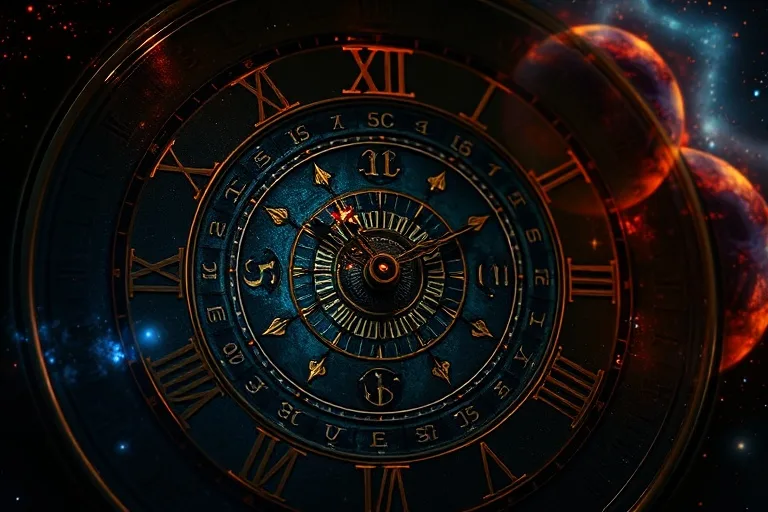
The intricate design of an ancient celestial clock, adorned with glowing planetary symbols, symbolizes the meticulous art of astrological timing for spiritual practices.
The concept of planetary hours bridges the gap between macrocosmic astrological influences and microcosmic daily life. It offers a practical framework for integrating astrological wisdom into everyday decision-making, particularly for those engaged in magick, meditation, or any form of intentional manifestation. This system, while seemingly complex at first glance, becomes an invaluable tool for anyone seeking to deepen their connection to cosmic energies and elevate their ritual practice.
Table of Contents
- Historical Roots of Planetary Hours
- Calculating Planetary Hours: A Daily Rhythm
- Planetary Rulers and Their Associations
- Optimizing Rituals with Planetary Energies
- Practical Application and Modern Tools
- Beyond Planetary Hours: Integrating Additional Factors
- Conclusion: Harmonizing with Cosmic Flow
Historical Roots of Planetary Hours
The system of planetary hours boasts a rich history, tracing its origins back to ancient Babylonian and Egyptian astronomical observations. These early civilizations meticulously tracked the movements of celestial bodies, attributing specific qualities and influences to each planet. This knowledge was later refined and integrated into Hellenistic astrology, where the concept of planetary hours as we know it today began to take shape.
During the Hellenistic period, astrologers developed a system that assigned each hour of the day and night to one of the seven classical planets: Saturn, Jupiter, Mars, Sun, Venus, Mercury, and Moon. This sequence, known as the Chaldean order, reflects the perceived speed of the planets as they appear from Earth, from slowest to fastest. This hierarchical ordering formed the basis for determining the planetary ruler of each hour, influencing everything from daily activities to significant political decisions.
Throughout the Middle Ages and the Renaissance, the practice of planetary hours remained a vital component of both scholarly astrology and popular magick. Grimoires and astrological texts from these periods are replete with instructions for timing rituals, herbal remedies, and even surgical procedures according to the planetary ruler of the hour. Figures like Agrippa and John Dee extensively documented the use of planetary hours in their esoteric works, solidifying their place in Western occult traditions.
The enduring legacy of planetary hours underscores a fundamental belief: that time is not uniform, but imbued with varying energetic qualities. By understanding and working with these qualities, ancient practitioners sought to align their intentions with the prevailing cosmic forces, thereby enhancing the likelihood of success in their endeavors. This historical context provides a powerful foundation for modern practitioners seeking to re-engage with these time-honored techniques.
Calculating Planetary Hours: A Daily Rhythm
Unlike standard clock hours, planetary hours are not fixed at 60 minutes. They are calculated based on the length of daylight and nighttime for a specific location and date. This makes them variable throughout the year and across different latitudes, reflecting the natural rhythms of the sun's path.
To calculate planetary hours, the period from sunrise to sunset (daylight) is divided into 12 equal "day hours," and the period from sunset to the next sunrise (nighttime) is divided into 12 equal "night hours." This means that a day hour in summer will be longer than a day hour in winter, and vice-versa for night hours.
The sequence of planetary rulers follows the Chaldean order, but the starting planet for the first hour of the day is determined by the day of the week. Each day of the week is traditionally ruled by a specific planet:
- Sunday: Sun
- Monday: Moon
- Tuesday: Mars
- Wednesday: Mercury
- Thursday: Jupiter
- Friday: Venus
- Saturday: Saturn
The first hour of the day (starting at sunrise) is ruled by the planet corresponding to that day. Subsequent hours then follow the Chaldean sequence: Saturn, Jupiter, Mars, Sun, Venus, Mercury, Moon. Once the Moon's hour is reached, the sequence cycles back to Saturn. This continuous cycle ensures that each planet gets its turn to rule an hour.

A carefully arranged still life of esoteric tools, featuring an antique hourglass and a crystal ball, highlights the dedication to precision in magickal timing.
For example, on a Tuesday, the first hour after sunrise is ruled by Mars. The second hour would be ruled by the Sun (following the Chaldean sequence), the third by Venus, and so on. This calculation, while historically done manually, is now readily available through various online calculators and mobile applications, making the practice accessible to everyone. The precision of these calculations ensures that practitioners can accurately pinpoint the most potent times for their specific intentions.
Planetary Rulers and Their Associations
Each of the seven traditional planets is associated with a distinct set of energies, themes, and correspondences. Understanding these associations is crucial for effectively matching your ritual's intention with the appropriate planetary hour. The following table outlines the primary attributes of each planet, serving as a quick reference for practitioners.
| Planet | Key Themes & Energies | Associated Rituals/Intentions |
|---|---|---|
| Sun | Vitality, success, honor, self-expression, leadership, healing, general well-being, fame, confidence. | Rituals for success, career advancement, health, personal power, recognition, spiritual illumination. |
| Moon | Intuition, emotions, psychic abilities, dreams, fertility, home, family, protection, nurturing, subconscious. | Rituals for psychic development, emotional healing, fertility, domestic harmony, dream work, divination, protection. |
| Mars | Action, courage, strength, passion, conflict, protection, energy, assertion, breaking obstacles, physical activity. | Rituals for courage, protection against enemies, overcoming obstacles, physical strength, banishing, sexual passion. |
| Mercury | Communication, intellect, learning, travel, business, writing, negotiation, adaptability, logic, trickery. | Rituals for communication, study, business deals, travel, writing, intellectual pursuits, problem-solving. |
| Jupiter | Expansion, abundance, luck, wisdom, philosophy, prosperity, growth, spiritual insight, justice, generosity. | Rituals for wealth, abundance, good fortune, spiritual growth, legal matters, higher education, blessing. |
| Venus | Love, beauty, harmony, relationships, pleasure, art, creativity, reconciliation, friendship, luxury. | Rituals for love, friendship, artistic inspiration, reconciliation, beauty, attracting harmony, social events. |
| Saturn | Discipline, structure, boundaries, responsibility, karma, wisdom through experience, limitation, endurance, grounding. | Rituals for discipline, breaking bad habits, setting boundaries, grounding, long-term projects, karmic work, banishing negativity. |
This table serves as a general guide. Experienced practitioners often develop a more nuanced understanding of each planet's influence, considering its aspects and current transits. However, for those new to the practice, aligning with these basic correspondences is an excellent starting point for enhancing ritual effectiveness.
Optimizing Rituals with Planetary Energies
The core principle of optimizing rituals with planetary hours lies in synchronicity. By performing a ritual during an hour ruled by a planet whose energies align with your intention, you create a powerful resonance that supports your goal. This is not about magic forcing an outcome, but rather about working with the natural flow of cosmic energy to facilitate manifestation.
Consider a ritual aimed at attracting abundance and prosperity. Performing this during a Jupiter hour would be highly auspicious, as Jupiter is the planet of expansion, luck, and wealth. Conversely, attempting a ritual for financial gain during a Saturn hour, which emphasizes limitation and discipline, might yield slower or more challenging results, though it could be ideal for a ritual focused on financial responsibility or debt repayment.
Similarly, for matters of the heart, a Venus hour would be ideal for love spells, reconciliation rituals, or creative endeavors. A Moon hour would be perfect for developing psychic abilities, dream work, or nurturing family bonds. For protection or banishing negative influences, a Mars hour provides the assertive energy needed to clear obstacles and establish boundaries.
An abstract visualization of cosmic energy, with intertwining light streams converging on a pulsating orb, symbolizing the focused power achieved through astrological timing in ritual.
It's important to note that while planetary hours offer a powerful layer of optimization, they are not the sole determinant of a ritual's success. The practitioner's intent, focus, and belief remain paramount. Planetary hours act as a cosmic tailwind, providing an energetic boost to an already well-conceived and executed ritual. For further exploration of planetary influences, consider delving into Tarot Quantum Mechanics Intersecting Divination Reality to deepen your understanding of these cosmic forces.
Practical Application and Modern Tools
In today's digital age, calculating planetary hours is significantly easier than it was for ancient astrologers. Numerous online calculators and mobile applications are available that can instantly provide the planetary hours for your specific location and date. These tools eliminate the need for complex manual calculations, making this powerful practice accessible to everyone.
When using these tools, ensure you input your exact location (latitude and longitude) for accurate sunrise and sunset times, as these are critical for determining the precise length of day and night hours. Once you have your planetary hour chart, you can plan your rituals accordingly. Many practitioners find it helpful to keep a journal, noting the planetary hour of their workings and the perceived outcomes, to better understand the subtle influences at play.
Beyond formal rituals, planetary hours can also be applied to everyday activities. For example, scheduling important meetings during a Mercury hour can enhance communication and negotiation. Starting a new creative project during a Venus hour can foster inspiration and harmony. Even simple tasks like cleaning during a Saturn hour can help instill discipline and order. This integration of astrological timing into daily life transforms mundane activities into intentional acts, aligning them with cosmic rhythms.
Remember, the goal is not rigid adherence but mindful application. If you miss an optimal planetary hour, it's generally better to proceed with your ritual when you are focused and ready than to delay indefinitely. The power of intention often outweighs perfect timing, but combining both creates a synergistic effect that can significantly enhance your results.
Beyond Planetary Hours: Integrating Additional Factors
While planetary hours offer a powerful layer of astrological timing, advanced practitioners often integrate other factors from electional astrology to further refine their choices. These factors provide a broader context for the planetary hour, allowing for even greater precision and potency in ritual timing.
- Lunar Aspects: The Moon's aspects to other planets can significantly influence the energetic quality of a given period. Favorable aspects (trines, sextiles) can enhance positive outcomes, while challenging aspects (squares, oppositions) might introduce obstacles or tension.
- Planetary Retrogrades: Planets in retrograde motion can alter their usual influence. For example, Mercury retrograde is generally avoided for starting new communication-heavy projects, but can be excellent for introspection, review, and re-doing past work. Understanding retrograde planets is crucial for advanced timing.
- Zodiacal Sign of the Moon: The zodiac sign the Moon is currently transiting also adds a layer of influence. For instance, the Moon in Cancer is excellent for home and family matters, while the Moon in Aries supports courageous and assertive actions.
- Fixed Stars: Some advanced systems also consider the influence of fixed stars, which can add specific, powerful energies to a ritual.
Integrating these additional factors allows for a multi-layered approach to astrological timing, creating a more robust and potent energetic container for your rituals. However, for beginners, focusing primarily on planetary hours and Moon phases is a perfectly effective and manageable starting point.
Conclusion: Harmonizing with Cosmic Flow
Astrological timing, particularly through the lens of planetary hours, offers a profound method for optimizing rituals and aligning personal intentions with the grander cosmic symphony. By understanding and applying these ancient principles, practitioners can move beyond mere wishing and into a realm of conscious co-creation, where their actions are supported and amplified by the prevailing planetary energies.
This practice is not about rigid adherence to rules, but about developing an intuitive sensitivity to the ebb and flow of cosmic forces. It encourages a deeper connection to the natural world and the celestial sphere, fostering a sense of harmony and purpose in one's spiritual journey. Whether you are a seasoned magickal practitioner or simply curious about the subtle influences of the cosmos, integrating planetary hours into your routine can unlock new dimensions of effectiveness and personal empowerment.
Embrace the wisdom of the ancients, utilize modern tools, and allow the celestial clockwork to guide your intentions. Through mindful timing, your rituals can become more potent, your manifestations clearer, and your connection to the universe more profound. The art of astrological timing is a journey of continuous learning and deepening intuition, promising rich rewards for those who choose to walk its path.
Fuente: Contenido híbrido asistido por IAs y supervisión editorial humana.


Comments
Post a Comment