
Black Sun Esoteric Symbolism: Shadow, Power, Transformation | StarPluto
The concept of the Black Sun is one of the most enigmatic and profound symbols found within various esoteric traditions. Far from being a literal celestial body, it represents a deep philosophical and spiritual principle, often associated with hidden knowledge, inner transformation, and the integration of the shadow self. Its symbolism transcends cultures and epochs, appearing in alchemical texts, Hermetic philosophy, and modern occultism, always pointing towards a journey into the depths of the unconscious.
This exploration delves into the multifaceted interpretations of the Black Sun, shedding light on its historical roots, its connection to psychological processes, and its significance as a potent symbol of power and spiritual evolution. Understanding the Black Sun means confronting aspects of existence often overlooked or feared, embracing the darkness not as an end, but as a crucible for profound rebirth.
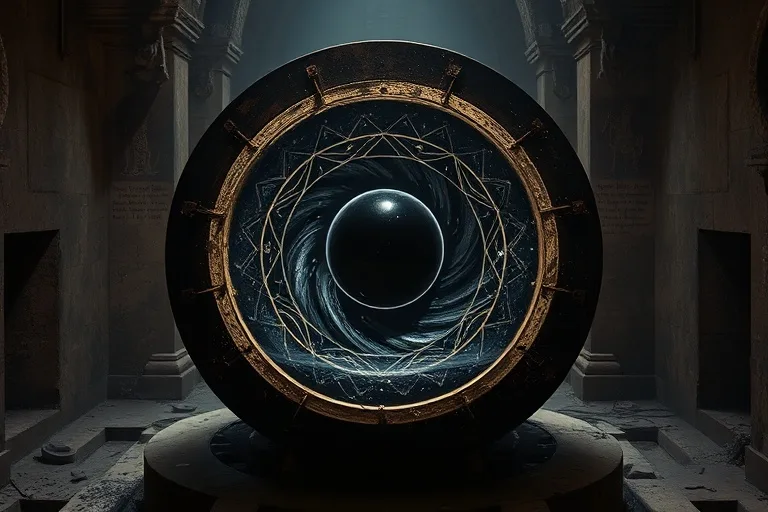
The enigmatic Black Sun, often depicted as a non-luminous orb, represents the initial stages of alchemical transformation and the hidden potential within darkness.
Table of Contents
- Historical Origins and Early Symbolism
- The Black Sun in Alchemical Tradition: Nigredo
- Jungian Psychology and the Shadow Self
- The Black Sun in Modern Esotericism
- Symbol of Power and Transformation
- Distinguishing from Malign Interpretations
- Meditative and Spiritual Practices
Historical Origins and Early Symbolism
The origins of the Black Sun symbol are deeply intertwined with ancient mystical and philosophical traditions. While not always explicitly named "Black Sun," the concept of a hidden, dark aspect of the solar principle can be traced back to various cultures. In ancient Egypt, for instance, the journey of Ra through the underworld during the night represented a period of dissolution and regeneration, a solar darkness preceding rebirth.
Hermetic and Gnostic texts often speak of a "dark light" or a "hidden sun" that illuminates the inner world rather than the outer. This inner illumination is not bright and obvious but subtle and profound, revealing truths that lie beneath the surface of conventional perception. These early references laid the groundwork for the more defined alchemical interpretations that would follow.
The symbol gained more prominence in the medieval and Renaissance periods, particularly within alchemical literature. Alchemists, who sought to transform base metals into gold, understood this process not just chemically but also spiritually. The Black Sun became a metaphor for the initial, darkest stage of this inner transformation, a necessary descent into chaos before the ascent to enlightenment.
The Black Sun in Alchemical Tradition: Nigredo
In alchemy, the Black Sun is most famously associated with the stage of Nigredo, or "blackening." This is the first and often most challenging phase of the Great Work (Magnum Opus), symbolizing decay, putrefaction, and dissolution. It is the stage where the raw material, or prima materia, is broken down, purified, and stripped of its superficial qualities.
- Decomposition: The Nigredo phase involves the symbolic death and decomposition of the old self, old beliefs, and outdated patterns. It is a confrontation with one's own inner darkness, imperfections, and unresolved issues.
- Chaos and Confusion: This stage is often characterized by psychological turmoil, confusion, and despair. It can feel like a "dark night of the soul," where everything familiar falls apart, and one is left facing an internal void.
- Purification: Despite its seemingly negative connotations, Nigredo is a crucial process of purification. By acknowledging and confronting the shadow aspects, one begins to cleanse the psyche of impurities, preparing it for subsequent stages of transformation.
The Black Sun in this context is not merely an absence of light but a light that shines in darkness, illuminating the hidden contents of the unconscious. It is the paradoxical light of introspection that reveals what has been suppressed or ignored. Without this descent into the blackness, true spiritual gold cannot be forged.
The journey of the Black Sun often mirrors the psychological process of integrating the shadow, leading to profound inner growth and wholeness.
Jungian Psychology and the Shadow Self
Carl Jung, the renowned Swiss psychiatrist and founder of analytical psychology, drew heavily from alchemical symbolism in his work on the human psyche. He recognized the profound parallels between the alchemical process and the process of individuation, the psychological journey of becoming a whole self. For Jung, the Black Sun can be seen as a powerful metaphor for the Shadow Self.
The Shadow is the unconscious aspect of the personality that the conscious ego does not identify with. It comprises repressed ideas, weaknesses, desires, instincts, and shortcomings. However, it also contains positive qualities that have been suppressed. Confronting and integrating the Shadow is a vital step in Jungian therapy and personal growth.
| Concept | Description |
|---|---|
| The Shadow | The unknown dark side of the personality, comprising both repressed negative and positive traits. |
| Nigredo (Alchemy) | The initial stage of blackening, decomposition, and purification; symbolic death of the old. |
| Black Sun | A symbolic representation of the hidden, non-luminous light that illuminates the unconscious, facilitating shadow integration. |
| Individuation | The psychological process of integrating the conscious and unconscious, leading to a more complete and balanced self. |
Just as the alchemist must endure the Nigredo to achieve the Philosopher's Stone, individuals must confront their Shadow to achieve psychological wholeness. The Black Sun, in this light, is the symbolic force that compels this confrontation, offering the opportunity for profound self-awareness and healing. It is the internal process of facing one's fears, flaws, and hidden potentials, transforming them into sources of strength.
The Black Sun in Modern Esotericism
In contemporary esoteric and occult circles, the Black Sun continues to hold significant meaning. It is often seen as a symbol of the "otherworld," the hidden dimensions of reality, or the primordial source of creation that lies beyond conventional perception. Its interpretations vary widely, reflecting the diverse nature of modern spiritual practices.
Some traditions associate it with the concept of the "void" or "unmanifest," the ultimate ground of being from which all things emerge and to which all things return. It can represent the ultimate mystery, the unknowable divine, or the dark feminine principle that embodies creation and destruction. For others, it is a symbol of anti-cosmic forces, challenging the established order and seeking a return to a more chaotic, primordial state.
- Primordial Source: Represents the origin point of existence, prior to the manifestation of light and form.
- Inner Cosmos: A gateway to deeply personal, subjective spiritual experiences and revelations.
- Shadow Integration: Continues to be a powerful emblem for shadow work, self-acceptance, and psychological integration.
- Hidden Knowledge: Symbolizes esoteric wisdom that is not readily apparent and requires deep introspection to uncover.
Its adaptability across different esoteric frameworks underscores its profound and universal appeal as a symbol for that which is hidden, powerful, and transformative. It speaks to the human desire to explore the unknown, both within and without, and to find meaning in the depths of existence.
The Black Sun as a central motif in a cosmic mandala, symbolizing the ultimate mystery and the unmanifest potential at the heart of creation.
Symbol of Power and Transformation
The Black Sun is not merely a symbol of darkness but, more importantly, a powerful emblem of transformation and inner strength. It represents the potential for profound change that arises from confronting and integrating one's shadow aspects. This process is inherently empowering, as it leads to a more complete and authentic self.
By embracing the "blackness" – the fears, flaws, and hidden desires – individuals can unlock immense reserves of energy and creativity that were previously bound up in repression. This integration allows for a more holistic understanding of oneself and the world, leading to greater resilience, wisdom, and spiritual maturity. The power of the Black Sun lies in its ability to facilitate this alchemical transmutation of lead into gold, psychologically speaking.
It signifies the courage to descend into one's own abyss, to face the unknown, and to emerge reborn. This journey is not for the faint of heart, but the rewards are immense: a deeper connection to one's true self, enhanced intuition, and the ability to navigate life's challenges with greater equanimity. It is a symbol for those who seek true mastery over their inner landscape.
Distinguishing from Malign Interpretations
It is crucial to address that, like many powerful symbols, the Black Sun has been subject to misinterpretation and appropriation, particularly by certain extremist groups. These groups have distorted its esoteric meaning, using it to symbolize ideologies of racial purity, dominance, and destructive power. This misuse is a profound deviation from its original and intended spiritual context.
The true esoteric Black Sun is fundamentally about internal, individual transformation and spiritual growth, not external, collective aggression or superiority. Its symbolism is rooted in the alchemical process of purification and integration, a journey towards wholeness that transcends superficial divisions. Scholars and practitioners of genuine esotericism unequivocally reject any association of the Black Sun with hate-filled or violent ideologies.
When approaching this symbol, it is vital to discern its authentic esoteric roots, which emphasize introspection, self-mastery, and the integration of all aspects of the self, both light and shadow, for the purpose of spiritual evolution and personal enlightenment. Any interpretation that promotes hatred, exclusion, or violence is a perversion of its profound spiritual message.
Meditative and Spiritual Practices
For those interested in exploring the Black Sun's symbolism in a constructive manner, various meditative and contemplative practices can be employed. These practices focus on inner exploration and the integration of unconscious elements, aligning with the symbol's original esoteric intent. It is important to approach such practices with respect, introspection, and a clear intention for personal growth.
Some common approaches include:
- Active Imagination: Engaging in guided meditations or visualizations where one consciously interacts with symbolic imagery, including a "Black Sun" as a representation of the unconscious mind or the shadow.
- Dream Analysis: Paying close attention to dreams, which often provide direct access to the unconscious, and interpreting them through the lens of shadow integration and personal transformation.
- Journaling and Self-Reflection: Dedicating time to writing about one's fears, hidden desires, past traumas, and unacknowledged strengths, allowing these "dark" aspects to surface and be processed.
- Symbolic Rituals: Creating personal rituals that acknowledge and honor the cycles of death and rebirth, dissolution and regeneration, mirroring the alchemical process.
These practices are not about worshipping darkness but about understanding and integrating it as an essential part of the human experience, leading to greater wholeness and enlightenment. The Black Sun serves as a powerful guide in this profound inner journey.
In conclusion, the Black Sun remains a potent and complex symbol within esoteric traditions. From its roots in ancient mystical thought and alchemical philosophy to its contemporary interpretations in Jungian psychology and modern occultism, it consistently points towards the necessity of confronting and integrating inner darkness for profound spiritual transformation. It is a symbol of hidden power, profound wisdom, and the ultimate journey towards self-realization, urging us to look beyond the superficial and embrace the transformative potential residing within the depths of our own being.
Fuente: Contenido híbrido asistido por IAs y supervisión editorial humana.


Comments
Post a Comment