
Chinese Zodiac Animal Element: Find Your Destiny | StarPluto
The Chinese Zodiac, a fascinating and ancient system, offers profound insights into an individual's personality, destiny, and compatibility. Unlike Western astrology, which is based on monthly zodiac signs, the Chinese Zodiac operates on a 12-year cycle, with each year represented by a specific animal. Furthermore, this system integrates the Five Elements – Wood, Fire, Earth, Metal, and Water – adding another layer of complexity and nuance to its interpretations. Understanding your Chinese Zodiac animal and its associated element can be a powerful tool for self-discovery and navigating life's challenges and opportunities.
This comprehensive guide will walk you through the process of identifying your unique Chinese Zodiac animal and element. We will delve into the characteristics of each animal and element, providing a foundational understanding of how these ancient principles shape individual traits and life paths. Whether you are new to Chinese astrology or seeking to deepen your knowledge, this article aims to provide clear, accessible information to help you uncover your place within this rich tradition.
Understanding the Chinese Zodiac: Animals and Elements
The Chinese Zodiac, known as Sheng Xiao (生肖), is a repeating cycle of 12 years, with each year being represented by an animal and its reputed attributes. This system is deeply rooted in Chinese culture and philosophy, influencing everything from personality analysis to marriage compatibility and career choices. The legend states that the Jade Emperor summoned all animals to a great race, and the order in which they arrived determined their place in the zodiac cycle. This mythical origin highlights the importance of diligence, strategy, and perseverance within the system.
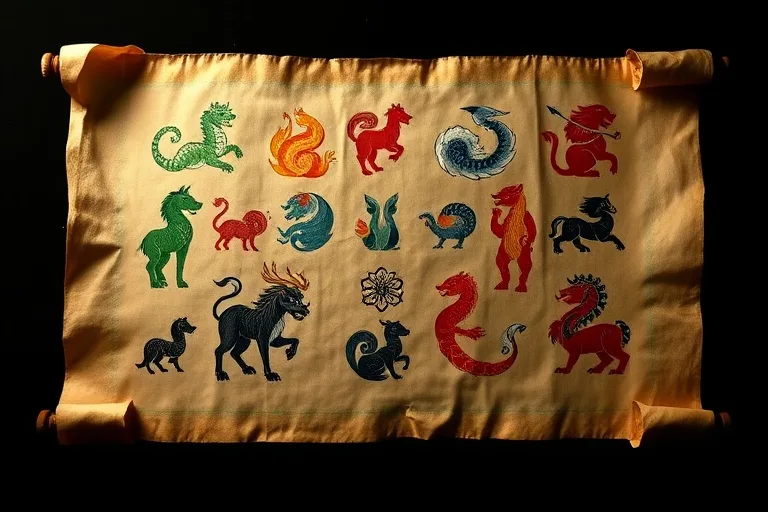
An ancient scroll reveals the intricate connection between Chinese zodiac animals and the five elemental forces, guiding self-discovery.
Beyond the animals, the Chinese Zodiac incorporates the Wu Xing (五行), or Five Elements theory: Wood, Fire, Earth, Metal, and Water. These elements are not static but are in a constant state of interaction, creation, and destruction, representing different phases of energy and matter. Each element is associated with specific colors, directions, seasons, and personality traits, further enriching the astrological profile of an individual. The combination of an animal and an element creates a unique energetic signature that influences a person's character and life experiences.
For example, while all individuals born under the sign of the Dragon share certain core characteristics, a Wood Dragon will exhibit different nuances compared to a Fire Dragon or a Metal Dragon. This elemental overlay provides a more detailed and personalized reading, moving beyond the general traits of the animal sign alone. Understanding this interplay is key to fully grasping the depth of Chinese astrology and its practical applications in daily life.
The 12 Chinese Zodiac Animals and Their Characteristics
Each of the 12 animals in the Chinese Zodiac possesses distinct personality traits and symbolic meanings. These animals rotate in a fixed order, influencing the characteristics of those born in their respective years. Below is a brief overview of each animal and its core attributes:
- Rat: Intelligent, quick-witted, charming, and resourceful. They are often ambitious and good at accumulating wealth.
- Ox: Diligent, dependable, strong, and determined. Oxen are known for their patience and conservative nature.
- Tiger: Brave, competitive, confident, and charismatic. Tigers are natural leaders but can be impulsive.
- Rabbit: Gentle, quiet, elegant, and responsible. Rabbits are known for their kindness and artistic sensibilities.
- Dragon: Enthusiastic, confident, intelligent, and ambitious. Dragons are powerful and charismatic figures, often seen as lucky.
- Snake: Enigmatic, intelligent, wise, and intuitive. Snakes are graceful and often possess a deep understanding of life.
- Horse: Active, energetic, animated, and independent. Horses love freedom and are known for their cheerful disposition.
- Goat (or Sheep/Ram): Gentle, calm, sympathetic, and artistic. Goats are peace-loving and enjoy being in nature.
- Monkey: Sharp, clever, curious, and playful. Monkeys are quick learners and good at problem-solving.
- Rooster: Observant, hardworking, courageous, and confident. Roosters are honest and enjoy being in the spotlight.
- Dog: Loyal, honest, cautious, and responsible. Dogs are known for their strong sense of justice and protective nature.
- Pig: Compassionate, generous, diligent, and honest. Pigs are good-natured and enjoy life's simple pleasures.
These traits offer a general framework, but the specific year of birth, combined with the element, refines these descriptions. For a deeper dive into the characteristics of each animal and their compatibility, you can explore resources on Tarot Quantum Mechanics Intersecting Divination Reality.
How to Calculate Your Chinese Zodiac Animal
Determining your Chinese Zodiac animal is relatively straightforward, as it's based on your birth year. However, there's a crucial detail to remember: the Chinese New Year does not fall on January 1st. It typically occurs between late January and mid-February. Therefore, if you were born in January or early February, your Chinese Zodiac animal might be the one from the previous calendar year.
To accurately find your animal, you need to consult a Chinese calendar or a reliable online calculator that accounts for the lunar new year dates. Here's a general guide to the zodiac cycle:
| Animal | Recent Years (Approximate) | Traits |
|---|---|---|
| Rat | 1948, 1960, 1972, 1984, 1996, 2008, 2020 | Intelligent, adaptable, charming |
| Ox | 1949, 1961, 1973, 1985, 1997, 2009, 2021 | Diligent, strong, dependable |
| Tiger | 1950, 1962, 1974, 1986, 1998, 2010, 2022 | Brave, confident, competitive |
| Rabbit | 1951, 1963, 1975, 1987, 1999, 2011, 2023 | Gentle, elegant, responsible |
| Dragon | 1952, 1964, 1976, 1988, 2000, 2012, 2024 | Enthusiastic, confident, charismatic |
| Snake | 1953, 1965, 1977, 1989, 2001, 2013, 2025 | Wise, intuitive, enigmatic |
| Horse | 1954, 1966, 1978, 1990, 2002, 2014, 2026 | Active, energetic, independent |
| Goat | 1955, 1967, 1979, 1991, 2003, 2015, 2027 | Gentle, calm, artistic |
| Monkey | 1956, 1968, 1980, 1992, 2004, 2016, 2028 | Clever, curious, playful |
| Rooster | 1957, 1969, 1981, 1993, 2005, 2017, 2029 | Observant, hardworking, courageous |
| Dog | 1958, 1970, 1982, 1994, 2006, 2018, 2030 | Loyal, honest, responsible |
| Pig | 1959, 1971, 1983, 1995, 2007, 2019, 2031 | Compassionate, generous, diligent |
To find your animal, simply locate your birth year in the table. If your birthday falls before the Chinese New Year in your birth year, you belong to the animal of the preceding year. For instance, if you were born on January 15, 1984, you would be a Pig (1983) because the Chinese New Year in 1984 was on February 2nd.
The Five Elements in Chinese Astrology
The Five Elements – Wood, Fire, Earth, Metal, and Water – are fundamental concepts in Chinese philosophy, medicine, and astrology. They represent different types of energy and their interactions, influencing everything from cosmic cycles to human personality. Each element is associated with a two-year period within the 60-year cycle, meaning each animal sign appears with a different element every 12 years.
Abstract representations of the five elements showcase their fundamental energies and interconnectedness.
- Wood: Represents growth, creativity, and flexibility. Wood types are often ambitious, compassionate, and enjoy exploring new ideas. They are natural innovators and problem-solvers.
- Fire: Symbolizes passion, dynamism, and leadership. Fire types are energetic, enthusiastic, and often have a strong desire for recognition. They can be impulsive but are also inspiring.
- Earth: Associated with stability, practicality, and reliability. Earth types are grounded, patient, and methodical. They value security and are often good at managing resources.
- Metal: Represents strength, determination, and discipline. Metal types are often resolute, independent, and goal-oriented. They can be rigid but are also fair and just.
- Water: Symbolizes adaptability, intuition, and communication. Water types are perceptive, empathetic, and often possess deep emotional intelligence. They are flexible and can easily flow with changes.
These elements interact in both productive and destructive cycles, which are crucial for understanding compatibility and the flow of energy. The productive cycle is Wood feeds Fire, Fire creates Earth (ash), Earth bears Metal, Metal carries Water, and Water nourishes Wood. The destructive cycle is Wood parts Earth, Earth absorbs Water, Water quenches Fire, Fire melts Metal, and Metal chops Wood. These cycles are used in advanced Chinese astrology to analyze relationships and life events.
Determining Your Chinese Zodiac Element
Your elemental sign is determined by the last digit of your birth year. This is a simpler calculation than finding your animal, as it doesn't depend on the Chinese New Year date. Each element governs two consecutive years, following a fixed pattern.
| Last Digit of Birth Year | Element | Associated Traits |
|---|---|---|
| 0 or 1 | Metal | Strong, disciplined, resolute |
| 2 or 3 | Water | Adaptable, intuitive, communicative |
| 4 or 5 | Wood | Creative, compassionate, growth-oriented |
| 6 or 7 | Fire | Passionate, energetic, leadership-driven |
| 8 or 9 | Earth | Stable, practical, reliable |
For example, if you were born in 1985, the last digit is 5, making your element Wood. If you were born in 1970, the last digit is 0, indicating your element is Metal. This elemental layer adds a unique flavor to your animal sign, providing a more personalized astrological profile. Understanding your element can help you leverage your inherent strengths and address potential weaknesses.
Combined Animal and Element Personalities
The true richness of the Chinese Zodiac emerges when you combine your animal sign with your elemental sign. This combination creates a unique personality archetype, offering a more nuanced understanding of an individual. For instance, a "Wood Dragon" will differ significantly from a "Metal Dragon."

A harmonious watercolor scene illustrates the interplay of water, wood, fire, metal, and earth elements.
Consider the example of the Dragon. All Dragons are generally charismatic and powerful. However:
- Wood Dragon: Combines the Dragon's ambition with Wood's creativity and flexibility. These Dragons are often more collaborative, open to new ideas, and possess a strong sense of justice. They are visionary leaders who inspire others.
- Fire Dragon: Amplifies the Dragon's inherent passion and leadership with Fire's dynamism. These individuals are extremely energetic, enthusiastic, and can be quite aggressive in pursuing their goals. They are natural born leaders, but can also be impulsive.
- Earth Dragon: Grounds the Dragon's power with Earth's stability and practicality. Earth Dragons are more realistic, reliable, and thoughtful in their approach. They are excellent planners and managers, valuing security and tradition.
- Metal Dragon: Infuses the Dragon's confidence with Metal's determination and discipline. These Dragons are highly ambitious, strong-willed, and often uncompromising. They are driven by a desire for success and can be very competitive.
- Water Dragon: Adds adaptability and intuition to the Dragon's charisma. Water Dragons are more flexible, perceptive, and empathetic. They can navigate complex social situations with ease and are often highly influential due to their persuasive nature.
This combination applies to all 12 animals, creating 60 unique archetypes (12 animals x 5 elements). Each combination reveals specific strengths, weaknesses, and tendencies, offering a deeper understanding of oneself and others. For more on specific animal traits, consider exploring Snake Zodiac: Famous Personalities & Traits or Monkey Personalities: Chinese Zodiac Traits in Action.
Significance and Application of Your Chinese Zodiac Profile
Knowing your Chinese Zodiac animal and element is more than just a fun fact; it provides a valuable framework for self-understanding and personal development. This knowledge can illuminate your inherent strengths, help you recognize potential challenges, and guide you in making informed decisions in various aspects of life.
In relationships, understanding the elemental and animal compatibility between individuals can foster better communication and empathy. For example, a Fire sign might find a Water sign's adaptability soothing, while a Metal sign might appreciate an Earth sign's stability. This insight can be particularly useful in romantic partnerships, family dynamics, and professional collaborations. You can delve into specific compatibilities like Rat and Goat Compatibility: A 2026 Astrological Guide or Rat Dragon Compatibility: Chinese Zodiac Insights.
From a career perspective, your zodiac profile can suggest suitable paths where your natural talents can flourish. A Wood person might excel in creative fields or entrepreneurship, while a Metal person might thrive in structured environments requiring precision and determination. This self-awareness can empower you to pursue roles that align with your innate tendencies, leading to greater job satisfaction and success. For those interested in career guidance, exploring Astrology Career Change: Cosmic Guidance Path might offer further insights.
Furthermore, Chinese astrology is often used to predict general trends for the year ahead, offering guidance on favorable times for certain activities or potential challenges to be aware of. While not deterministic, these forecasts can serve as a guide for planning and preparation. For instance, the Dragon Year 2024: Comprehensive Zodiac Forecast provides insights into the energies of that specific year. By understanding these influences, you can align your actions with the prevailing energies, enhancing your chances of success and well-being. The principles of Chinese Zodiac also extend to broader concepts like Mantras Affirmations: Vibrational Healing Power, which can complement your understanding of personal energy.
In conclusion, discovering your Chinese Zodiac animal and element is a journey into ancient wisdom that remains relevant today. It offers a unique lens through which to view your personality, relationships, and life path, providing valuable insights for personal growth and harmonious living. By embracing this knowledge, you can better understand yourself and your interactions with the world around you, fostering a more balanced and fulfilling existence.
Fuente: Contenido híbrido asistido por IAs y supervisión editorial humana.


Comments
Post a Comment