
Historical Astrological Systems: Babylonian, Hellenistic Practices | StarPluto
Astrology, in its myriad forms, has captivated humanity for millennia, offering insights into destiny, personality, and the cosmic dance. Its roots stretch deep into antiquity, with two primary traditions—Babylonian and Hellenistic—laying the foundational groundwork for much of what we understand as astrology today. These systems, though distinct in their development and emphasis, represent pivotal moments in the evolution of celestial divination, shaping how civilizations perceived the intricate connection between the heavens and earthly affairs.
Exploring these historical astrological systems is not merely an academic exercise; it is a journey into the intellectual and spiritual landscapes of ancient cultures. It reveals how early astronomers and diviners meticulously observed celestial phenomena, developed sophisticated mathematical models, and wove complex narratives to interpret the will of the gods or the unfolding of fate. Understanding their practices provides a crucial context for appreciating the enduring legacy and transformative power of astrology across civilizations.

This article delves into the intricate details of Babylonian and Hellenistic astrological practices, examining their unique contributions, methodologies, and the profound impact they continue to exert on contemporary astrological thought. We will uncover the origins of key concepts, trace their transmission across cultures, and highlight the figures who shaped these ancient sciences.
Table of Contents:
- The Dawn of Astrology: Babylonian Foundations
- Hellenistic Astrology: Synthesis and Systematization
- Bridging the Gap: Transmission and Evolution
- Methodologies and Interpretations
- Enduring Legacy in Modern Astrology
The Dawn of Astrology: Babylonian Foundations
The earliest systematic astrological practices emerged in Mesopotamia, primarily within the Babylonian civilization, dating back to the second and first millennia BCE. Unlike modern natal astrology, early Babylonian astrology was predominantly concerned with mundane events, focusing on omens and predictions for the king and the state rather than individual destinies. These observations were meticulously recorded on cuneiform tablets, forming vast archives of celestial data and their terrestrial correlations.
Babylonian astronomers were unparalleled observers of the night sky, developing sophisticated mathematical methods to track planetary movements, eclipses, and the positions of fixed stars. Their primary motivation was divinatory; they believed that celestial phenomena were signs from the gods, offering warnings or blessings regarding agriculture, warfare, and the well-being of the kingdom. The practice was deeply intertwined with religious and political life, with priests and scribes serving as expert interpreters of these divine messages.
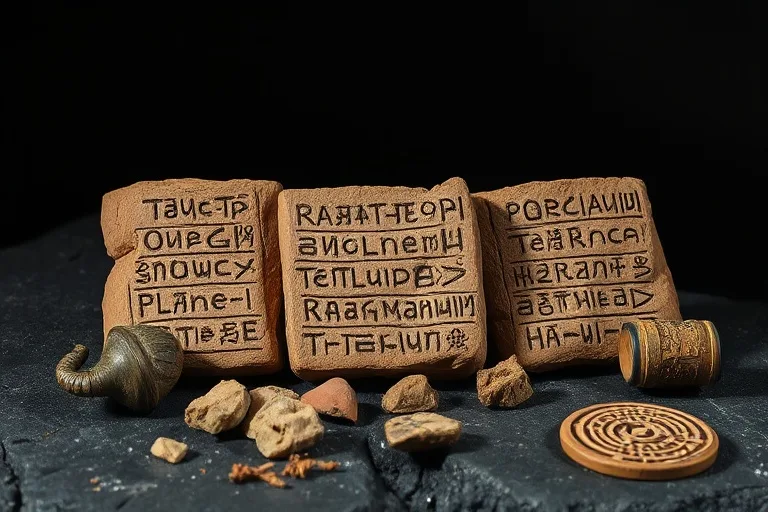
Key texts like the "Enuma Anu Enlil" represent monumental compilations of celestial omens, spanning thousands of entries. This series meticulously documented observations of the Moon, Sun, planets, and meteorological phenomena, associating them with specific earthly events. For instance, a particular lunar eclipse might foretell a famine, while the appearance of a specific planet in a certain constellation could indicate a military victory or defeat.
Another significant text, the "Mul.Apin," served as an astronomical compendium, providing lists of constellations, rising and setting times of stars, and methods for calculating planetary positions. While primarily astronomical, these texts were indispensable for the divinatory practices that formed the core of Babylonian astrology. The concept of the zodiac, though not yet divided into twelve equal signs as we know it, began to take shape with the identification of specific constellations along the ecliptic.
The Babylonians also developed a system of planetary week, assigning each day to a specific planet, a practice that eventually influenced the seven-day week observed globally. Their advancements in mathematics, particularly in sexagesimal notation, enabled precise astronomical calculations, laying a crucial foundation for future astrological and astronomical developments. The focus remained on collective destiny, with the king acting as the intermediary between the gods and the people, and celestial omens guiding his decisions for the welfare of the entire kingdom. For more on the history of celestial interpretations, you can explore Tarot Quantum Mechanics Intersecting Divination Reality.
| Text | Period | Primary Focus | Significance |
|---|---|---|---|
| Enuma Anu Enlil | Late 2nd - early 1st Millennium BCE | Celestial Omens (Moon, Sun, Planets) | Vast compilation of thousands of omens, guiding state affairs and royal decisions. |
| Mul.Apin | ~1000 BCE | Astronomical Compendium | Lists of constellations, star rising/setting times, planetary paths; foundational for observation. |
| Goal-Year Texts | ~4th Century BCE | Predictive Astronomical Tables | Used for predicting future planetary positions based on observed cycles, aiding omen interpretation. |
| Diaries | ~7th - 1st Century BCE | Daily Astronomical Observations & Market Prices | Detailed records linking celestial events with economic and historical occurrences. |
Hellenistic Astrology: Synthesis and Systematization
The conquests of Alexander the Great in the 4th century BCE facilitated an unprecedented cultural exchange, leading to the fusion of Babylonian celestial knowledge with Egyptian religious traditions and Greek philosophical thought. This synthesis gave birth to Hellenistic astrology, a system that dramatically shifted the focus from mundane omens to natal astrology—the prediction of individual destiny based on the moment of birth. Alexandria, Egypt, became the intellectual epicenter of this new astrological paradigm.
Hellenistic astrology introduced several key innovations that are still central to modern practice. The most significant was the development of the tropical zodiac, which divides the ecliptic into twelve equal signs of 30 degrees each, starting from the vernal equinox. This mathematical construct, rather than fixed constellations, became the primary framework for astrological interpretation. The signs were imbued with specific characteristics, ruling planets, and elemental qualities, laying the groundwork for complex personality analysis.

The concept of planetary rulerships, exaltations, and detriments was formalized, defining the strengths and weaknesses of planets in different zodiacal positions. Furthermore, the system of astrological houses was developed, dividing the celestial sphere into twelve sectors, each corresponding to different areas of life such as wealth, family, career, and relationships. These houses provided a more granular framework for interpreting the influence of planets and signs on an individual's life path.
Prominent figures like Claudius Ptolemy (2nd century CE) played a crucial role in systematizing Hellenistic astrology. His monumental work, the "Tetrabiblos," became the definitive textbook for astrological theory for over a millennium, codifying planetary aspects, dignities, and interpretative techniques. Another influential astrologer, Vettius Valens (also 2nd century CE), compiled the "Anthology," a practical guide filled with example charts and advanced predictive methods, offering invaluable insights into the application of Hellenistic principles. To understand more about planetary influences, consider reading about Tarot Quantum Mechanics Intersecting Divination Reality.
Core Hellenistic Astrological Concepts:
- Tropical Zodiac: Division of the ecliptic into 12 equal 30-degree signs, starting from the vernal equinox, independent of constellations.
- Planetary Rulerships: Each zodiac sign assigned a ruling planet, indicating where a planet expresses its nature most powerfully.
- Astrological Houses: Twelve divisions of the celestial sphere, each governing specific areas of life (e.g., self, possessions, communication, home, love, health, relationships, death, philosophy, career, friendships, hidden enemies).
- Aspects: Angular relationships between planets and points in a chart, signifying harmonious or challenging interactions (e.g., conjunction, opposition, trine, square, sextile).
- Lots (or Parts): Mathematically derived points in the chart, often used for specific areas of fortune, spirit, or other life themes.
- Dignities and Debilities: A system evaluating the strength or weakness of a planet based on its zodiacal placement (e.g., exaltation, fall, detriment).
- Profections and Directions: Advanced predictive techniques used to forecast significant life events by advancing the natal chart or specific points within it over time.
Bridging the Gap: Transmission and Evolution
The transition from Babylonian to Hellenistic astrology was a complex process of cultural exchange and intellectual adaptation. Babylonian astronomical tables and omens were translated into Greek, providing the raw data for Hellenistic astrologers. However, the Greeks, with their philosophical inclinations, sought to rationalize and systematize these observations, integrating them into a coherent worldview that explained individual fate within a deterministic cosmos.
The Alexandrian period, characterized by its famous library and vibrant intellectual community, served as a melting pot where Mesopotamian, Egyptian, and Greek ideas converged. Egyptian influences contributed to the emphasis on individual destiny and the development of decans (36 divisions of the zodiac), while Greek philosophy provided the theoretical framework for understanding the cosmos as an interconnected system. This period saw the birth of the horoscope as we recognize it today, a chart cast for the moment of birth, depicting the positions of planets and signs.
From its Hellenistic peak, astrological knowledge spread throughout the Roman Empire, influencing thinkers and emperors alike. Later, during the Islamic Golden Age, Arab scholars meticulously preserved, translated, and expanded upon Hellenistic texts, adding their own innovations, such as the development of more precise astronomical instruments and advanced mathematical techniques. These Islamic contributions were then transmitted back to Europe during the Middle Ages, rekindling astrological studies in the West. For more on the influence of zodiac signs, you can read about Tarot Quantum Mechanics Intersecting Divination Reality.
Methodologies and Interpretations
The methodologies employed by Babylonian and Hellenistic astrologers differed significantly, reflecting their distinct objectives. Babylonian astrology was primarily observational and inductive, deriving omens from observed celestial patterns and their subsequent earthly correlations. Its interpretations were often direct and literal, focusing on the immediate implications for the state or king. The emphasis was on identifying recurring patterns that signaled divine intent, making it a form of Female Hormonal Biohacking: Longevity, Well-being Strategies rather than a study of individual character.
Hellenistic astrology, by contrast, was deductive and systematic. It began with a theoretical framework—the tropical zodiac, planetary rulerships, houses, and aspects—and then interpreted the unique configuration of a birth chart based on these established principles. This allowed for a much more nuanced and individualized analysis, delving into personality traits, life potential, and specific events in an individual's life. Predictive techniques like profections, primary directions, and planetary periods were developed to forecast the timing of major life events, moving beyond simple omens to a comprehensive system of fate.
While Babylonian astrology was largely mundane, Hellenistic astrology expanded to include both mundane (world events) and natal (individual) applications. The development of the natal chart provided a powerful tool for understanding human psychology and potential, a concept that resonated deeply with Greek philosophical inquiries into the nature of man and his place in the cosmos. This shift marked a profound evolution, transforming astrology from a tool for statecraft into a personal guide for life. For further understanding of predictive systems, explore Tarot Quantum Mechanics Intersecting Divination Reality.
Enduring Legacy in Modern Astrology
The contributions of Babylonian and Hellenistic astrological systems are indelible, forming the bedrock upon which much of contemporary astrology is built. The tropical zodiac, planetary rulerships, aspects, and house systems that are standard in Western astrology today are direct descendants of Hellenistic innovations. Even the names of many constellations and planets derive from Greek and Roman mythology, reflecting the cultural transmission of these ancient traditions.
Modern astrologers, particularly those practicing traditional or Hellenistic revival astrology, continue to study and apply the techniques outlined by Ptolemy, Valens, and other ancient masters. Concepts such as planetary dignities, lots, and specific predictive methods like profections are experiencing a resurgence, offering deeper layers of interpretation than purely modern approaches. The meticulous astronomical observations of the Babylonians, though primarily for omens, laid the empirical foundation for understanding celestial mechanics, which was then refined and integrated into the more philosophical framework of Hellenistic astrology.
Ultimately, these historical systems remind us that astrology is a living tradition, constantly evolving yet firmly anchored in its ancient past. Their study provides not only a historical perspective but also a rich reservoir of techniques and philosophical insights that continue to enrich and deepen our understanding of the cosmos and our place within it. The journey from celestial omens for kings to personalized birth charts for individuals is a testament to humanity's persistent quest for meaning in the stars. To further explore personal cosmic blueprints, consider Tarot Quantum Mechanics Intersecting Divination Reality.
Fuente: Contenido híbrido asistido por IAs y supervisión editorial humana.


Comments
Post a Comment