
Inter-Elemental Relationships Astrology: Compatibility Harmony Strategies | StarPluto
In the intricate tapestry of astrology, understanding the elemental composition of a birth chart transcends basic interpretations, offering profound insights into personality, motivations, and, crucially, interpersonal dynamics. Beyond merely identifying one's Sun sign element, a deep dive into Cosmic Sociology AI Ethics Global Consciousness Digital Age provides advanced strategies for fostering harmony, managing conflict, and maximizing potential in all forms of compatibility. This comprehensive guide explores the nuanced interplay of Fire, Earth, Air, and Water, moving beyond superficial analyses to reveal the sophisticated mechanisms of elemental balance and interaction.

A conceptual depiction of the four astrological elements in balanced interaction, symbolizing harmony.
The four classical elements—Fire, Earth, Air, and Water—are the foundational building blocks of astrological interpretation. Each element governs a specific mode of being, a set of psychological traits, and a particular energetic expression. While individual planets and signs contribute to this elemental mix, the overall distribution of elements in a natal chart paints a broad stroke of an individual's core nature and how they navigate the world.
Mastering inter-elemental relationships involves not just recognizing these elemental biases but understanding how they combine, clash, and complement each other, both within a single chart and between two charts in synastry. This advanced perspective allows for a more holistic and accurate assessment of compatibility, moving beyond simple Sun sign comparisons to a truly sophisticated understanding of energetic resonance.
Table of Contents
- Understanding the Four Elements
- Elemental Balance and Imbalance in Natal Charts
- Synastry and Inter-Elemental Compatibility
- Advanced Strategies for Elemental Harmony
- The Role of Modalities and Polarities
- Practical Application and Self-Mastery
Understanding the Four Elements
Each element represents a fundamental psychological function and a distinct approach to life. Recognizing these core attributes is the first step towards mastering their interactions. The elements are not isolated forces but rather parts of a dynamic system, constantly influencing and transforming one another.
- Fire (Aries, Leo, Sagittarius): Characterized by enthusiasm, inspiration, action, and a desire for self-expression. Fire signs are passionate, energetic, and often impulsive. Their focus is on growth, creativity, and direct experience.
- Earth (Taurus, Virgo, Capricorn): Associated with practicality, stability, structure, and a connection to the material world. Earth signs are grounded, reliable, and focused on tangible results. They value security, tradition, and sensory experience.
- Air (Gemini, Libra, Aquarius): Represents intellect, communication, objectivity, and social interaction. Air signs are analytical, curious, and seek connection through ideas and conversation. They thrive on mental stimulation and abstract thought.
- Water (Cancer, Scorpio, Pisces): Governs emotions, intuition, empathy, and the subconscious realm. Water signs are sensitive, nurturing, and deeply connected to their inner world and the feelings of others. They seek emotional depth and spiritual understanding.
These elemental descriptions serve as a baseline. The true complexity emerges when we consider their interactions. For instance, Fire and Air elements are generally considered compatible due to their shared outgoing nature and intellectual synergy, while Fire and Water can be volatile, representing a clash between passion and emotion.
Elemental Balance and Imbalance in Natal Charts
A balanced elemental distribution in a natal chart suggests a well-rounded personality, capable of adapting to various situations. However, most charts exhibit an elemental bias, either an excess or a deficiency in one or more elements. Understanding these imbalances is crucial for personal growth and for navigating relationships.
- Excess of Fire: Can lead to impulsiveness, impatience, arrogance, and burnout. Individuals may struggle with follow-through or sensitivity to others' feelings.
- Deficiency of Fire: May result in a lack of motivation, enthusiasm, self-confidence, or difficulty initiating action.
- Excess of Earth: Can manifest as stubbornness, materialism, rigidity, or resistance to change. Individuals might be overly cautious or stuck in routines.
- Deficiency of Earth: May lead to impracticality, disorganization, financial instability, or a lack of grounding and common sense.
- Excess of Air: Can cause overthinking, detachment, anxiety, or difficulty connecting with emotions. Individuals might be too intellectual or scattered.
- Deficiency of Air: May result in poor communication skills, a lack of objectivity, narrow-mindedness, or difficulty forming social connections.
- Excess of Water: Can lead to hypersensitivity, moodiness, emotional overwhelm, or a tendency to absorb others' energies. Individuals might struggle with boundaries.
- Deficiency of Water: May result in emotional detachment, insensitivity, difficulty expressing feelings, or a lack of empathy and intuition.
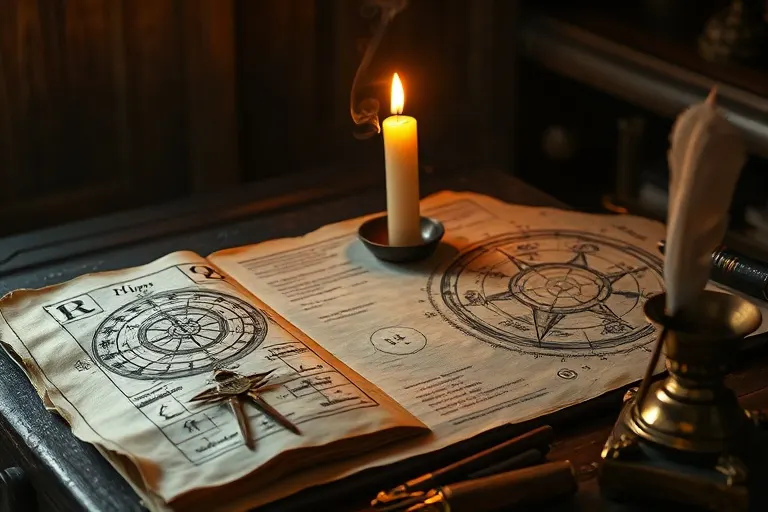
Historical astrological tools and texts, symbolizing the deep study of elemental forces.
Addressing these imbalances is a key aspect of advanced astrological work. It involves consciously developing the deficient elements or moderating the excessive ones. For example, someone with an excess of Fire and a deficiency of Water might benefit from practices that foster emotional awareness and empathy, such as meditation or journaling.
Synastry and Inter-Elemental Compatibility
In synastry, the comparison of two birth charts, elemental relationships are paramount for understanding compatibility. While a balanced elemental exchange between partners is often ideal, dynamic and even challenging combinations can lead to growth and profound connection if understood and managed consciously.
Here's a breakdown of common inter-elemental dynamics in relationships:
| Elemental Pair | Dynamics & Challenges | Strengths & Harmony |
|---|---|---|
| Fire & Fire | High energy, passion, but can lead to competition, arguments, and burnout. | Mutual inspiration, shared enthusiasm, adventurous spirit, strong sexual chemistry. |
| Fire & Earth | Fire can feel stifled by Earth's caution; Earth can feel overwhelmed by Fire's impulsiveness. | Earth grounds Fire's ideas, Fire inspires Earth to take risks. Productive, complementary. |
| Fire & Air | Air can intellectualize Fire's passion; Fire can find Air too detached. | Air fuels Fire's ideas, stimulating creativity and communication. Exciting, dynamic. |
| Fire & Water | Water can extinguish Fire; Fire can boil Water. Emotional intensity, potential for volatility. | Deep passion, emotional depth, Water can soothe Fire, Fire can warm Water. Transformative. |
| Earth & Earth | Can become too rigid, stuck in routines, or overly materialistic. Lack of spontaneity. | Stability, security, shared values, practical support, strong foundation. Reliable. |
| Earth & Air | Air can find Earth too slow or boring; Earth can find Air too flighty or impractical. | Air brings new ideas to Earth's practicality; Earth grounds Air's abstract thoughts. Innovative yet stable. |
| Earth & Water | Water can erode Earth's boundaries; Earth can stifle Water's emotional flow. | Water nourishes Earth, fostering growth and emotional depth. Nurturing, supportive, fertile. |
| Air & Air | Can be too intellectual, detached, or scattered. Lack of emotional depth or practical grounding. | Excellent communication, intellectual stimulation, shared ideas, freedom. Mentally engaging. |
| Air & Water | Air can intellectualize Water's emotions; Water can overwhelm Air's logic. Misunderstandings. | Air brings objectivity to Water's emotions; Water adds depth to Air's ideas. Empathetic understanding. |
| Water & Water | Can lead to emotional intensity, codependency, or getting lost in shared feelings. Lack of objectivity. | Deep emotional connection, empathy, intuition, mutual understanding, spiritual bond. Profound. |
Advanced Strategies for Elemental Harmony
Beyond basic compatibility, advanced strategies involve conscious effort to balance and integrate elemental energies. This is particularly relevant when dealing with significant elemental imbalances or challenging synastric combinations. It's not about changing who you are, but rather expanding your capacity to express different elemental qualities.
- Conscious Development of Deficient Elements: If your chart lacks Earth, engage in practical, grounding activities like gardening, cooking, or managing finances. If Water is scarce, practice empathy, listen actively, or spend time near water bodies.
- Moderating Excessive Elements: An excess of Fire can be channeled through physical exercise, creative outlets, or leadership roles. Too much Air might require mindfulness practices to ground mental energy or focusing on tangible tasks.
- Utilizing Planetary Placements: Look to planets in signs of your deficient elements. For example, if you lack Earth but have Mars in Capricorn, consciously use your Martian energy in a disciplined, practical way to compensate.
- Transits and Progressions: Pay attention to current transits or progressed planets moving through signs of your deficient elements. These periods offer opportunities to develop those qualities more easily.
- Synastric Compensation: In relationships, partners often unconsciously compensate for each other's elemental deficiencies. A Fire-dominant person might be drawn to a Water-dominant partner to provide emotional depth, and vice-versa. Recognizing this dynamic consciously allows for mutual support rather than conflict.

A mosaic of gemstones representing the intricate and balanced connections between astrological elements.
The Role of Modalities and Polarities
While elements describe the "what" of energy, modalities (Cardinal, Fixed, Mutable) describe the "how" that energy is expressed. Integrating modalities with elemental understanding adds another layer of sophistication to compatibility analysis. For instance, a Cardinal Fire (Aries) will initiate action differently than a Fixed Fire (Leo) or a Mutable Fire (Sagittarius), even though all share the Fire element.
- Cardinal (Aries, Cancer, Libra, Capricorn): Initiators, leaders, driven to start things.
- Fixed (Taurus, Leo, Scorpio, Aquarius): Stabilizers, persistent, resistant to change, focused on maintenance.
- Mutable (Gemini, Virgo, Sagittarius, Pisces): Adaptable, flexible, communicative, focused on transition and change.
Furthermore, understanding elemental polarities (Fire/Air vs. Earth/Water) can highlight fundamental differences in perspective. Fire and Air are active, objective, and outward-focused, while Earth and Water are receptive, subjective, and inward-focused. Relationships between these polarities require conscious effort to bridge the gap between different ways of perceiving and interacting with the world.
Practical Application and Self-Mastery
The ultimate goal of mastering inter-elemental relationships is not just to predict compatibility but to cultivate self-awareness and foster deeper, more harmonious connections. By recognizing your own elemental makeup and that of others, you can:
- Improve Communication: Tailor your communication style to resonate with another's dominant element. For an Air-dominant person, appeal to logic; for a Water-dominant, acknowledge emotions.
- Manage Conflict: Understand the root elemental clash. Is it a Fire person's impulsiveness clashing with an Earth person's need for stability? Address the underlying elemental need.
- Enhance Personal Growth: Actively work on developing your deficient elements to become a more well-rounded individual, capable of responding effectively to a wider range of life's demands.
- Deepen Empathy: Recognize that others' reactions and motivations stem from their unique elemental blueprint, fostering greater understanding and compassion.
Astrology, at its advanced level, is a tool for self-mastery and relational wisdom. The elements provide a powerful framework for understanding the energetic currents that shape our lives and our interactions. By delving into the subtleties of inter-elemental relationships, you unlock a profound capacity for harmony, not just with others, but within yourself.
Fuente: Contenido híbrido asistido por IAs y supervisión editorial humana.


Comments
Post a Comment