
Psychology Horoscopes Belief Self-Fulfillment Suggestion | StarPluto
Horoscopes, with their daily, weekly, or monthly predictions, have captivated human interest for centuries. Despite a lack of scientific evidence supporting their predictive accuracy, millions worldwide consult them regularly. This enduring appeal points not to cosmic determinism, but to a fascinating interplay of psychological phenomena that shape how we perceive, interpret, and even act upon these astrological readings.
Understanding the psychology behind horoscope belief offers profound insights into human cognition, our need for meaning, and the subtle ways suggestion can influence our lives. This exploration delves into the mechanisms that make horoscopes resonate so deeply with individuals, transforming vague statements into personally relevant truths.
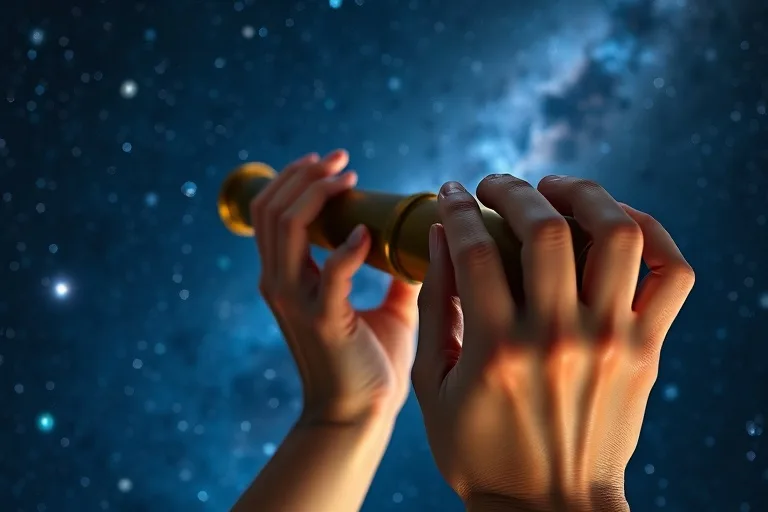
A solitary figure's hands guide a vintage telescope towards a luminous, star-filled expanse, reflecting humanity's ancient quest for understanding and connection with the cosmos.
This article aims to dissect the psychological underpinnings of horoscope engagement, moving beyond mere skepticism to appreciate the complex cognitive processes involved. We will examine how psychological principles like the Barnum Effect, cognitive biases, and the power of suggestion contribute to the perceived accuracy and utility of astrological forecasts.
By exploring these mechanisms, we can gain a clearer perspective on why horoscopes continue to thrive in modern spirituality and how individuals can navigate their influence with a more critical and informed mindset. This journey into the mind's interaction with astrological predictions reveals more about ourselves than about the stars.
Table of Contents
- The Barnum Effect: Why Horoscopes Feel Personal
- Cognitive Biases at Play: Confirmation Bias and Selective Memory
- The Power of Suggestion: Shaping Perception and Behavior
- Self-Fulfilling Prophecy: When Belief Becomes Reality
- Horoscopes as a Coping Mechanism: Comfort and Guidance
- Modern Spirituality and the Quest for Meaning
- Scientific Perspectives on Astrology
- Navigating Horoscope Influence: Critical Thinking
The Barnum Effect: Why Horoscopes Feel Personal
One of the most significant psychological factors contributing to horoscope belief is the Barnum Effect, also known as the Forer Effect. This phenomenon describes our tendency to accept vague, general personality descriptions as uniquely applicable to ourselves, even though they could apply to almost anyone. Horoscopes are expertly crafted to leverage this cognitive bias.
Psychologist Bertram R. Forer demonstrated this in 1948 by giving students a personality test and then providing them with a generic personality analysis, claiming it was tailored to them. The students overwhelmingly rated the accuracy of their "personal" analysis very highly, unaware that every student received the exact same text.
Horoscope writers often use broad statements that touch upon universal human experiences, such as "You sometimes doubt your decisions" or "You have a great deal of unused capacity." These statements are designed to resonate with a wide audience, making each reader feel a personal connection to the prediction, thus reinforcing belief in the horoscope's accuracy.
- Vagueness: Statements are general enough to apply to most people.
- Positive Framing: Often include flattering or hopeful remarks.
- Authority Bias: Presented with an air of mystical or ancient authority.
- Personal Relevance: Individuals actively seek connections to their own lives.
Cognitive Biases at Play: Confirmation Bias and Selective Memory
Beyond the Barnum Effect, several other cognitive biases contribute to the perceived validity of horoscopes. Confirmation bias is a powerful one, leading individuals to seek out, interpret, and remember information in a way that confirms their existing beliefs or expectations. When reading a horoscope, people tend to notice and recall the predictions that align with their experiences, while overlooking or rationalizing those that don't.
For instance, if a horoscope predicts a "challenging day at work," someone might attribute any minor setback or disagreement to this prediction, even if similar events occur on days with different forecasts. Conversely, if a positive prediction is made, any good fortune is readily linked back to the horoscope, strengthening the belief in its power.
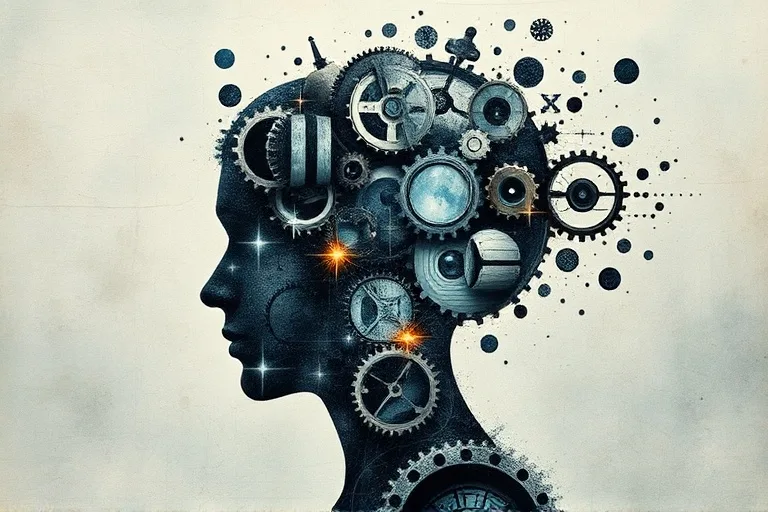
An abstract digital artwork depicts the intricate and often distorted nature of human thought processes, with fragmented reflections symbolizing cognitive biases in action.
Selective memory further solidifies this effect. We are more likely to remember instances where a horoscope seemed accurate than those where it was clearly wrong. Over time, this selective recall creates a skewed perception of the horoscope's overall predictive success, reinforcing the belief system. This psychological phenomenon is not unique to horoscopes but is a fundamental aspect of how our brains process information and maintain coherence in our worldviews.
The human mind is adept at finding patterns and making connections, even when none objectively exist. This patternicity, combined with the desire for order and predictability, makes us particularly susceptible to the allure of systems like astrology that promise to reveal hidden meanings and future events. For a deeper dive into how our minds process complex spiritual concepts, consider exploring resources on mind and belief systems.
The Power of Suggestion: Shaping Perception and Behavior
The power of suggestion plays a crucial role in how horoscopes influence individuals. When a person reads a prediction, it can subtly prime their mind to notice certain events or adopt particular attitudes. This is not to say horoscopes force actions, but they can create a framework through which daily experiences are filtered and understood.
For example, if a horoscope suggests "a day for bold decisions," an individual might feel more confident in taking a risk they were already contemplating. If it warns of "potential misunderstandings in relationships," they might become more sensitive to perceived slights or miscommunications, inadvertently contributing to them.
This psychological priming can lead to a phenomenon known as the "nocebo effect," the opposite of the placebo effect, where negative expectations can actually induce negative outcomes. If a horoscope predicts bad luck, an individual might become more anxious, less proactive, and more prone to perceiving negative events, thus seemingly confirming the prediction.
| Psychological Mechanism | How it Applies to Horoscopes |
|---|---|
| Barnum Effect | Vague statements are perceived as highly accurate and personal. |
| Confirmation Bias | Individuals seek out and remember information that confirms predictions. |
| Selective Memory | Positive hits are remembered, misses are forgotten or rationalized. |
| Power of Suggestion | Predictions subtly influence perceptions and behaviors. |
| Self-Fulfilling Prophecy | Belief in a prediction leads to actions that make it come true. |
Self-Fulfilling Prophecy: When Belief Becomes Reality
Perhaps the most profound psychological impact of horoscopes lies in the concept of the self-fulfilling prophecy. This occurs when a person's belief or expectation about a situation influences their behavior in such a way that the initial expectation is ultimately fulfilled. In the context of horoscopes, if someone deeply believes a prediction, they might unconsciously alter their actions or attitudes to align with it.
For example, if a horoscope advises a specific zodiac sign to "be open to new romantic opportunities," that individual might become more outgoing, engage in more social interactions, or simply be more receptive to advances. These behavioral changes increase the likelihood of meeting someone new, thus fulfilling the prophecy.

An extreme close-up captures the intricate beauty of a fern frond as it slowly unfurls, a natural metaphor for personal growth and the gradual revelation of one's path.
Conversely, a negative prediction, such as "expect financial difficulties," could lead to increased anxiety, reduced risk-taking, or even missed opportunities, which could then contribute to actual financial strain. The belief itself, rather than any celestial influence, becomes the driving force behind the outcome.
This mechanism highlights the immense power of our own minds and beliefs in shaping our reality. It underscores that while the stars may not dictate our fate, our interpretation and internalization of their supposed messages certainly can. Understanding this dynamic empowers individuals to critically evaluate the source of their beliefs and their potential impact.
Horoscopes as a Coping Mechanism: Comfort and Guidance
Beyond cognitive biases, horoscopes serve important emotional and psychological functions. In an uncertain world, they offer a sense of order, predictability, and control. For many, reading a horoscope provides comfort and reassurance, a feeling that someone or something understands their struggles and offers guidance for the future.
They can act as a form of informal therapy, offering a moment of self-reflection and a narrative framework for understanding life's ups and downs. When facing stress or difficult decisions, a horoscope can provide a perceived external validation or a nudge in a particular direction, reducing cognitive load and decision fatigue.
For some, horoscopes are a source of hope and optimism, especially when predictions are positive. This can boost mood, motivation, and resilience, helping individuals navigate challenges with a more positive outlook. This emotional support is a significant reason for their continued popularity, regardless of their scientific validity.
Modern Spirituality and the Quest for Meaning
In contemporary society, horoscopes have found a niche within the broader landscape of modern spirituality. As traditional religious affiliations decline, many individuals seek alternative sources of meaning, connection, and self-understanding. Astrology, with its ancient roots and cosmic narrative, offers a compelling framework for exploring personal identity and destiny.
It provides a language to describe personality traits, relationship dynamics, and life challenges, allowing people to feel more connected to a larger, universal plan. This quest for meaning is a fundamental human drive, and horoscopes, even if psychologically driven, fulfill this need for many. They offer a sense of belonging to a cosmic order and a shared experience with others born under the same sign.
The rise of online platforms and social media has further amplified the reach and accessibility of horoscopes, integrating them into daily routines and conversations. This digital proliferation has transformed astrology from an esoteric practice into a mainstream cultural phenomenon, often intertwined with wellness, self-care, and personal growth narratives. For more on how astrology influences modern life, consider reading about astrology and psychology.
Scientific Perspectives on Astrology
From a scientific standpoint, astrology, and by extension horoscopes, are generally considered a pseudoscience. Numerous studies have attempted to find a correlation between astrological predictions and actual life events or personality traits, consistently failing to yield statistically significant results. Scientific methodology relies on empirical evidence, falsifiability, and reproducibility, criteria that astrology does not meet.
For example, experiments testing whether astrologers can accurately predict personality traits from birth charts, or match birth charts to individuals, have shown results no better than chance. The gravitational and electromagnetic forces exerted by distant celestial bodies are negligible compared to forces on Earth, making any direct physical influence on human personality or fate highly improbable.
Despite this scientific consensus, it's important to differentiate between the scientific validity of astrology and the psychological utility of horoscopes. While the former lacks empirical support, the latter clearly provides psychological benefits for many, as discussed throughout this article. The scientific perspective seeks to understand the "how" and "why" of belief, rather than simply dismissing it.
Navigating Horoscope Influence: Critical Thinking
Given the powerful psychological mechanisms at play, how can individuals navigate the influence of horoscopes with a healthy dose of critical thinking? The key lies in awareness and conscious engagement. Recognizing the Barnum Effect, confirmation bias, and the potential for self-fulfilling prophecies allows one to approach horoscopes as a form of entertainment or self-reflection, rather than infallible prophecy.
It is beneficial to consider horoscopes as prompts for introspection rather than directives. If a horoscope suggests a particular challenge or opportunity, one can reflect on whether that resonates with their current situation or aspirations, without feeling bound by the prediction. This approach transforms a passive consumption of information into an active process of self-discovery.
- Maintain Skepticism: Approach predictions with a critical, questioning mind.
- Focus on Self-Reflection: Use horoscopes as a tool for introspection, not decision-making.
- Observe Biases: Be aware of how confirmation bias might influence your interpretation.
- Empower Personal Agency: Remember that your choices and actions shape your reality.
Ultimately, the psychology of horoscopes reveals more about the human mind's incredible capacity for belief, pattern recognition, and self-influence than it does about the alignment of planets. By understanding these dynamics, we can engage with horoscopes in a way that is both entertaining and psychologically empowering, fostering self-awareness without surrendering personal agency.
Fuente: Contenido híbrido asistido por IAs y supervisión editorial humana.


Comments
Post a Comment