
Sacred Geography: Power Spots, Ley Lines, Astrological Relocation | StarPluto
Sacred Geography is an intriguing field that explores the profound connections between specific geographical locations and their perceived spiritual or energetic significance. This ancient concept suggests that certain places on Earth possess unique qualities capable of influencing human experience, consciousness, and even destiny. It encompasses a rich tapestry of beliefs, from ancient indigenous traditions to modern esoteric practices, all centered on the idea that the Earth itself is a living entity with discernible energy patterns.
The study of sacred geography invites us to look beyond the physical landscape and consider the subtle forces that might be at play. It delves into how our ancestors perceived and interacted with their environment, often selecting sites for temples, ceremonies, and settlements based on these energetic considerations. Understanding these principles can offer new perspectives on historical architecture, cultural practices, and even personal well-being.
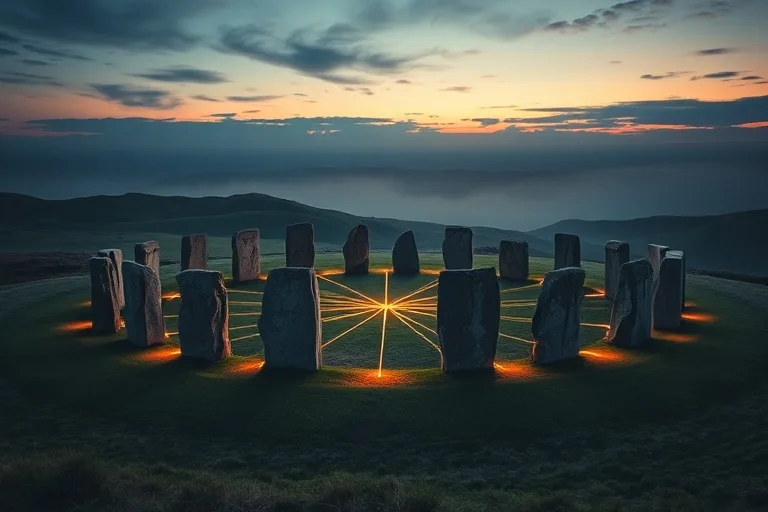
A majestic ancient stone circle, a prime example of a power spot, resonates with the subtle energies of the Earth at dawn.
This article will explore three core components of sacred geography: power spots, ley lines, and astrological relocation. We will examine their definitions, historical context, proposed mechanisms, and their relevance in contemporary understanding. By shedding light on these concepts, we aim to provide an educational and informed perspective on how location can profoundly influence our lives.
From ancient megalithic structures to modern personal choices about where to live, the idea of energetically significant places continues to captivate and inspire. Join us as we unravel the mysteries of these powerful geographical phenomena and their potential impact on human existence.
Sacred Geography Defined
Sacred geography is the study of places that hold special spiritual or energetic significance within various cultures and belief systems. These locations are often considered holy, powerful, or conducive to spiritual experiences. The concept is deeply rooted in geomancy, the ancient art of harmonizing with the Earth's energies, and has been practiced across civilizations for millennia.
Historically, cultures worldwide have identified specific sites as sacred, ranging from natural formations like mountains, caves, and springs to human-made structures such as temples, pyramids, and megaliths. These sites were chosen not merely for aesthetic beauty but for perceived energetic qualities that could facilitate healing, meditation, or connection with the divine. The selection of these locations often involved careful observation of natural phenomena, celestial alignments, and intuitive understanding of the land.
The underlying premise is that the Earth is not a uniform, inert sphere but a dynamic system with varying energy concentrations and flows. These energies are believed to influence everything from crop growth and animal behavior to human mood and spiritual insight. Sacred geography, therefore, seeks to understand, map, and utilize these energetic landscapes for spiritual and practical purposes.
- Ancient Roots: Many indigenous cultures, such as Native Americans, Australian Aborigines, and Celtic peoples, possessed intricate knowledge of sacred sites and their energetic properties.
- Universal Phenomenon: The presence of sacred sites is a global phenomenon, found in nearly every culture and religion, suggesting a universal human recognition of special places.
- Purposeful Design: Temples and cathedrals were often built on pre-existing sacred sites, indicating a continuity of belief in the power of these locations.
Power Spots: Centers of Earth's Energy
Power spots, also known as energy vortexes or sacred sites, are geographical locations believed to possess a concentrated or unique energetic signature. These areas are thought to emit powerful Earth energies that can have a profound impact on individuals who visit them. The effects reported by visitors vary widely, from feelings of peace and rejuvenation to heightened spiritual awareness and even physical healing.
These spots are often characterized by unusual geological formations, historical significance, or the presence of ancient megalithic structures. Examples include Stonehenge in England, Machu Picchu in Peru, the Sedona vortexes in Arizona, and various ancient temples and pilgrimage sites across the globe. Each power spot is said to have its own unique energetic quality, which can be perceived differently by individuals.
The mechanisms behind power spots are a subject of ongoing debate and research. Esoteric traditions suggest that these locations are points where telluric currents (Earth's natural energy flows) converge, creating amplified energy fields. Some theories propose that specific mineral compositions, geological faults, or even subterranean water flows contribute to these unique energetic properties. While scientific validation remains elusive, the subjective experiences of countless individuals attest to their perceived influence.
- Types of Energy: Power spots are often described as having either "up-welling" (masculine, invigorating) or "down-welling" (feminine, calming) energies, or a combination of both.
- Reported Effects: Visitors often report enhanced intuition, emotional release, increased creativity, and a deep sense of connection to nature or the divine.
- Global Distribution: From the pyramids of Giza to the Black Hills of South Dakota, power spots are found on every continent, indicating a widespread recognition of their significance.
Ley Lines: Invisible Energetic Pathways
Ley lines are hypothetical alignments of various ancient sites, megaliths, and natural landforms, suggesting a network of invisible energetic pathways across the Earth's surface. The concept was first proposed by Alfred Watkins in 1921, who observed that many ancient sites in the British landscape seemed to fall along straight lines. He theorized these lines were ancient trackways used for trade and ceremonial purposes, later becoming associated with spiritual energy.
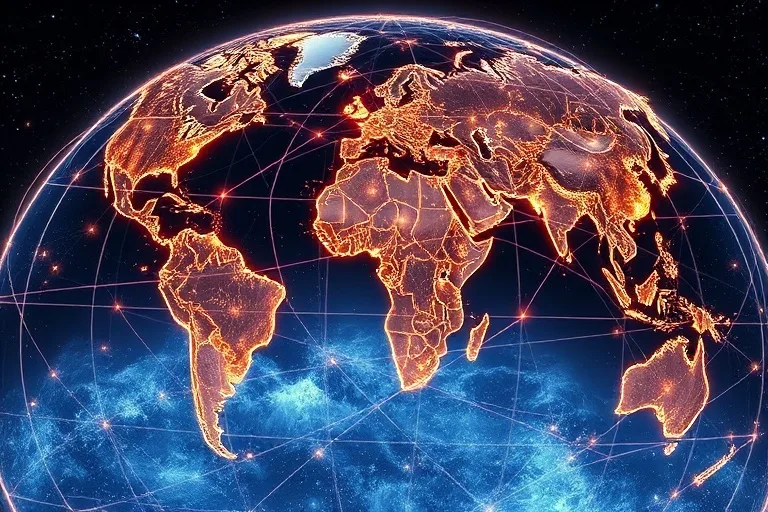
An intricate digital painting illustrating ley lines, depicting the Earth's hidden energetic pathways connecting ancient landmarks.
The idea of ley lines has since evolved to include the belief that these alignments correspond to channels of telluric energy or "Earth energy." Proponents suggest that where ley lines intersect, power spots are often found, creating points of intensified energy. Dowsers and geomancers claim to be able to detect these energies using various tools and intuitive senses, describing them as flowing currents similar to meridians in the human body.
While the existence of ley lines as energetic pathways lacks mainstream scientific proof, the concept remains popular in esoteric and New Age communities. Critics argue that the alignments can be attributed to chance or the natural human tendency to find patterns in randomness. However, the sheer number of aligned sites in some regions, and the consistent anecdotal reports of energy phenomena, continue to fuel interest and exploration.
The study of ley lines often involves mapping ancient sites and observing their geographical relationships. This practice highlights a potential ancient understanding of landscape organization that goes beyond mere practicality, suggesting a spiritual or energetic design. Whether viewed as historical curiosities or genuine energetic conduits, ley lines offer a fascinating lens through which to view the Earth's spiritual topography.
| Aspect | Description |
|---|---|
| Originator | Alfred Watkins (1921) |
| Primary Concept | Straight alignments of ancient sites and landmarks. |
| Esoteric Belief | Channels of telluric (Earth) energy. |
| Associated Phenomena | Often intersect at power spots, believed to amplify energy. |
| Scientific Status | Lacks empirical scientific evidence; largely anecdotal. |
Astrological Relocation: Mapping Your Destiny
Astrological relocation, often referred to as Astrocartography or locational astrology, is a branch of astrology that examines how changing one's geographical location can alter the influence of planetary energies in their birth chart. The core idea is that while your birth chart remains fixed for your time and place of birth, the way these energies manifest can shift dramatically depending on where you are on Earth.

A person at a crossroads, symbolizing the choices involved in astrological relocation, guided by planetary influences.
When you relocate, the planets in your birth chart effectively shift their positions relative to the angles (Ascendant, Descendant, Midheaven, Imum Coeli) of the new location. This creates a "relocated chart" that highlights different planetary lines and their associated themes. For example, moving to a location where your Jupiter line is prominent might bring opportunities for growth, abundance, and optimism, while a Saturn line could emphasize discipline, challenges, and structure.
Astrocartography maps these planetary lines across the globe, allowing individuals to identify places that are energetically favorable or challenging for specific life areas, such as career, relationships, creativity, or spiritual development. People use this technique to choose ideal locations for living, working, traveling, or even starting a business. It's a powerful tool for aligning personal goals with geographical energies.
The practice involves generating a world map with various planetary lines superimposed, indicating where each planet was angular at the moment of your birth, projected onto different longitudes. Interpreting these lines requires a deep understanding of astrological principles and how planetary energies interact. Astrological relocation offers a unique perspective on how our environment can actively shape our experiences and opportunities.
The fundamental principle of Astrocartography is that "As above, so below," but also "As within, so without." Your birth chart is a snapshot of the cosmos at your moment of birth, and relocating changes the terrestrial manifestation of those cosmic energies. It's not about changing your destiny, but about optimizing the environment for your unique energetic blueprint.
This allows for a proactive approach to life planning, enabling individuals to seek out locations that resonate with their desired outcomes and personal growth trajectories.
Interconnections and Practical Applications
While seemingly distinct, power spots, ley lines, and astrological relocation share a common thread: the belief that geographical location holds significant energetic influence. Power spots and ley lines represent the Earth's intrinsic energy grid, while astrological relocation offers a personalized map of how cosmic energies interact with specific places for an individual. Together, they form a comprehensive framework for understanding sacred geography.
The practical applications of these concepts are diverse. For those seeking spiritual growth, visiting power spots or meditating on ley lines can enhance spiritual practices and provide profound insights. Many practitioners believe that aligning oneself with these Earth energies can lead to greater harmony and well-being. The choice of a pilgrimage site, for instance, is often guided by the perceived spiritual potency of the location.
Astrological relocation, on the other hand, provides a highly individualized approach to geographical decision-making. It empowers individuals to consciously choose environments that support their personal and professional aspirations. For example, an artist might seek a location with a strong Venus line to boost creativity, while an entrepreneur might favor a Jupiter or Sun line for business success. This allows for a more intentional and astrologically informed approach to life choices.
- Personal Development: Using Astrocartography to find locations conducive to specific personal goals.
- Spiritual Practice: Visiting power spots for meditation, healing, or spiritual ceremonies.
- Travel and Exploration: Planning trips to energetically significant sites to deepen understanding and experience.
- Environmental Harmony: Applying principles of geomancy to create balanced and supportive living spaces.
Scientific Perspectives and Skepticism
From a mainstream scientific perspective, the concepts of power spots, ley lines, and astrological relocation largely fall outside the realm of empirically verifiable phenomena. While the historical and cultural significance of sacred sites is well-documented, the claims of invisible energy lines or planetary influences shifting with geographical location are not supported by conventional scientific methodology.
Skeptics often point to the lack of measurable energy fields corresponding to ley lines or power spots using standard scientific instruments. The alignments of ley lines are frequently attributed to confirmation bias or statistical probability, arguing that with enough points on a map, some will inevitably appear to align. Similarly, the effects of astrological relocation are considered subjective and anecdotal, lacking controlled studies to prove causality.
However, some researchers in fields like parapsychology, archaeoastronomy, and consciousness studies continue to explore these phenomena. They often employ interdisciplinary approaches, combining geological analysis with historical data and qualitative reports of subjective experiences. While not yet accepted by the broader scientific community, these explorations highlight a willingness to investigate phenomena that challenge conventional paradigms.
It is important to approach these topics with a critical yet open mind, distinguishing between cultural beliefs, personal experiences, and scientific evidence. The value of sacred geography may lie not solely in its scientific provability but in its capacity to inspire a deeper connection to the Earth, foster personal meaning, and influence human behavior in positive ways, regardless of the underlying mechanism.
Conclusion: Harmonizing with Earth's Energies
Sacred geography, through its exploration of power spots, ley lines, and astrological relocation, offers a profound framework for understanding the energetic dimensions of our planet and our place within it. These concepts, rooted in ancient wisdom and continually reinterpreted in modern contexts, invite us to consider the subtle yet powerful influences that geographical locations can exert on our lives.
Whether viewed through a scientific lens, a spiritual perspective, or a blend of both, the idea that certain places hold unique energetic qualities resonates deeply with many. From the awe-inspiring presence of ancient power spots to the intricate patterns of ley lines and the personalized insights of astrological relocation, these fields encourage a more conscious and harmonious interaction with our environment.
By exploring sacred geography, we gain not only a deeper appreciation for the Earth's mysteries but also practical tools for personal growth and well-being. Understanding where we are, both physically and energetically, can help us make more informed decisions about our homes, travels, and life paths, ultimately leading to a more aligned and fulfilling existence. The journey into sacred geography is a journey into the heart of our connection with the living planet.
Fuente: Contenido híbrido asistido por IAs y supervisión editorial humana.


Comments
Post a Comment