
Shinrin-Yoku: Forest Bathing for Spiritual Wellness | StarPluto
In our increasingly fast-paced and digitally saturated world, the ancient wisdom of connecting with nature offers a profound antidote to modern stress. Among the most revered practices is Shinrin-Yoku, often translated as "forest bathing." Originating in Japan, this practice is far more than just a walk in the woods; it is a mindful immersion in the atmosphere of the forest, designed to awaken the senses and promote holistic well-being.
Shinrin-Yoku encourages a deliberate slowing down, inviting individuals to absorb the sights, sounds, smells, and textures of the natural environment. This intentional engagement fosters a deep connection with the earth, leading to significant benefits for both physical and spiritual health. It represents a potent pathway to spiritual wellness, offering a sanctuary from the demands of daily life.
Table of Contents
- Understanding Shinrin-Yoku: The Art of Forest Bathing
- Historical Context and Core Principles
- The Science Behind Nature's Healing Power
- Practical Steps for Your First Forest Bath
- Cultivating Mindful Nature Connection
- Spiritual and Emotional Wellness Benefits
- Integrating Forest Bathing into Modern Life
- Common Misconceptions and Best Practices

Embracing the tranquil silence and natural beauty of a forest path, a core element of mindful forest bathing.
Understanding Shinrin-Yoku: The Art of Forest Bathing
Shinrin-Yoku was officially recognized and promoted by the Japanese government in the 1980s as a national health program. It emerged as a direct response to the growing rates of stress and burnout among the population, particularly in urban areas. The concept is rooted in the belief that spending time in a forest environment can significantly improve human health and well-being.
Unlike hiking or jogging, Shinrin-Yoku is not about physical exertion or reaching a destination. Instead, it emphasizes a gentle, contemplative approach to nature. Participants are encouraged to wander slowly, without a specific route or goal, allowing their senses to guide them and their minds to quiet down. This practice fosters a deep sense of presence and connection.
The "bathing" aspect refers to immersing oneself in the forest atmosphere, much like taking a bath. It means opening up and letting the forest "wash over" you with its sensory input. This can involve consciously noticing the textures of bark, the scent of pine, the sound of rustling leaves, or the feeling of the breeze on your skin.
Historical Context and Core Principles
The roots of Shinrin-Yoku are deeply embedded in Japan's cultural reverence for nature, which can be traced back to Shintoism and Buddhism. These traditions emphasize the interconnectedness of all living things and the sacredness found within natural landscapes. The formalization of Shinrin-Yoku in the 1980s was a modern application of these ancient beliefs.
The core principles of forest bathing revolve around mindfulness and sensory engagement. Participants are guided to:
- Be Present: Disconnect from digital devices and external distractions.
- Engage Senses: Actively use sight, sound, smell, touch, and even taste (e.g., clean air).
- Wander Aimlessly: Let intuition guide your path rather than following a predetermined route.
- Observe and Reflect: Notice details, patterns, and your own internal responses without judgment.
- Breathe Deeply: Inhale the forest air, rich with beneficial compounds.
These principles collectively create an environment for relaxation, introspection, and a profound sense of belonging within the natural world. It's a deliberate practice of slowing down to truly experience the environment.
The Science Behind Nature's Healing Power
While the spiritual benefits of Shinrin-Yoku are often intuitively understood, scientific research has increasingly validated its physiological impacts. Studies, primarily conducted in Japan and other parts of Asia, have demonstrated measurable health improvements associated with forest bathing. These findings provide a compelling reason to embrace this practice.
One of the most significant discoveries relates to phytoncides, airborne chemicals emitted by trees and plants to protect themselves from insects and fungi. When humans inhale these compounds, they can experience a boost in their immune system. Specifically, research has shown an increase in the activity and number of Natural Killer (NK) cells, which play a vital role in fighting infections and cancer.

A detailed watercolor rendering capturing the subtle textures and delicate beauty of forest elements, inviting sensory exploration.
Beyond immune enhancement, forest bathing has been linked to a reduction in stress hormones like cortisol. Participants often exhibit lower blood pressure, decreased heart rate, and improved mood states after spending time in a forest environment. The calming effects extend to cognitive function, with reported improvements in focus, creativity, and problem-solving abilities.
The presence of negative ions in forest air, often associated with waterfalls and moving water, is also thought to contribute to feelings of well-being. These scientific findings underscore that Shinrin-Yoku is not merely a pleasant pastime but a powerful therapeutic intervention for modern health challenges. More information on the intersection of nature and well-being can be found in discussions about mindfulness and meditation practices.
Practical Steps for Your First Forest Bath
Embarking on your first Shinrin-Yoku experience requires minimal preparation but a significant shift in mindset. The goal is to maximize sensory input and minimize distractions. Here’s a simple guide to get started:
- Choose Your Location: Find a natural area where you feel safe and comfortable. This could be a dense forest, a local park with mature trees, or even a botanical garden.
- Leave Technology Behind: Turn off your phone or leave it at home. The aim is to disconnect from digital noise and reconnect with the natural world.
- Dress Comfortably: Wear loose clothing and appropriate footwear for slow walking.
- Set an Intention: Before you begin, take a moment to set an intention to simply be present and open to the forest's offerings.
- Walk Slowly and Observe: There's no need to cover a lot of ground. Take small, deliberate steps, pausing frequently.
- Engage Your Senses: This is the most crucial part.
- Sight: Notice the varying shades of green, the patterns of sunlight filtering through leaves, the intricate details of a spiderweb.
- Sound: Listen to the rustling of leaves, the chirping of birds, the distant hum of insects, the flow of water.
- Smell: Inhale the earthy scent of soil, the freshness of pine, the fragrance of wildflowers.
- Touch: Feel the rough bark of a tree, the coolness of a mossy stone, the softness of a leaf, the breeze on your skin.
- Taste: Experience the clean, fresh air; if safe, perhaps a dewdrop on a leaf.
- Find a Sit Spot: Spend some time sitting quietly, observing the life around you from a single vantage point.
- Duration: Aim for at least 20 minutes, but ideally 2 to 4 hours for a full immersive experience.
Cultivating Mindful Nature Connection
Mindful nature connection is the heart of Shinrin-Yoku. It's about consciously shifting from a state of doing to a state of being, allowing the natural world to engage and soothe your nervous system. This practice deepens your appreciation for the intricate web of life and your place within it.
To cultivate this connection, consider specific invitations during your forest bath:
- The Invitation of Sight: Focus on one small area, like a patch of moss or a single leaf. What colors do you see? What textures? How does the light play on it?
- The Invitation of Sound: Close your eyes and identify every sound you can hear, from the closest to the furthest. Notice the layers of sound.
- The Invitation of Smell: Take deep breaths, trying to discern different aromas in the air. Crush a fallen leaf gently and smell its essence.
- The Invitation of Touch: Gently run your fingers over different surfaces – smooth stones, rough bark, soft petals. Feel the temperature and texture.
- The Invitation of Stillness: Find a comfortable spot to simply sit and observe. Let your thoughts come and go without judgment, returning your attention to your breath and the surrounding nature.
These invitations help to anchor your attention in the present moment, fostering a profound sense of peace and interconnectedness. This conscious engagement is what transforms a simple walk into a restorative practice.
Spiritual and Emotional Wellness Benefits
Beyond the measurable physical benefits, Shinrin-Yoku offers a rich tapestry of spiritual and emotional advantages. Many practitioners report a deep sense of inner peace, clarity, and a renewed connection to themselves and the larger world. This practice serves as a powerful tool for spiritual development and emotional regulation.
The quiet contemplation facilitated by forest bathing allows for a reduction in mental chatter and an increase in self-awareness. This can lead to:
- Enhanced Emotional Regulation: Nature has a calming effect, helping to soothe anxiety, reduce anger, and alleviate feelings of sadness.
- Increased Creativity and Intuition: By stepping away from distractions, the mind becomes more open to new ideas and intuitive insights.
- Greater Sense of Interconnectedness: Feeling part of a larger ecosystem can foster feelings of belonging and reduce feelings of isolation.
- Cultivation of Gratitude: Observing the beauty and resilience of nature often inspires a deep sense of appreciation for life.
- Spiritual Rejuvenation: Many find a profound sense of spiritual renewal, feeling more grounded, centered, and aligned with their purpose.
- Improved Focus and Mental Clarity: The gentle stimulation of nature can restore attention and reduce mental fatigue, leading to clearer thinking.
These benefits contribute to a more balanced and harmonious inner life, making Shinrin-Yoku an invaluable practice for anyone seeking deeper spiritual wellness. Exploring spiritual and healing practices can further enhance this journey.
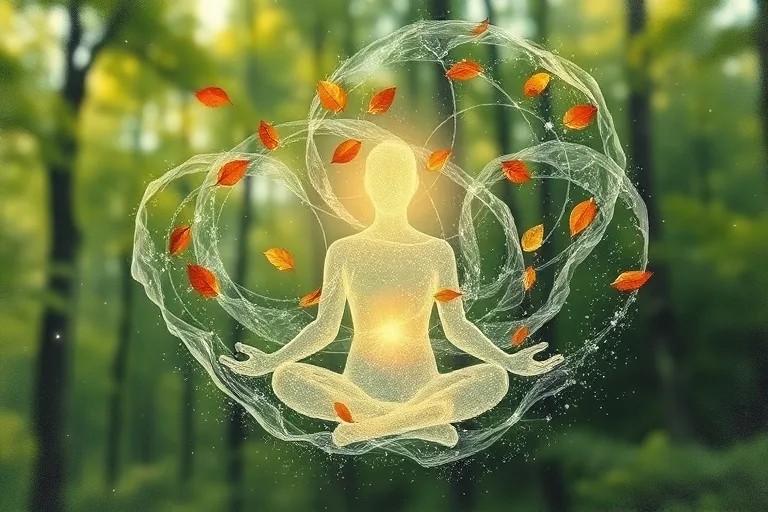
An ethereal 3D render depicting an abstract figure in meditation amidst natural elements, symbolizing spiritual awakening and inner harmony.
Integrating Forest Bathing into Modern Life
Even if access to dense forests is limited, the principles of Shinrin-Yoku can be adapted and integrated into various aspects of modern life. The key is intentionality and a commitment to seeking out natural elements, no matter how small. This adaptability makes spiritual wellness through nature accessible to everyone.
- Urban Green Spaces: Utilize city parks, botanical gardens, or even tree-lined streets for short, mindful walks. Focus on the trees, the sky, and any natural sounds.
- "Micro-Dosing" Nature: Spend a few minutes each day near a window, observing a plant, or stepping outside to feel the sun and wind. Even brief moments of connection can be beneficial.
- Bringing Nature Indoors: Incorporate houseplants, natural materials (wood, stone), and natural light into your living and working spaces. This creates a more biophilic environment.
- Sensory Focus Anywhere: Practice mindful observation of natural elements wherever you are. Notice the clouds, the texture of a leaf, or the scent of rain.
- Gardening: Engaging with soil, plants, and the cycles of growth can be a deeply grounding and meditative practice.
These adaptations ensure that the healing power of nature is not confined to remote wilderness but can be a consistent, enriching part of your daily routine. The goal is to consistently seek out and mindfully engage with natural elements.
Common Misconceptions and Best Practices
As Shinrin-Yoku gains popularity, it's important to clarify what it is and what it isn't to ensure a truly beneficial experience. Avoiding common misunderstandings can help practitioners maximize their connection with nature and achieve genuine spiritual wellness.
Misconceptions to Avoid:
1. It's not a hike: The focus is on slowness and sensory engagement, not distance or cardiovascular exercise.
2. It's not about identifying species: While learning about nature is wonderful, Shinrin-Yoku emphasizes experience over intellectual knowledge.
3. It's not a race or competition: There's no "right" way to do it, and personal experience is paramount.
4. It's not a group therapy session: While guided forest bathing is common, the core practice is deeply personal and introspective.
Best Practices for a Deeper Experience:
1. Prioritize safety: Choose well-maintained paths and be aware of your surroundings.
2. Hydrate: Bring water, especially for longer sessions.
3. Be patient: It may take time to quiet your mind and fully engage your senses.
4. Reflect: After your forest bath, take time to journal or reflect on your experiences and feelings.
5. Consistency: Regular practice, even short bursts, yields the most significant benefits.
By approaching Shinrin-Yoku with these guidelines, individuals can cultivate a more profound and sustainable practice, unlocking its full potential for spiritual and emotional well-being.
In conclusion, Shinrin-Yoku offers a powerful yet gentle path to reconnect with the natural world and, by extension, with ourselves. Its blend of ancient wisdom and modern scientific validation makes it an indispensable practice for anyone seeking to reduce stress, boost immunity, and cultivate a deeper sense of spiritual wellness. By simply stepping into the forest and opening our senses, we can tap into a profound source of healing and rejuvenation.
Fuente: Contenido híbrido asistido por IAs y supervisión editorial humana.


Comments
Post a Comment