
Mystical Architecture Esoteric Symbolism Sacred Structures Energy
Mystical architecture transcends mere construction, serving as a profound language that communicates esoteric principles and spiritual truths through its very form. These sacred structures, from ancient temples to modern cathedrals, are not just buildings; they are meticulously designed conduits intended to connect the earthly realm with the divine. Their layouts, proportions, and decorative elements are often imbued with symbolic meanings, reflecting cosmic order, human consciousness, and pathways to enlightenment.
Table of Contents
- The Language of Sacred Spaces: Decoding Architectural Symbolism
- Historical Roots: Ancient Wisdom in Stone
- Key Esoteric Principles in Design
- Symbolism of Form and Geometry
- Energetic Impact: How Architecture Shapes Consciousness
- Case Studies: Iconic Mystical Structures
- Modern Interpretations and Revival
- Conclusion: Reconnecting with Sacred Design
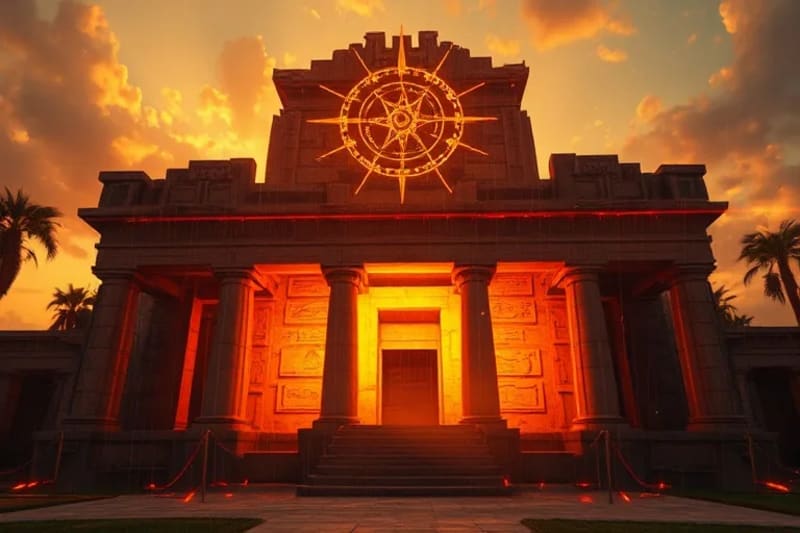
A grand ancient structure, its design reflecting a deep understanding of cosmic principles and spiritual geometry, bathed in a mystical glow.
The study of mystical architecture delves into how these designs influence human perception, emotional states, and spiritual experiences. It explores the deliberate integration of sacred geometry, astrological alignments, and numerological patterns to create environments that facilitate meditation, ritual, and a deeper connection to universal energies. Understanding these principles allows us to appreciate not only the aesthetic beauty but also the profound spiritual purpose behind some of humanity's most enduring architectural marvels.
The Language of Sacred Spaces: Decoding Architectural Symbolism
Sacred architecture acts as a tangible representation of intangible spiritual concepts. Every curve, column, and window can hold a specific meaning, often understood only by initiates or those deeply immersed in the esoteric traditions of the time. These structures are designed to be more than shelters; they are educational tools, spiritual maps, and energetic generators.
The symbolism often draws from cosmology, mythology, and religious texts, creating a multi-layered narrative that unfolds as one moves through the space. For instance, the orientation of a temple towards the rising sun or a specific constellation is not arbitrary; it signifies a connection to celestial cycles and divine timing. Such alignments are believed to harness specific energies, enhancing the spiritual potency of the site.
Consider the deliberate use of light and shadow, which can guide the eye, evoke awe, or symbolize the interplay between knowledge and ignorance. The materials chosen, from humble earth to precious metals, also carry symbolic weight, reflecting the values and beliefs of the culture that built them. This intricate web of meaning transforms a building into a living, breathing entity that communicates with its inhabitants on a subconscious level, fostering a sense of reverence and introspection.
Historical Roots: Ancient Wisdom in Stone
The practice of imbuing architecture with mystical significance dates back to the dawn of civilization. From the megalithic structures of Stonehenge and Gobekli Tepe to the pyramids of Egypt and Mesoamerica, ancient cultures consistently built with an awareness of cosmic principles. These early builders possessed sophisticated knowledge of astronomy, mathematics, and geometry, which they applied to create enduring monuments that served both practical and spiritual purposes.
The Egyptian pyramids, for example, are not merely tombs but complex astronomical observatories and energetic devices, aligned with cardinal directions and specific stars. Their precise construction and internal chambers are thought to facilitate the soul's journey and connect with higher dimensions. Similarly, the ancient Greek temples, such as the Parthenon, utilized the Golden Ratio and other sacred proportions to achieve aesthetic perfection and spiritual harmony, embodying ideals of order and beauty.
Across different continents, indigenous cultures also integrated their spiritual beliefs into their dwellings and ceremonial sites. Native American medicine wheels, for instance, are circular arrangements of stones that represent cosmic order and are used for healing and spiritual guidance. The intricate carvings and reliefs found in Mayan temples, depicting deities and cosmological events, further illustrate this universal impulse. These historical examples underscore a universal human impulse to create spaces that resonate with the sacred, reflecting a deep understanding of the universe's underlying patterns and their influence on human existence.
Key Esoteric Principles in Design
Several core esoteric principles consistently appear in mystical architecture across diverse cultures and eras. These principles act as foundational elements that transform ordinary structures into sacred spaces. Understanding them is crucial for deciphering the hidden language of these architectural masterpieces.
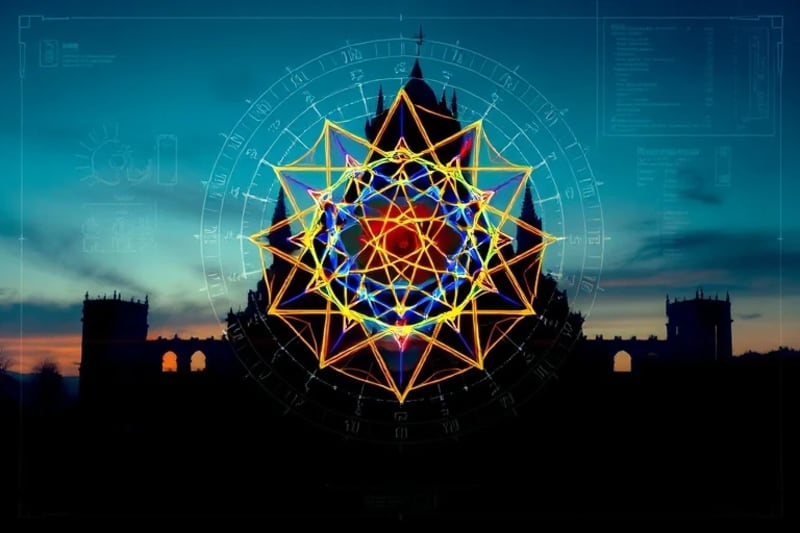
A mesmerizing pattern of sacred geometry, illuminated by a warm golden light, symbolizing the universal order within architectural design.
- Sacred Geometry: This is perhaps the most fundamental principle, involving the use of universal geometric forms like the circle, square, triangle, and the Golden Ratio (Phi). These shapes are believed to be the building blocks of the universe, reflecting divine order and harmony. Structures designed with sacred geometry are thought to resonate with cosmic frequencies, promoting balance and well-being. The Vesica Piscis, the Flower of Life, and the Seed of Life are other examples of these foundational patterns.
- Astrological Alignments: Many ancient temples and cathedrals are oriented to specific celestial events, such as solstices, equinoxes, or the rising of particular stars. These alignments are not just observational; they are believed to channel specific planetary energies into the building, enhancing its spiritual purpose. This practice is deeply intertwined with evolutionary astrology, which explores how cosmic influences shape our spiritual path and destiny.
- Numerology: The use of specific numbers in dimensions, proportions, and repetitions often carries symbolic weight. For example, the number three might represent the trinity, seven the chakras, or twelve the zodiac. These numerical patterns are believed to imbue the structure with specific energetic qualities and meanings, guiding the visitor through a symbolic journey.
- Feng Shui and Vastu Shastra: These ancient systems of spatial arrangement and orientation, originating from China and India respectively, focus on harmonizing human environments with the flow of natural energy (Qi or Prana). They dictate optimal placement of structures, rooms, and objects to promote health, prosperity, and spiritual growth, ensuring a beneficial energetic footprint.
Symbolism of Form and Geometry
Beyond abstract principles, the very forms and geometric shapes employed in mystical architecture carry profound symbolic weight. Each element contributes to the overall narrative and energetic signature of the space, influencing the experience of those within it. These forms are not accidental but are chosen for their inherent spiritual resonance.
- The Circle: Symbolizes eternity, wholeness, unity, and the divine. Domes, rotundas, and circular layouts are common in sacred spaces, representing the cosmos, infinite cycles, and the all-encompassing nature of the divine.
- The Square/Cube: Represents the material world, stability, grounding, and the earthly realm. The foundation of many structures is square, anchoring the spiritual aspirations to physical reality and providing a sense of order.
- The Triangle: Often signifies spirituality, ascension, the trinity, or the connection between heaven and earth. Pyramids are prime examples, pointing towards the heavens and symbolizing a path to higher consciousness.
- The Cross: A universal symbol of balance, intersection of planes, and spiritual sacrifice or resurrection. It forms the layout of many Christian churches, representing both suffering and salvation.
- The Labyrinth: A winding path often found in cathedral floors, symbolizing a journey of pilgrimage, introspection, and spiritual transformation. Walking a labyrinth is a meditative practice, mirroring the quest for self-discovery and inner peace.
The combination and interplay of these forms create a complex symbolic language. For instance, a square base topped with a circular dome can symbolize the integration of earthly and heavenly realms, a common motif in Byzantine and Islamic architecture. This synthesis of forms aims to create a microcosm of the universe, inviting the worshipper to experience cosmic harmony. These deliberate choices in form are not merely aesthetic but are intended to evoke specific spiritual states and facilitate a deeper connection to the divine, guiding the individual towards transcendence.
Energetic Impact: How Architecture Shapes Consciousness
The most compelling aspect of mystical architecture is its purported ability to influence human consciousness and energetic well-being. Proponents believe that the careful application of esoteric principles creates a resonant field within the structure, impacting those who enter it. This goes beyond psychological effects, venturing into the realm of subtle energies and vibrational frequencies, often referred to as geomancy.
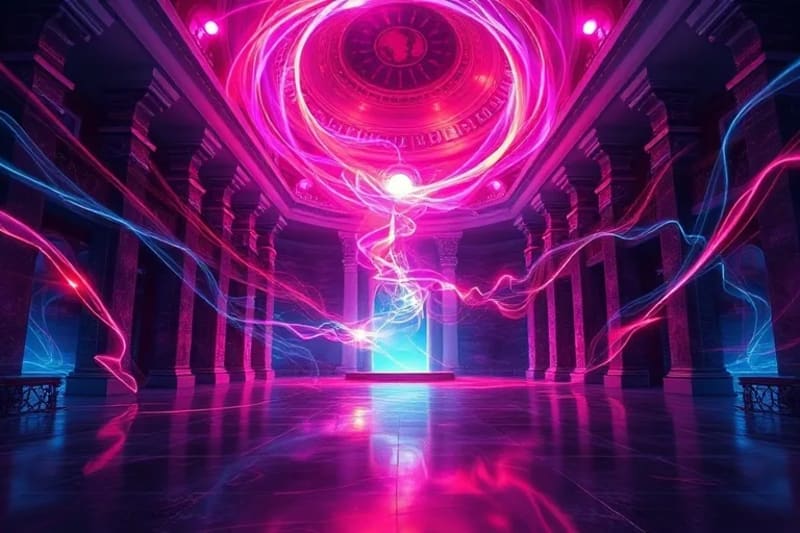
Vibrant, subtle energy patterns swirling within a beautifully designed sacred space, illustrating the profound energetic influence on visitors.
The precise alignments and geometric proportions are thought to create specific energetic vortices or amplify natural telluric currents, the Earth's subtle energy lines. These amplified energies can then facilitate altered states of consciousness, enhance meditative practices, and promote healing, by bringing the individual's energy field into harmony with the sacred space. This concept is similar to how sound bath healing utilizes vibrational therapy to restore balance to the mind, body, and spirit, but applied through spatial design and the manipulation of architectural forms.
Visiting these sites often evokes feelings of peace, awe, or spiritual elevation, which many attribute to these underlying energetic properties. The deliberate flow of space, the quality of light, and even the acoustics are all orchestrated to create an immersive experience that transcends the mundane. This holistic approach to design seeks to nourish the soul as much as it protects the body, creating an environment where spiritual growth is naturally encouraged.
The human body itself is an intricate energetic system, and when placed within a harmonically designed space, it can resonate with those frequencies. This resonance can lead to a sense of expanded awareness, reduced stress, and increased spiritual clarity. The architects of these mystical structures understood this intrinsic connection, crafting spaces that were not just visually appealing but also energetically supportive of human spiritual evolution.
Case Studies: Iconic Mystical Structures
Examining specific examples brings the abstract principles of mystical architecture into tangible focus. These structures stand as testaments to humanity's enduring quest for spiritual connection through design, each with its unique story and energetic signature.
- Chartres Cathedral, France: Renowned for its labyrinth, stained-glass windows, and precise astronomical alignments. The cathedral is believed to be built on a powerful energy vortex, and its design incorporates numerous sacred geometric ratios, creating an atmosphere conducive to spiritual contemplation and Akashic Records access, allowing visitors to tap into universal knowledge.
- The Great Pyramid of Giza, Egypt: A marvel of ancient engineering and esoteric knowledge. Its dimensions are said to encode mathematical constants like Pi and Phi, and its alignment with true north and specific stars suggests a profound understanding of cosmology. The internal chambers are theorized to have energetic properties that facilitate spiritual transformation and even mummification processes, preparing the soul for its journey.
- Borobudur Temple, Indonesia: This massive Buddhist monument is a three-dimensional mandala, guiding pilgrims through a symbolic journey from the earthly realm to Nirvana. Its circular terraces and stupas represent stages of enlightenment, with each level embodying specific spiritual teachings and meditations, culminating in the ultimate state of emptiness.
- Stonehenge, England: A prehistoric monument whose precise alignment with the solstices and equinoxes points to its use as an astronomical calendar and a site for ancient rituals. Its megalithic stones are believed to channel telluric energies, creating a powerful sacred space for ceremonies and observations of celestial cycles.
- Sagrada Familia, Spain: Antoni Gaudí's unfinished masterpiece in Barcelona is a modern example of mystical architecture. Gaudí incorporated natural forms, sacred geometry, and Christian symbolism to create a basilica that evokes a sense of the divine through its organic shapes, soaring heights, and interplay of light, mimicking the grandeur of nature itself.
- The Pantheon, Rome: An ancient Roman temple, later a church, famous for its massive unsupported concrete dome and central oculus. The oculus serves as a direct connection to the heavens, allowing light to flood the interior in a dramatic, symbolic dance that changes throughout the day, representing the divine presence.
Modern Interpretations and Revival
In contemporary times, there is a growing interest in reviving the principles of mystical architecture, moving beyond purely functional or aesthetic design. Architects and designers are increasingly exploring how to integrate sacred geometry, biophilic design, and energetic considerations into modern spaces, from homes to public buildings, recognizing the deep human need for meaningful environments.
This revival is driven by a desire to create environments that support well-being, foster creativity, and reconnect individuals with a sense of purpose and spiritual harmony. Concepts like "healing architecture" and "conscious design" are gaining traction, emphasizing the importance of creating spaces that positively impact physical, mental, and spiritual health. This often involves using natural materials, optimizing natural light, and incorporating elements that resonate with universal patterns, much like astrological remedies seek to balance planetary energies for holistic well-being. The focus is on creating spaces that feel alive and nurturing.
The integration of sustainable practices with esoteric principles is also a key trend, recognizing that a harmonious relationship with the environment is integral to spiritual well-being. Modern eco-villages and spiritual retreat centers often exemplify these principles, building structures that are not only energy-efficient but also designed to enhance the spiritual experience of their inhabitants. By designing buildings that are not only beautiful but also energetically aligned and environmentally responsible, modern architects are rediscovering the profound power of sacred spaces to uplift and transform, fostering a deeper connection to both self and planet.
Conclusion: Reconnecting with Sacred Design
Mystical architecture offers a rich tapestry of human ingenuity and spiritual aspiration. It reminds us that buildings can be more than mere structures; they can be living expressions of our deepest beliefs and our connection to the cosmos. By understanding the esoteric symbolism and energetic impact embedded in sacred designs, we gain a deeper appreciation for the wisdom of ancient civilizations and their profound understanding of the universe and its subtle forces.
As we navigate an increasingly complex world, the principles of mystical architecture provide a powerful framework for creating spaces that foster harmony, well-being, and spiritual awakening. Reconnecting with sacred design allows us to build environments that not only serve our practical needs but also nourish our souls, guiding us towards a more integrated and meaningful existence, where every space holds the potential for profound transformation.
Explore Further: Related Insights
Source: Hybrid content assisted by AI and human editorial supervision.


Comments
Post a Comment