
Spiritual Japanese Calligraphy: Meditation, Manifestation Art | StarPluto
Japanese calligraphy, known as Shodo (書道), is far more than a mere artistic discipline; it is a profound spiritual practice deeply intertwined with meditation and the intentional manifestation of inner states. Originating from ancient China and refined over centuries in Japan, Shodo embodies a philosophy that transcends the visual appeal of written characters. It offers a pathway to mindfulness, self-discovery, and a deeper connection to the present moment.
This ancient art form, often translated as "the way of writing," emphasizes the process of creation over the final product, encouraging practitioners to cultivate patience, discipline, and a clear mind. Through the rhythmic dance of brush and ink, individuals can explore their inner landscape, express profound emotions, and even channel intentions into tangible forms. Understanding Shodo means delving into its rich history, its essential tools, and the meditative principles that transform simple strokes into powerful spiritual expressions.
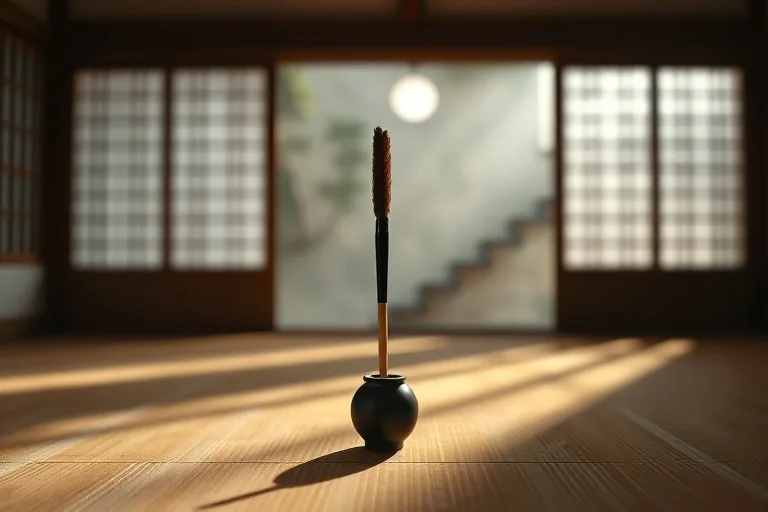
A serene Japanese studio, embodying the spiritual depth of calligraphy.
The practice of Shodo is a holistic experience, engaging not only the hands but also the mind and spirit. It draws heavily from Zen Buddhist principles, particularly the concept of "one stroke, one chance" (Hitofude), which underscores the importance of intentionality and living in the present. This article will explore the spiritual dimensions of Japanese calligraphy, guiding you through its meditative aspects and its potential as a tool for personal manifestation.
The Essence of Shodo: Beyond Aesthetics
At its core, Shodo is a discipline that seeks to capture the essence of a character or phrase, not just its form. Each stroke is a reflection of the calligrapher's inner state, their breath, and their concentration at that precise moment. This immediate and unrepeatable nature of the brushstroke fosters a deep sense of mindfulness, compelling the practitioner to be fully present.
The philosophical underpinnings of Shodo are deeply rooted in Zen Buddhism and Taoism, emphasizing harmony, balance, and the flow of energy. Concepts like Wabi-sabi, which appreciates imperfection and transience, are evident in the spontaneous and often asymmetrical beauty of calligraphic works. The empty spaces within and around the characters, known as Ma, are as significant as the ink strokes themselves, representing potential and the void from which all things emerge.
Practitioners aim to achieve "Mushin" (無心), a state of "no-mind" or "empty mind," where thoughts and distractions are set aside, allowing intuition and the subconscious to guide the brush. This state of flow is akin to meditation, where the ego dissolves, and the artist becomes one with the creative act. The result is a piece that vibrates with authenticity and spiritual energy, reflecting the true nature of the moment it was created.
Tools of the Trade: Sacred Instruments
The tools used in Shodo are not merely instruments; they are considered sacred extensions of the calligrapher's spirit and intention. Each component plays a vital role in the meditative process, from the preparation of the ink to the final stroke on the paper. Understanding and respecting these tools is fundamental to the practice.
- The Brush (Fude - 筆): Often made from animal hair (such as wolf, goat, or horse), the brush is the primary conduit for expression. Its flexibility and responsiveness allow for a vast range of strokes, from delicate lines to bold, sweeping gestures. The way one holds and manipulates the brush reflects their inner balance and control.
- The Ink (Sumi - 墨): Traditionally, sumi ink is made from soot and animal glue, pressed into solid sticks. Grinding the sumi stick on an inkstone with water is itself a meditative ritual, allowing the calligrapher to focus and prepare their mind. The depth and richness of the ink symbolize the calligrapher's focus and energy.
- The Inkstone (Suzuri - 硯): A flat, often carved stone surface where the sumi stick is ground with water to produce liquid ink. The texture of the suzuri is crucial for creating fine ink. This preparatory step is integral to the Shodo experience, fostering patience and presence.
- The Paper (Washi - 和紙): Japanese paper, known as washi, is renowned for its strength, absorbency, and beautiful texture. Different types of washi react differently to ink, and choosing the right paper is part of the artistic consideration. It serves as the canvas that receives and preserves the calligrapher's spiritual imprint.
- Water: The purity of water is essential for grinding ink and cleaning brushes. It symbolizes adaptability, flow, and the cleansing of the mind, reflecting the fluid nature of creation itself.
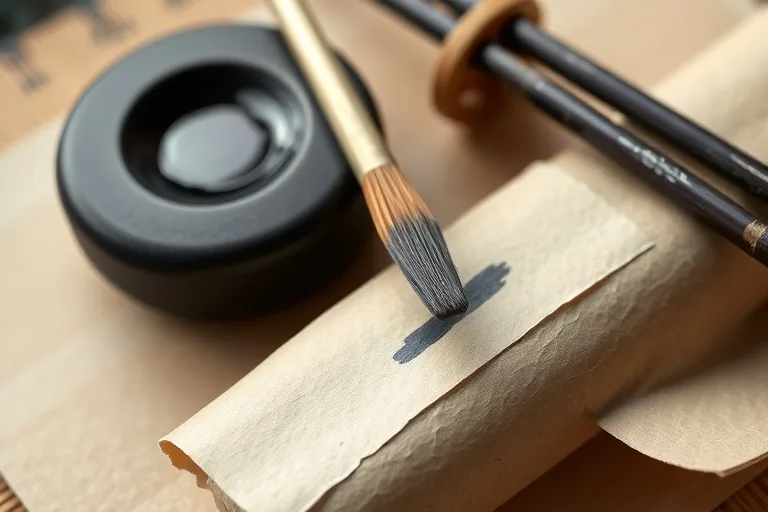
An artistic display of the fundamental tools used in Japanese calligraphy.
The selection and care of these tools are as much a part of the spiritual practice as the act of writing itself. They are cherished objects, each with its own history and energy. This reverence for the instruments elevates the entire practice, transforming it into a ritual of respect and intention.
The Meditative Process: A Path to Mindfulness
The act of practicing Shodo is inherently meditative, guiding the practitioner into a state of deep concentration and inner stillness. Before even touching the brush to paper, a calligrapher engages in a series of preparatory steps designed to clear the mind and align the spirit. This preparation is crucial for achieving the desired state of mindfulness.
The process typically begins with finding a quiet space, adopting a correct posture, and focusing on one's breath. Grinding the sumi ink, a slow and deliberate action, helps to further calm the mind and establish a rhythmic pace. This ritualistic preparation is a form of active meditation, bringing the practitioner fully into the present moment and away from external distractions.
Once the brush is loaded with ink, the focus shifts entirely to the stroke. Each movement requires precise control, a steady hand, and an unwavering gaze. The calligrapher must anticipate the flow of the ink and the pressure of the brush, making each decision with deliberate intention. This intense focus on the physical act of writing naturally stills the internal monologue, leading to a state of profound concentration.
The concept of Mushin, or "no-mind," is central to the meditative aspect of Shodo. It signifies a state where the mind is free from thought, judgment, and attachment, allowing for spontaneous and intuitive action. In this state, the brush moves effortlessly, guided by an inner wisdom rather than conscious effort. Achieving Mushin in calligraphy is a powerful experience, revealing the interconnectedness of mind, body, and spirit.
Manifestation Through Ink: Intentional Creation
Beyond its meditative benefits, Japanese calligraphy can also serve as a powerful tool for manifestation. The act of writing, particularly when imbued with clear intention, can help to solidify desires and bring them into reality. This practice leverages the energetic power of symbols and the focused energy of the calligrapher.
Before beginning a calligraphic piece for manifestation, it is essential to set a clear and positive intention. This might involve choosing a specific Kanji character that represents a desired quality, such as "peace" (平和 - Heiwa), "strength" (力 - Chikara), "love" (愛 - Ai), or "prosperity" (富 - Tomi). The act of writing this character then becomes a ritual of imbuing it with personal energy and focus.
As the calligrapher executes each stroke, they visualize the intention becoming manifest, pouring their belief and energy into the ink. The physical act of creating the character on paper serves as a symbolic representation of bringing the desired outcome into existence. This tangible representation acts as a constant reminder and energetic anchor for the manifestation process.
Dynamic ink patterns representing the flowing energy of manifestation.
Once completed, the calligraphic piece can be displayed in a prominent place, serving as a visual affirmation of the intention. Each time the practitioner sees the artwork, they are reminded of their goal, reinforcing the energetic connection and accelerating the manifestation process. This blending of artistic expression with spiritual intention makes Shodo a unique and powerful practice for personal growth and goal attainment.
Historical and Cultural Significance
Japanese calligraphy boasts a rich history, tracing its origins back to ancient China, where it developed alongside the written language. It was introduced to Japan around the 5th century CE, primarily through Buddhist monks who brought Chinese texts and the art of writing with them. Over the centuries, Japanese calligraphers adapted and evolved the art form, developing distinct styles and incorporating elements unique to Japanese aesthetics.
During the Heian period (794-1185), Japanese calligraphy flourished, with court nobles and scholars embracing it as a sophisticated art form. The development of Japanese syllabaries, Hiragana and Katakana, alongside Chinese characters (Kanji), further diversified calligraphic expression. Shodo became an integral part of courtly life, poetry, and religious texts.
In later periods, Shodo became closely associated with Zen Buddhism, samurai culture, and the tea ceremony. Samurai warriors practiced calligraphy to cultivate discipline, focus, and a calm mind, essential qualities for martial arts. The art also found its place in the contemplative atmosphere of the tea ceremony, where calligraphic scrolls often adorned the alcove (tokonoma), setting the spiritual tone for the gathering.
Today, Japanese calligraphy continues to be a revered art form, both in Japan and internationally. It is taught in schools and practiced by enthusiasts of all ages, valued for its artistic beauty, its cultural heritage, and its profound spiritual benefits. The global appeal of Shodo highlights its timeless ability to connect individuals with a deeper sense of self and universal harmony.
Practical Steps to Begin Your Shodo Journey
Embarking on a Shodo journey can be a deeply rewarding experience, offering not only artistic development but also significant benefits for mental well-being and spiritual growth. For those interested in exploring this ancient art, here are some practical steps to begin:
- Acquire Basic Tools: Start with a beginner's calligraphy set, which typically includes a brush, ink stick, inkstone, and a stack of practice paper. Quality tools, even for beginners, can make a significant difference in the learning experience.
- Find a Teacher or Resources: While self-study is possible, learning from an experienced Shodo teacher can provide invaluable guidance on technique, philosophy, and posture. Many online courses and books are also available to introduce the fundamentals.
- Master Basic Strokes: Begin by practicing fundamental strokes and their variations. This builds muscle memory and control, which are essential before attempting complex characters. Focus on consistency and fluidity.
- Practice Regularly: Consistency is key in Shodo. Even short, daily practice sessions can help develop skill and deepen the meditative aspect of the art. Treat each session as an opportunity for mindfulness and self-reflection.
- Embrace Imperfection: Shodo teaches that true beauty often lies in imperfection and uniqueness. Do not strive for mechanical perfection, but rather for authenticity and the expression of your inner self. Each stroke is a snapshot of your present moment.
- Explore Kanji and Kana: Once comfortable with basic strokes, begin practicing simple Kanji characters or Hiragana/Katakana. Choose characters that resonate with you or represent qualities you wish to cultivate.
The benefits of practicing Shodo extend far beyond creating beautiful art. It cultivates patience, improves concentration, reduces stress, and fosters a deeper connection to one's inner wisdom. It is a journey of continuous learning and self-discovery, where each stroke brings you closer to a state of harmonious balance.
Frequently Asked Questions about Japanese Calligraphy
Here are answers to some common questions regarding the spiritual art of Japanese calligraphy:
What is the spiritual significance of Japanese calligraphy?
Japanese calligraphy, or Shodo, is deeply spiritual as it integrates Zen Buddhist principles like mindfulness, concentration, and the concept of "one stroke, one chance." It's a meditative practice where the calligrapher's inner state and breath are reflected in each brushstroke, aiming for a state of "no-mind" (Mushin) for authentic expression.
What are the essential tools for Shodo?
The essential tools, often referred to as the "Four Treasures of the Study," include the brush (Fude), ink (Sumi), inkstone (Suzuri), and paper (Washi). Water is also crucial for grinding the ink. Each tool is considered sacred and integral to the meditative and artistic process.
Source: Hybrid content assisted by AI and human editorial supervision.


Comments
Post a Comment