
Progressed Chart: Evolving Soul's Journey and Inner Growth | StarPluto
In the intricate tapestry of astrology, the natal chart serves as a snapshot of the heavens at the precise moment of your birth, revealing your innate potential, personality traits, and life's blueprint. However, life is a dynamic process, not a static state. To understand the ongoing evolution of your consciousness and the unfolding of your destiny, astrologers turn to the progressed chart. This advanced technique offers profound insights into your inner growth, psychological development, and the timing of significant life transitions, acting as a personal roadmap for your soul's journey.
Unlike transits, which involve the current positions of planets moving through the sky and interacting with your natal chart, progressions reflect your internal clock. They symbolize your personal growth curve, showing how your natal energies mature and express themselves over time. By examining the progressed chart, we can uncover periods of profound self-discovery, shifts in identity, and evolving life priorities, providing a deeper understanding of where you are in your personal developmental cycle.
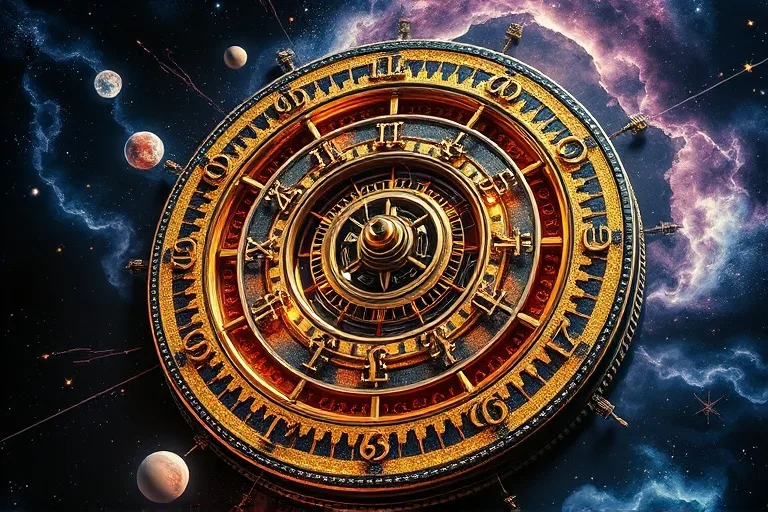
A cosmic clock, intricately designed, symbolizes the continuous internal evolution reflected in a progressed chart.
The progressed chart is essentially a symbolic movement of your natal planets and points forward in time. The most common method, secondary progressions, uses the "day for a year" rule: one day after your birth corresponds to one year of your life. This means that if you are 30 years old, your progressed chart would be calculated based on the planetary positions 30 days after your birth. This subtle, slow movement reveals the unfolding of your inner self rather than external events, making it an invaluable tool for self-awareness and personal development.
Understanding your progressed chart can help you navigate periods of change with greater clarity and purpose. It sheds light on why certain themes become prominent at different stages of your life, why your interests or relationships evolve, and how your core identity transforms over the years. This guide will delve into the fundamentals of the progressed chart, exploring its key components and offering insights into how to interpret its profound messages for your evolving soul.
Table of Contents
- What is a Progressed Chart?
- How Progressions Work: The Day for a Year Rule
- Key Components of the Progressed Chart
- The Progressed Sun: Evolving Identity
- The Progressed Moon: Emotional Cycles and Needs
- The Progressed Ascendant: Shifting Persona
- Other Progressed Planets: Inner Growth Triggers
- Progressed Aspects: Moments of Integration
- Interpreting Progressions for Personal Growth
- Natal vs. Progressed Chart: A Comparative View
What is a Progressed Chart?
A progressed chart is a calculated astrological chart that illustrates the symbolic movement of planets and astrological points forward from their positions in your natal chart. It's not about what's happening in the sky right now, but rather about your internal development and psychological evolution over time. Think of it as a series of growth rings on a tree, each representing a phase of your life and the lessons learned.
The primary purpose of a progressed chart is to highlight periods of significant inner change, shifts in your core identity, and the development of new facets of your personality. It helps explain why your priorities, desires, and even your self-perception might evolve dramatically over the years, often leading to a deeper understanding of your life's purpose and direction. This technique is particularly useful for understanding mid-life crises, career changes, or shifts in relationship dynamics that stem from internal shifts.
Astrologers primarily use secondary progressions, which are the most widely accepted and effective method. Other less common methods include tertiary progressions (one day equals one lunar month) and minor progressions (one day equals one month), but secondary progressions remain the cornerstone for understanding the soul's journey. The slow pace of these progressions means their effects are deeply felt and represent profound, lasting changes rather than fleeting influences.
How Progressions Work: The Day for a Year Rule
The core mechanism behind secondary progressions is the "day for a year" rule. This means that for every year of your life, the planets in your progressed chart advance by approximately one day from their natal positions. For example, if you want to see your progressed chart for your 25th birthday, you would calculate the planetary positions 25 days after your birth date, at the same time and location.
This symbolic movement is slow and deliberate, reflecting the gradual nature of personal development. The Sun moves approximately one degree per year, the Moon about one degree per month, and the inner planets (Mercury, Venus, Mars) move at varying speeds, sometimes appearing to retrograde in the progressed chart, which signifies periods of internal re-evaluation. The outer planets (Jupiter, Saturn, Uranus, Neptune, Pluto) move so slowly that they rarely change signs or houses in a progressed chart, emphasizing their role as generational or slower-moving, foundational influences.
The progressed chart is then interpreted by comparing it to your natal chart. Astrologers look for:
- Planets changing signs or houses.
- Progressed planets forming new aspects to natal planets.
- Progressed angles (Ascendant, Midheaven) changing signs or forming aspects.
- Progressed planets forming aspects to other progressed planets.
Key Components of the Progressed Chart
While all elements of the natal chart have a progressed counterpart, certain components hold particular weight in interpretation due to their speed and symbolic significance for personal evolution. Focusing on these key players can provide the most profound insights into your current developmental phase.
An open journal and a compass symbolize the ongoing journey of self-discovery guided by astrological insights.
The most dynamic elements are the Sun, Moon, and Ascendant, as they move fast enough to change signs and houses within a typical human lifespan, marking distinct phases of growth. The inner planets (Mercury, Venus, Mars) also offer significant clues, while the slower-moving outer planets provide a backdrop of more subtle, long-term influences on your internal processing. Understanding the role of each planet is crucial; you can learn more about planets in astrology.
The Progressed Sun
The progressed Sun symbolizes the evolution of your core identity, purpose, and conscious self. As it moves into a new sign, you experience a fundamental shift in your self-expression, life goals, and what motivates you. This transition can feel like a profound redefinition of who you are, often coinciding with major life decisions or a new sense of direction. For instance, a progressed Sun moving from Cancer to Leo might signify a shift from nurturing and security-focused drives to a more expressive, confident, and leadership-oriented identity.
The Progressed Moon
The progressed Moon is the fastest-moving body in the progressed chart, changing signs approximately every 2.5 years and houses every few months. It represents your evolving emotional needs, habits, and subconscious drives. Its movement through the signs and houses highlights cyclical shifts in your feelings, what you seek for emotional security, and how you react to your environment. Each new sign or house the progressed Moon enters brings a new emotional tone and focus, often correlating with changes in living situations, family dynamics, or emotional priorities.
The Progressed Ascendant
The progressed Ascendant (or Rising Sign) indicates how your outer personality and your approach to the world are evolving. When the progressed Ascendant changes signs, you may notice a significant shift in your physical appearance, mannerisms, or how others perceive you. This can also influence the types of experiences you attract and your general outlook on life. It's a powerful indicator of how your persona is adapting and maturing, reflecting your inner growth outwardly.
The Progressed Sun: Evolving Identity
The Sun in astrology represents your core essence, vitality, and conscious will. In the progressed chart, the progressed Sun signifies the evolution of this core identity. It moves approximately one degree per year, meaning it changes signs only once every 30 years or so. This makes a progressed Sun sign change a monumental event in a person's life, marking a new 30-year cycle of self-discovery and purpose.
When your progressed Sun enters a new sign, you are called to embody the qualities and lessons of that sign. For example, if your natal Sun is in Taurus, and your progressed Sun moves into Gemini, you might find yourself becoming more curious, communicative, and adaptable, moving away from the more fixed and stable nature of Taurus. This shift isn't about abandoning your natal Sun sign but rather integrating new energies and expanding your sense of self. It often coincides with major life turning points, such as career changes, significant relationships, or a profound shift in personal philosophy.
The house the progressed Sun occupies also becomes a focal point for your evolving identity and life purpose. If your progressed Sun moves into the 10th House, for instance, your focus might shift towards career, public recognition, and achieving your ambitions. This period will be characterized by a strong drive to make your mark on the world and define your public image. Understanding the meaning of houses in astrology can further deepen your interpretation.
The Progressed Moon: Emotional Cycles and Needs
The Moon governs our emotions, instincts, habits, and our need for security. In the progressed chart, the progressed Moon is the fastest-moving body, changing signs approximately every 2.5 years and houses every few months. This rapid movement creates distinct emotional cycles, highlighting what we need for emotional fulfillment and how our feelings evolve over time. Each progressed Moon cycle brings a new emotional theme to the forefront of our lives.
As the progressed Moon moves through each sign, it colors our emotional landscape with the qualities of that sign. For example, when the progressed Moon is in Aries, you might feel more assertive, impulsive, and eager for new beginnings. When it moves into Taurus, your emotional needs might shift towards stability, comfort, and sensory pleasures. These shifts are subtle but powerful, influencing your daily mood, your reactions to events, and the types of experiences that bring you emotional satisfaction.
Vibrant watercolors illustrate the delicate yet powerful process of inner growth and the unfolding of one's true potential.
The house the progressed Moon occupies indicates the area of life where your emotional focus and needs are most active. If the progressed Moon is in your 7th House, relationships and partnerships will be a primary emotional focus. If it's in the 2nd House, your emotional security might be tied to your finances, values, or possessions. Understanding these cycles can help you honor your evolving emotional needs and make choices that support your well-being. This is a crucial aspect of emotional astrology and wellness.
The Progressed Ascendant: Shifting Persona
The Ascendant, or Rising Sign, represents your outer personality, your physical appearance, and your initial approach to the world. The progressed Ascendant reveals how this persona evolves over time, indicating shifts in how you present yourself and how others perceive you. Like the progressed Sun, the progressed Ascendant moves slowly, changing signs every 30 years or so, marking significant periods of identity transformation.
When your progressed Ascendant changes signs, it's a powerful indicator of a new chapter in your life where you're adopting a different way of engaging with the world. For example, if your natal Ascendant is in Capricorn, and your progressed Ascendant moves into Aquarius, you might transition from a more reserved and traditional demeanor to one that is more innovative, humanitarian, and socially conscious. This can manifest as changes in your style, interests, or even your social circle, as you naturally gravitate towards experiences that align with your new progressed Ascendant energy.
This shift is not superficial; it reflects a deep internal change in how you want to interact with your environment. It can lead to new opportunities and challenges that help you grow into your evolving self. The progressed Ascendant also influences the themes that become prominent in your life, as it re-orientates your entire progressed chart, shifting the house cusps and bringing different areas of life into focus. For more on the Ascendant, check out Ascendant Sign: Rising Sign Calculator and Meaning.
Other Progressed Planets: Inner Growth Triggers
While the Sun, Moon, and Ascendant are the most prominent, the other planets in your progressed chart also offer valuable insights into your inner growth and psychological development. Their movements, though slower than the Moon, reveal important shifts in specific areas of your life.
- Progressed Mercury: Represents the evolution of your communication style, thought processes, and learning patterns. A progressed Mercury changing signs or houses can indicate a new intellectual focus, a shift in how you express your ideas, or a period of intense learning.
- Progressed Venus: Shows the development of your values, aesthetic tastes, and approach to relationships and pleasure. A progressed Venus shift might bring changes in your romantic preferences, artistic inclinations, or what you find truly valuable in life.
- Progressed Mars: Reflects the evolution of your drive, ambition, and how you assert yourself. A progressed Mars changing signs can signal a new way of pursuing goals, a shift in your energy levels, or a re-evaluation of your courage and assertiveness.
- Progressed Jupiter and Saturn: These social planets move very slowly in progression, typically staying in the same sign for many years. Their progressed aspects to natal planets are more significant, indicating long-term cycles of expansion (Jupiter) or structure and discipline (Saturn) in specific areas of your life. For more on Saturn's influence, see Saturno Tránsito: Lecciones, Estructura y...
- Progressed Uranus, Neptune, and Pluto: These outer planets move so slowly that they rarely change signs or houses in a progressed chart within a human lifetime. Their primary influence comes from forming aspects to natal planets, triggering profound and often generational shifts in consciousness, spirituality, or transformation. Understanding planetas transpersonales y tránsito de Urano is key here.
Each of these progressed planetary movements contributes to the overall narrative of your evolving soul, painting a detailed picture of your internal landscape at any given time. They act as triggers for inner growth, prompting you to adapt, learn, and expand your understanding of yourself and the world.
Progressed Aspects: Moments of Integration
Beyond the movement of planets through signs and houses, the aspects formed between progressed planets (and between progressed planets and natal planets) are crucial for interpretation. Aspects represent the dynamic relationships and interactions between different energies in your chart, indicating periods of integration, challenge, or opportunity for growth. These aspects are often felt as internal shifts that precede or coincide with external life events.
Key types of progressed aspects include:
- Progressed Planet to Natal Planet: When a progressed planet forms an aspect to a natal planet, it activates the themes of both planets and the houses they rule. For example, a progressed Venus conjunct natal Mars might indicate a period of heightened romantic activity or a new, more assertive approach to relationships.
- Progressed Planet to Progressed Planet: Aspects between two progressed planets show the internal development of different parts of your psyche coming into relationship. A progressed Moon trine progressed Mercury, for instance, could signify a period where emotional needs and intellectual understanding are harmoniously aligned, fostering clear communication of feelings.
- Progressed Planet to Natal Angles: When a progressed planet aspects your natal Ascendant, Descendant, Midheaven, or Imum Coeli, it brings the themes of that planet into your personal identity, relationships, career, or home life. A progressed Jupiter conjunct natal Midheaven could mark a time of significant career expansion or public recognition. Learn more about Midheaven (MC) Decoding: Career & Public Image.
The nature of the aspect (conjunction, opposition, trine, square, sextile) will determine whether the energy is harmonious, challenging, or stimulating. Conjunctions mark new beginnings, squares bring tension and growth, trines offer ease and flow, and oppositions highlight awareness and balance. These aspects are not just events but processes of internal integration that unfold over several months or even years, shaping your character and life path. For a deeper dive into astrological aspects, refer to Astrological Aspects: Conjunctions, Oppositions, Trines Explained.
Interpreting Progressions for Personal Growth
Interpreting your progressed chart involves more than just identifying individual planetary movements; it's about synthesizing the entire picture to understand the overarching themes of your current life phase. Here’s a structured approach to interpreting progressions for maximum personal growth:
- Identify Major Progressed Changes: Start by looking for the most significant shifts: progressed Sun changing signs, progressed Ascendant changing signs, and any major aspects formed by the progressed Sun or Moon to natal planets. These are the big-picture themes.
- Focus on the Progressed Moon Cycle: Since the progressed Moon moves quickly, track its journey through signs and houses. This will give you insights into your current emotional landscape and what you need for emotional satisfaction in the short to medium term.
- Consider Progressed Inner Planets: Note any sign or house changes for Mercury, Venus, and Mars, as these indicate shifts in your communication, relationships, and drive.
- Synthesize Natal and Progressed: Always interpret progressions in the context of your natal chart. The progressed chart doesn't replace your natal chart; it shows how your natal potential is unfolding. For example, if your natal chart has a strong emphasis on communication, and your progressed Mercury moves into a communicative sign, this potential is being actively developed.
- Look for Repetitive Themes: Sometimes, several progressed factors will point to a similar theme (e.g., progressed Sun, Moon, and Venus all activating relationship houses). This indicates a strong focus on that area of life.
- Journal and Reflect: Keep a journal of your feelings, experiences, and insights during different progressed cycles. This self-reflection can help you connect the astrological symbolism to your lived experience, fostering deeper self-awareness.
The progressed chart is a powerful tool for self-understanding, helping you to embrace change, align with your evolving purpose, and navigate your soul's journey with greater intention. It reminds us that growth is continuous and that each phase of life brings unique opportunities for learning and transformation. For further guidance on self-discovery, consider exploring karmic astrology and past life connections.
Natal vs. Progressed Chart: A Comparative View
To fully appreciate the utility of the progressed chart, it's essential to understand how it differs from and complements the natal chart. Both are indispensable tools in astrological analysis, but they serve distinct purposes in illuminating your life's journey.
| Feature | Natal Chart | Progressed Chart |
|---|---|---|
| Represents | Your innate potential, personality, and life blueprint at birth. | Your internal psychological and spiritual evolution over time. |
| Calculation | Planetary positions at the exact moment of birth. | Symbolic movement of planets forward from birth (e.g., day for a year). |
| Focus | Who you fundamentally are; your core identity and predispositions. | Who you are becoming; your evolving self and developmental stages. |
| Speed of Change | Static; remains the same throughout life. | Dynamic; planets move slowly, reflecting gradual internal shifts. |
| Primary Insights | Innate strengths, challenges, talents, and life themes. | Periods of self-redefinition, emotional cycles, and evolving motivations. |
| Best Used For | Understanding your foundational self and potentials. | Navigating personal growth, psychological development, and life transitions. |
While the natal chart provides the foundation, the progressed chart reveals the story of your life as it unfolds from within. It helps you understand the internal impetus behind your evolving choices and experiences, offering a profound sense of timing and purpose to your personal journey. Together, they form a comprehensive astrological profile, providing both a static blueprint and a dynamic narrative of your soul's evolution. For a deeper understanding of your natal chart components, you can visit Horoscope Birth Chart: Components.
Fuente: Contenido híbrido asistido por IAs y supervisión editorial humana.


Comments
Post a Comment