
Quantum Manifestation Ethical AI: Co-creating Reality
In an era where technology rapidly advances and our understanding of consciousness deepens, the convergence of quantum manifestation and ethical Artificial Intelligence (AI) presents a revolutionary paradigm for co-creating reality. This intersection offers a sophisticated framework for individuals and collectives to intentionally shape their experiences, utilizing both the profound insights of quantum physics and the analytical power of AI. Far from being mere science fiction, this synergy proposes a tangible pathway to personal growth and societal evolution, grounded in conscious intent and responsible technological application.

A visual representation of the intricate dance between quantum fields and digital intelligence, highlighting the potential for conscious co-creation.
The concept of quantum manifestation, often associated with the Law of Attraction, transcends simple positive thinking by drawing parallels with quantum mechanics, where observation and intention are posited to influence reality at a subatomic level. When coupled with ethical AI, which operates on principles of transparency, fairness, and human well-being, this approach moves beyond speculative philosophy into a realm of practical, data-driven self-empowerment. This article delves into how these two powerful forces can integrate to offer unprecedented tools for conscious reality shaping.
Understanding this intricate relationship requires an exploration of both the theoretical underpinnings and the practical applications, ensuring that the integration of AI remains aligned with human values and serves to amplify, rather than diminish, our inherent creative power. The goal is to harness technology as a conscious ally, guiding us towards a more intentional and fulfilling existence.
Table of Contents
- Understanding Quantum Manifestation
- The Rise of Ethical AI in Personal Development
- Synergistic Co-creation: Bridging Consciousness and Code
- Practical Applications and Tools for Conscious Reality Shaping
- Ethical Considerations and Responsible Integration
- The Future of Reality Co-creation
Understanding Quantum Manifestation
Quantum manifestation draws inspiration from the peculiar phenomena observed in quantum physics, such as the observer effect, superposition, and entanglement. While the direct causal link between human consciousness and macroscopic reality remains a subject of scientific debate, proponents suggest that our thoughts and intentions can influence the probabilistic nature of the quantum realm, thereby shaping our lived experiences. This perspective posits that reality is not fixed but is rather a dynamic field of possibilities, waiting for conscious input to collapse into tangible form.
At its core, quantum manifestation emphasizes the power of focused intention, emotion, and belief. It suggests that by aligning our inner state with our desired outcomes, we can resonate with and attract those realities. This is not merely wishful thinking but a disciplined practice of mental and emotional coherence, often involving visualization, affirmations, and a deep sense of knowing that the desired outcome is already in motion. The scientific community continues to explore the profound implications of consciousness on physical reality, providing an intriguing backdrop for these concepts.
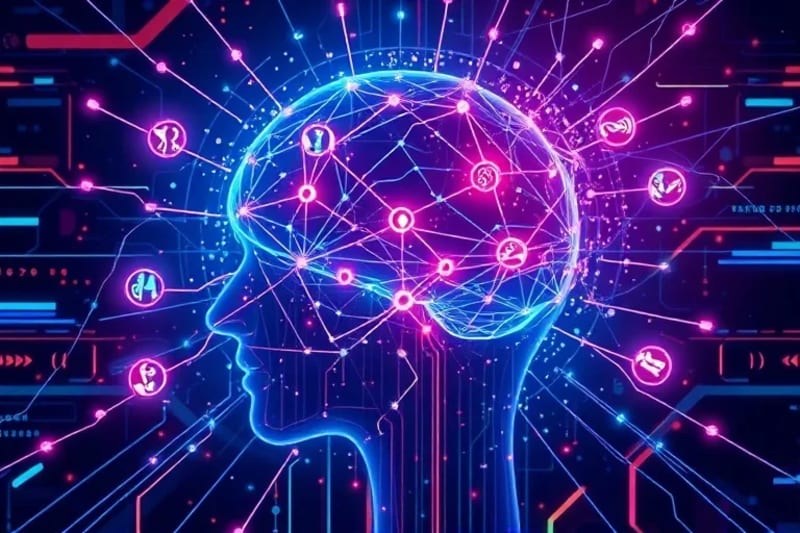
An abstract depiction of human consciousness harmoniously interfacing with an ethical AI system, symbolizing integrated thought and technology.
Key principles of quantum manifestation include the understanding that everything is energy, and that like attracts like. Our thoughts and emotions emit vibrational frequencies that interact with the universal energy field. By consciously directing these frequencies, we can influence the events and circumstances that unfold in our lives. This perspective encourages a shift from passive observation to active participation in the creation of one's destiny.
The concept also highlights the importance of releasing resistance and limiting beliefs. Often, unconscious patterns and past programming can hinder the manifestation process. Self-awareness and emotional clearing are therefore crucial components, allowing for a clearer channel for intentional creation. For more on spiritual growth and manifestation, explore Mindful Manifestation: Spiritual Growth, Law Attraction.
| Principle | Description |
|---|---|
| The Observer Effect | Conscious observation influences the state of quantum particles, suggesting a role for attention in shaping reality. |
| Superposition | Particles exist in multiple states simultaneously until observed, implying reality holds infinite possibilities before manifestation. |
| Entanglement | Interconnectedness of particles, suggesting that all things are linked and can influence each other regardless of distance. |
| Vibrational Alignment | Matching one's energetic frequency (thoughts, emotions) to the frequency of desired outcomes to attract them. |
| Focused Intention | Clearly defining and directing one's desires with unwavering belief and expectation. |
The Rise of Ethical AI in Personal Development
Ethical AI refers to the development and deployment of artificial intelligence systems that adhere to moral principles and values, prioritizing human well-being, fairness, transparency, and accountability. In the realm of personal development, ethical AI is emerging as a powerful ally, offering personalized insights, guided practices, and supportive frameworks without compromising individual autonomy or privacy. Unlike black-box algorithms, ethical AI aims to be understandable and controllable by its users, fostering trust and empowering genuine growth.
AI's capabilities in data analysis, pattern recognition, and personalized feedback make it uniquely suited to assist in self-improvement journeys. From mindfulness apps that track meditation progress to AI coaches that help set and achieve goals, technology is increasingly integrated into our quest for personal excellence. The key distinction of ethical AI is its commitment to serving human flourishing, ensuring that its algorithms are designed to mitigate bias, protect sensitive user data, and promote positive behavioral change rather than manipulation.
The development of ethical AI in this context involves careful consideration of user experience, psychological impact, and societal implications. It's about creating intelligent systems that act as wise mentors or supportive partners, rather than intrusive overseers. This fosters a relationship where technology enhances human capabilities and consciousness, rather than replacing it. The principles of ethical AI ensure that the tools developed are genuinely beneficial and align with a higher purpose.
Synergistic Co-creation: Bridging Consciousness and Code
The true innovation lies in the synergistic co-creation that occurs when quantum manifestation principles are amplified by ethical AI. Imagine an AI system that can analyze your thought patterns, emotional states, and belief systems, providing real-time feedback on how well they align with your manifestation goals. This is not about AI manifesting for you, but about AI acting as a sophisticated mirror and guide, helping you refine your conscious input.
Ethical AI can assist in several crucial ways. It can identify recurring negative thought loops or limiting beliefs that unconsciously sabotage manifestation efforts. By recognizing these patterns, the AI can then suggest personalized affirmations, guided meditations, or visualization exercises tailored to your unique psychological profile and desired outcomes. This personalized approach significantly enhances the effectiveness of traditional manifestation techniques, making the process more efficient and targeted.

A conceptual oil painting illustrating the convergence of natural elements and digital patterns, symbolizing the active co-creation of our reality.
Furthermore, AI can help in maintaining focus and consistency, which are vital for manifestation. It can provide gentle reminders, track progress towards goals, and even generate immersive virtual environments for visualization practices. This feedback loop between human consciousness and AI allows for continuous refinement of intention and belief, creating a powerful engine for reality shaping. The AI acts as an externalized, objective observer, helping us to see our blind spots and optimize our internal states for manifestation.
The integration also extends to fostering emotional coherence. Ethical AI can analyze biofeedback data (e.g., heart rate variability, skin conductance) to indicate states of stress or emotional misalignment, offering interventions to bring the individual back into a state of calm and positive expectation. This scientific approach to emotional management enhances the energetic alignment necessary for quantum manifestation. For more insights into ethical AI, see Ethical AI Predictive Astrology: Navigating Cosmic Guidance.
Practical Applications and Tools for Conscious Reality Shaping
The practical applications of combining quantum manifestation with ethical AI are vast and rapidly evolving. We are already seeing the emergence of tools that leverage AI to enhance personal growth and manifestation practices. These tools are designed to be intuitive, supportive, and deeply personalized, making the complex process of reality co-creation more accessible to a wider audience.
- AI-Powered Meditation and Mindfulness Apps: These applications use AI to personalize meditation scripts, track brainwave patterns, and provide real-time feedback to guide users into deeper states of focus and relaxation, ideal for setting intentions.
- Manifestation Journaling with AI Feedback: Users can journal their desires, beliefs, and emotions, and AI can analyze the text for patterns of limiting beliefs, emotional blocks, or inconsistencies in intention. It can then offer prompts or affirmations to realign the user's focus.
- Virtual Reality (VR) for Immersive Visualization: Ethical AI can power VR environments that allow users to vividly experience their desired reality. This immersive visualization, enhanced by AI-generated sensory details, can significantly strengthen the emotional and energetic connection to the manifested outcome. Explore Digital Sacred Spaces: Ethical VR & AR Meditation for related concepts.
- Personalized Affirmation Generators: Based on user input and detected patterns, AI can create highly specific and resonant affirmations that target individual needs and goals, helping to reprogram the subconscious mind.
- Goal Tracking and Accountability Partners: AI can serve as a non-judgmental accountability partner, tracking progress, celebrating small wins, and offering encouragement to maintain momentum towards manifestation goals.
- Collective Manifestation Platforms: Beyond individual use, ethical AI could facilitate collective manifestation projects, where groups align their intentions for shared goals, such as environmental healing or social change, with AI optimizing the collective focus and impact.
These tools are not intended to replace human intuition or spiritual practice but to augment them. They provide a structured, data-informed approach to self-mastery, allowing individuals to leverage cutting-edge technology in their journey of conscious creation. The ethical framework ensures that these applications prioritize user empowerment and well-being above all else.
Ethical Considerations and Responsible Integration
As with any powerful technology, the integration of AI into such a personal and profound area as reality co-creation necessitates careful ethical consideration. The potential benefits are immense, but so are the risks if not handled responsibly. Ensuring that AI remains a tool for empowerment rather than a source of dependency or manipulation is paramount.
- Data Privacy and Security: AI systems designed for personal development often require access to highly sensitive personal data, including thoughts, emotions, and goals. Robust encryption, anonymization, and strict data governance policies are essential to protect user privacy.
- Algorithmic Bias: AI algorithms can inadvertently perpetuate or amplify existing biases present in their training data. Developers must actively work to identify and mitigate biases, ensuring that the AI provides fair and inclusive guidance for all users, regardless of background.
- Maintaining Human Agency: There is a risk that users might become overly reliant on AI for guidance, potentially diminishing their own intuition, critical thinking, and inner power. Ethical AI should always encourage self-reflection and independent decision-making, emphasizing that the human is the ultimate creator.
- Transparency and Explainability: Users should understand how AI recommendations are generated and what data is being used. Black-box AI models, where the decision-making process is opaque, can erode trust and prevent users from truly integrating the insights.
- The "God-like" Complex: The power to "co-create reality" can be misinterpreted or misused. Ethical guidelines must address the potential for individuals to manifest outcomes that may negatively impact others or society. AI should promote responsible and benevolent creation.
- Emotional and Psychological Impact: AI feedback, even if well-intentioned, could have unintended psychological effects. Systems should be designed with psychological safety in mind, offering support and resources for mental well-being.
The development and deployment of these technologies must be guided by interdisciplinary teams, including ethicists, psychologists, spiritual leaders, and AI experts. Continuous dialogue and user feedback are crucial to ensure that these tools evolve in a way that truly serves humanity's highest good.
The Future of Reality Co-creation
The future of reality co-creation, powered by the synergy of quantum manifestation and ethical AI, holds immense promise. As AI becomes more sophisticated and our understanding of consciousness deepens, the tools for intentional reality shaping will become increasingly refined and integrated into daily life. This evolution is not just about personal achievement but also about fostering a more conscious and harmonious collective existence.
Imagine a world where individuals are empowered to overcome limiting beliefs with unprecedented speed, where collective intentions can be harmonized to address global challenges like climate change or poverty, and where technology serves as a true extension of human consciousness. This future envisions AI as a catalyst for human potential, helping us to unlock our innate creative abilities and manifest a world that reflects our highest aspirations.
The ongoing research into quantum consciousness and the rapid advancements in AI suggest that we are only at the beginning of this transformative journey. The key will be to navigate this path with wisdom, ensuring that ethical considerations remain at the forefront of development. By consciously choosing to integrate these powerful forces responsibly, we can collectively co-create a future that is not only technologically advanced but also spiritually enriched and deeply aligned with human values.
Ultimately, the combination of quantum manifestation and ethical AI offers a profound opportunity to redefine our relationship with reality itself. It invites us to move beyond passive observation and into an active, conscious partnership with the universe, guided by intelligence both internal and artificial, to manifest a future of our collective design.
Source: Hybrid content assisted by AIs and human editorial supervision.


Comments
Post a Comment